At a Glance
| Property | Value |
|---|---|
| Evidence Level | Moderate (both well-established in their respective domains) |
| Primary Use | Neurofeedback: brainwave dysregulation. Biofeedback: autonomic dysregulation |
| Key Mechanism | Both use operant conditioning — neurofeedback targets the brain, biofeedback targets the body |
The Confusion Is Understandable
Patients ask me this question frequently: “My doctor recommended biofeedback, but I have read about neurofeedback for brain fog. Are they the same thing?” The names sound similar, the principle is related, and the marketing for both can be vague. Let me be direct about what each one does and when you need which.
What Neurofeedback Measures and Trains
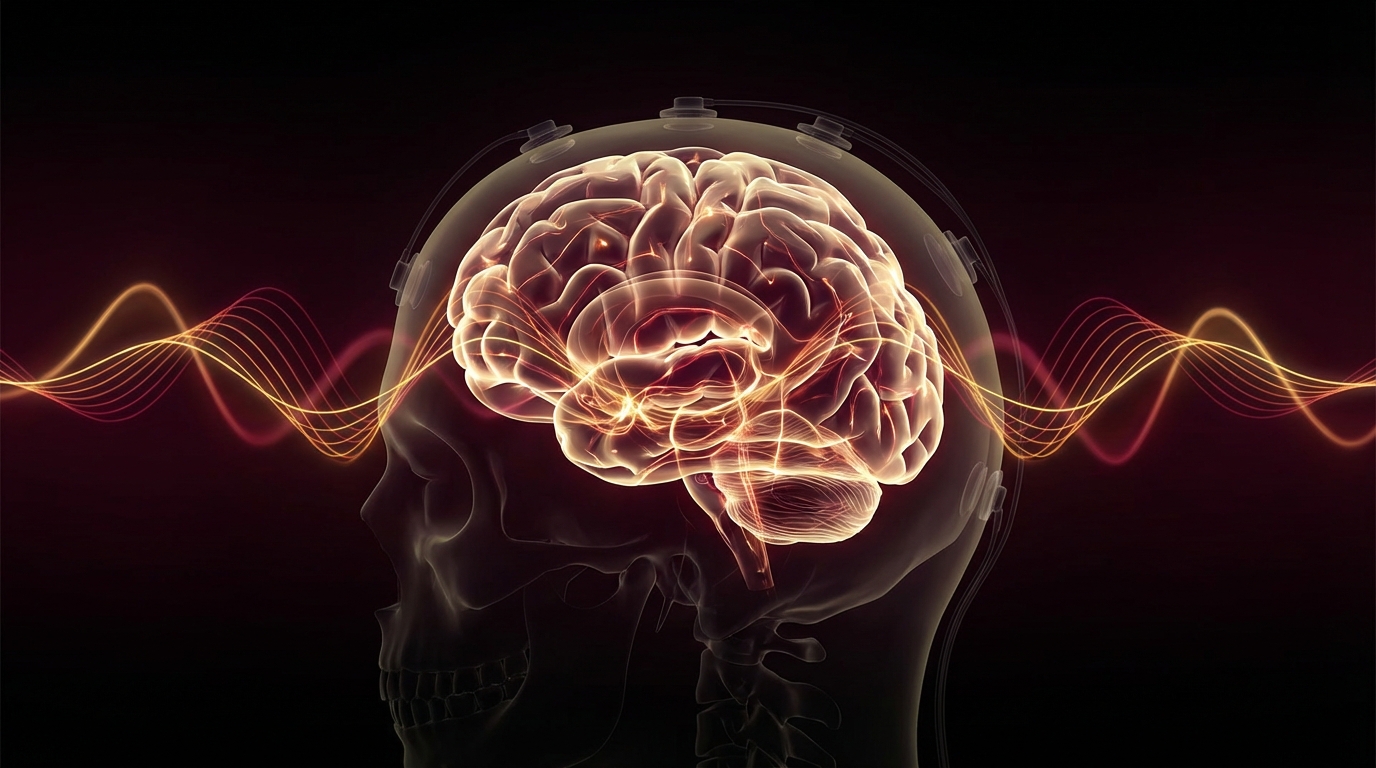
Neurofeedback — technically a specialized form of biofeedback — measures brainwave activity through electroencephalography (EEG). Sensors placed on the scalp detect the electrical activity of cortical neurons, which is processed in real time and fed back to the patient as visual or auditory signals.
What it measures:
- Delta waves (1-4 Hz): deep sleep, regeneration
- Theta waves (4-8 Hz): drowsiness, daydreaming, meditation
- Alpha waves (8-12 Hz): relaxed alertness, calm focus
- Beta waves (13-30 Hz): active thinking, attention, problem-solving
- High beta/gamma (30-100 Hz): intense focus, anxiety when excessive
What it trains: The goal is to normalize specific brainwave patterns. For example, a Lyme disease patient with brain fog typically shows excess frontal theta (too much slow-wave activity) and deficient beta (not enough fast-wave activity). Neurofeedback trains the brain to reduce theta and increase beta in those regions.
Best for:
- Brain fog and cognitive dysfunction
- ADHD and attention disorders
- Anxiety (especially rumination and overactivation patterns)
- Sleep disorders (particularly insomnia with hyperarousal)
- Depression with frontal alpha asymmetry
- Post-concussion/TBI cognitive symptoms
- Trauma-related brainwave dysregulation
Session format: Sensors on the scalp (non-invasive), watching a screen that provides feedback based on brainwave patterns. Typical course: 20-40 sessions at 2-3 per week [1].
What Biofeedback Measures and Trains
Biofeedback measures peripheral physiological signals — everything happening in the body outside the brain — and trains voluntary control over these typically involuntary processes.
What it measures:
- Heart rate variability (HRV): The variation in time between heartbeats. Higher HRV reflects better autonomic flexibility and parasympathetic tone.
- Electromyography (EMG): Muscle tension. Used for chronic pain, tension headaches, and TMJ disorders.
- Skin conductance (GSR): Sweat gland activity as a measure of sympathetic nervous system activation.
- Respiration rate and pattern: Breathing rate, depth, and regularity.
- Peripheral temperature: Finger temperature as a measure of peripheral blood flow (sympathetic tone).
- Blood pressure: For hypertension biofeedback protocols.
What it trains: The goal is to give patients conscious awareness and control over autonomic functions. For example, an HRV biofeedback protocol teaches the patient to breathe at their resonance frequency (typically 5-7 breaths per minute) to maximize HRV, strengthening vagal tone and parasympathetic function.
Best for:
- POTS and dysautonomia
- Chronic pain syndromes
- Stress-related physical symptoms (tension headache, IBS, hypertension)
- Anxiety with strong somatic components (racing heart, sweating, muscle tension)
- Migraine prevention
- Post-COVID autonomic dysfunction
- Raynaud’s phenomenon
Session format: Sensors on fingers, chest, or forehead (depending on the modality), with real-time display of physiological data. Typical course: 10-20 sessions [2].

Head-to-Head Comparison
| Feature | Neurofeedback | Biofeedback |
|---|---|---|
| What is measured | Brainwaves (EEG) | Body signals (HRV, EMG, GSR, temp) |
| Target system | Central nervous system | Autonomic nervous system, muscles |
| Primary goal | Normalize brainwave patterns | Normalize autonomic regulation |
| Brain fog | Primary tool | Indirect support only |
| Anxiety | Cortical patterns of anxiety | Physical symptoms of anxiety |
| POTS/dysautonomia | Limited role | Primary tool |
| Chronic pain | Some protocols for central sensitization | Primary tool (EMG, HRV) |
| Requires assessment | qEEG brain map recommended | HRV baseline and autonomic testing |
| Typical sessions | 20-40 | 10-20 |
| Home practice | Limited (some home devices exist) | Extensive (HRV apps, breathing trainers) |
| Evidence strength | Strong for ADHD, moderate for other conditions | Strong for stress, pain, moderate for autonomic conditions |
When You Need Neurofeedback
Choose neurofeedback when the primary problem is in the brain:
- Your main complaint is brain fog, slow processing, or cognitive dysfunction
- You have ADHD symptoms or attention difficulties
- Your anxiety manifests as racing thoughts, rumination, or difficulty “turning off” your brain
- Sleep problems are primarily insomnia with an overactive mind
- A qEEG shows specific brainwave dysregulation patterns
- You have post-Lyme or post-COVID cognitive impairment that persists after treatment
When You Need Biofeedback
Choose biofeedback when the primary problem is in the body’s autonomic regulation:
- Your main complaint is physical — racing heart, blood pressure swings, chronic muscle tension
- You have POTS or other dysautonomia
- Anxiety manifests primarily as physical symptoms (sweating, trembling, chest tightness)
- Chronic pain is your dominant symptom
- You have poor HRV (measured by a wearable or clinical testing)
- Stress management and relaxation are your primary goals
When You Need Both
In my clinical experience, the majority of chronic Lyme and post-COVID patients benefit from both — because these conditions simultaneously disrupt the brain and the autonomic nervous system.
A typical combination approach:
- Start with biofeedback (especially HRV training) to stabilize the autonomic nervous system. This creates a more regulated physiological foundation.
- Add neurofeedback once autonomic regulation has improved. Training brainwave patterns is more effective when the body is not in a constant state of fight-or-flight.
- Continue home HRV practice while doing clinical neurofeedback sessions.
This sequencing is not rigid — some patients start with neurofeedback if brain fog is the most debilitating symptom. But in patients with significant autonomic dysfunction (POTS symptoms, wildly variable heart rate, poor sleep from sympathetic overdrive), stabilizing the autonomic nervous system first creates a better platform for brain training.
What I tell my patients: think of it this way. Biofeedback calms the body so the brain can learn. Neurofeedback retrains the brain so the body stays calm. They are complementary, not competitive.

Practical Application
Getting Started
For either modality:
- Find a qualified provider. For neurofeedback, look for BCN (Board Certified in Neurofeedback) or BCIA certification. For biofeedback, BCIA certification is the standard.
- Get the appropriate assessment. Neurofeedback should be guided by a qEEG brain map. Biofeedback should be guided by autonomic testing (tilt table, HRV assessment).
- Commit to the process. Neither modality works in 2-3 sessions. Plan for 10-20 sessions minimum for biofeedback, 20-40 for neurofeedback.
- Integrate with your medical treatment. Neurofeedback and biofeedback are adjunctive tools. They work best alongside — not instead of — treatment for the underlying condition.
Home Practice Options
Biofeedback has a significant advantage in home practice availability:
- HRV biofeedback apps (HeartMath, Elite HRV) provide basic but useful training
- Breathing trainers can guide resonance frequency breathing
- Wearable HRV monitors provide daily feedback on autonomic function
Neurofeedback home options exist but are more limited. Consumer-grade EEG headbands (Muse, Emotiv) provide basic meditation feedback but lack the precision of clinical neurofeedback. Some clinicians offer home neurofeedback rentals with pre-programmed protocols for patients who cannot attend sessions three times per week.
Safety and Considerations
Both modalities are among the safest interventions in medicine. Neither involves electrical stimulation — they are purely measurement and feedback. Side effects are minimal (temporary fatigue after neurofeedback, occasional light-headedness during HRV training) and self-limiting.
The primary risk is choosing the wrong modality for your problem, leading to frustration and wasted time and money. A Lyme patient with primary brain fog who spends 20 sessions doing HRV biofeedback alone will see minimal cognitive improvement. A POTS patient who does neurofeedback alone will still stand up and get dizzy. Proper assessment and modality selection is the key.
The Bottom Line
Neurofeedback trains the brain. Biofeedback trains the body. Both use the same principle — real-time measurement and feedback to teach self-regulation — but they target different systems and solve different problems. For brain fog, cognitive dysfunction, and brainwave dysregulation, neurofeedback is the primary tool. For autonomic dysfunction, chronic pain, and stress-related physical symptoms, biofeedback is the primary tool. Many chronic illness patients need both. The distinction is not complicated once you understand that the brain and the autonomic nervous system are different targets requiring different training.
References
- Marzbani H, Marateb HR, Mansourian M. Neurofeedback: A Comprehensive Review on System Design, Methodology and Clinical Applications. Basic and Clinical Neuroscience. 2016;7(2):143-158. PMC4892319.
- Lehrer PM, Gevirtz R. Heart rate variability biofeedback: how and why does it work? Frontiers in Psychology. 2014;5:756. PMC4104929.
- Arns M, et al. Neurofeedback: One of today’s techniques in psychiatry? L’Encéphale. 2017;43(2):135-145. PMID: 27876384.