At a Glance
| Property | Value |
|---|---|
| Evidence Level | Emerging to Moderate (strong mechanism, limited Lyme-specific RCTs) |
| Primary Use | Brain fog, cognitive dysfunction, anxiety, and sleep disruption in Lyme disease |
| Key Mechanism | Operant conditioning of brainwave patterns via real-time EEG feedback |
Why Lyme Disease Disrupts Your Brain Waves
You have been treated for Lyme disease. The antibiotics are done. Maybe your joint pain improved, maybe your energy is slowly returning. But the brain fog persists — the slow thinking, the word-finding difficulty, the feeling that your cognitive “processor” is running at half speed.
This is not in your head. Or rather, it is precisely in your head — in a measurable, documentable way.
When Borrelia burgdorferi crosses the blood-brain barrier, it triggers a neuroinflammatory cascade. Activated microglia release pro-inflammatory cytokines (TNF-alpha, IL-6, IL-1beta) that disrupt synaptic transmission and alter neuronal firing patterns. The result is a characteristic shift in the brain’s electrical activity: increased slow-wave power (theta at 4-8 Hz, sometimes delta at 1-4 Hz) and decreased fast-wave power (beta at 13-30 Hz), particularly over frontal and temporal cortex [1].
In practical terms: the brain regions responsible for attention, processing speed, and executive function are running too slowly. This is not a metaphor — it is a measurable electrophysiological reality that shows up clearly on quantitative EEG brain mapping.
What Neurofeedback Does
Neurofeedback is a form of operant conditioning applied to brainwave patterns. The principle is straightforward:
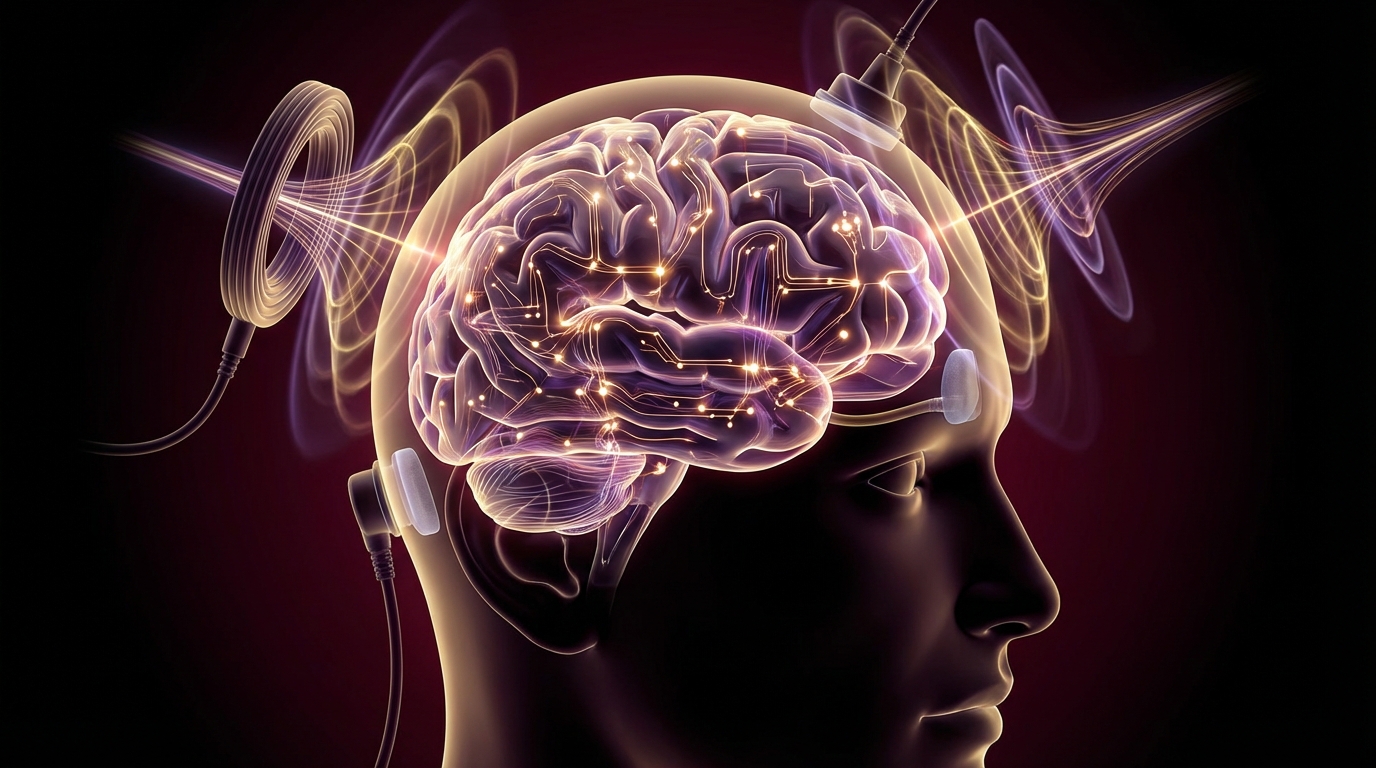
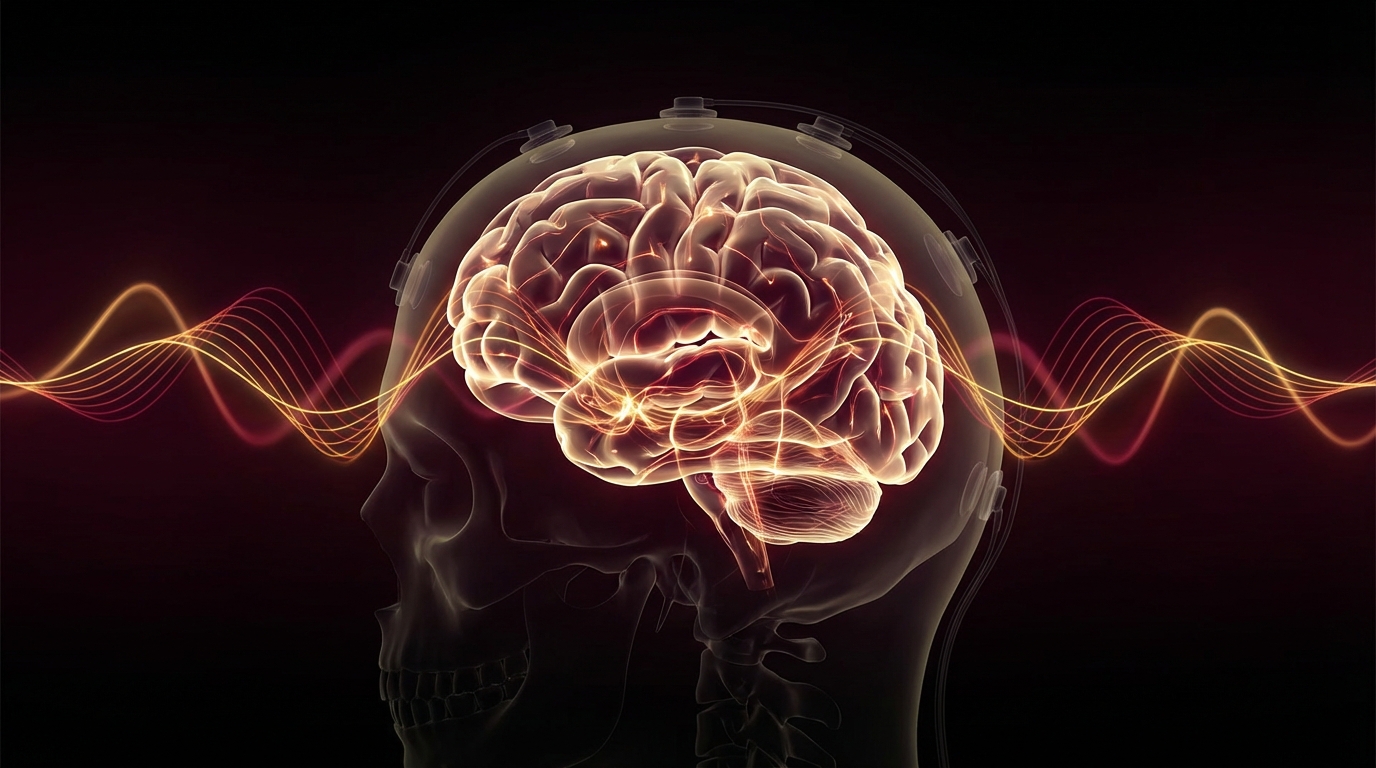
- EEG sensors on the scalp measure your real-time brainwave activity
- A computer processes the signal and identifies whether your brain is producing the target pattern (e.g., more beta, less theta over frontal cortex)
- When your brain moves toward the target pattern, you receive a reward signal — a video plays smoothly, a tone sounds, a game progresses
- When your brain drifts away from the target, the reward stops
- Over repeated sessions, the brain learns to self-regulate toward healthier patterns
The brain does not need to “understand” what it is doing. The process is automatic — the same mechanism by which you learned to balance on a bicycle. Your neurons adjust their firing patterns in response to the feedback signal, gradually establishing new, more efficient patterns [2].
In Lyme disease patients specifically, neurofeedback protocols typically aim to:
- Reduce excessive theta power over frontal cortex (addressing the “fog”)
- Increase beta power in attention networks (improving processing speed)
- Normalize alpha patterns (restoring the relaxed-but-alert state that Lyme disrupts)
- Reduce high-beta excess in anxiety-related regions (calming the hypervigilant nervous system)
The Evidence
What We Know (Human Data)
Neurofeedback has a substantial evidence base for attention, anxiety, and cognitive dysfunction in general populations. The American Academy of Pediatrics rates neurofeedback as a Level 1 “best support” intervention for ADHD. Multiple controlled trials demonstrate improvements in attention, impulse control, and processing speed that persist at 6-12 month follow-up.
For Lyme disease specifically, the evidence is earlier-stage but consistent:
Project Lyme pilot study: A collaboration between Project Lyme and neurofeedback researchers documented cognitive improvements in Lyme patients undergoing qEEG-guided neurofeedback. Participants showed improvements in self-reported brain fog, working memory, and processing speed after 20-30 sessions [3].
Global Lyme Alliance clinical observations: GLA has documented the use of neurofeedback as an adjunctive therapy for Lyme patients with persistent neurological symptoms. Their clinical reports note particular benefit for patients with anxiety, sleep disruption, and cognitive slowing that persists after antibiotic therapy.
qEEG studies in Lyme: Research has documented characteristic qEEG patterns in chronic Lyme patients — elevated frontal theta, reduced posterior alpha peak frequency, and altered coherence patterns between cortical regions. These patterns normalize with effective treatment, providing both a diagnostic marker and a treatment target.
What We See in the Lab (Preclinical)
The neuroinflammation-brainwave connection is well-established in animal models. TNF-alpha administration in rats produces the same slowing of cortical activity (increased theta, decreased beta) seen in Lyme patients. Anti-inflammatory treatment reverses these changes. This supports the model that neurofeedback is not treating the infection — it is rehabilitating the brain’s electrical patterns after the infection has disrupted them.
What I See in Practice
In my clinical experience, neurofeedback is one of the most underutilized tools for Lyme-related brain fog. The patients who benefit most are those who have completed infection treatment but retain persistent cognitive symptoms — the “post-treatment Lyme disease” population that conventional medicine often has little to offer.

What I observe in practice:
- Sessions 1-10: Subtle changes. Most patients report slightly improved sleep before noticing cognitive changes. Some experience temporary fatigue after early sessions as the brain adjusts.
- Sessions 10-20: Cognitive improvements become noticeable. Patients report faster word retrieval, longer reading tolerance, and reduced “mental exhaustion” by end of day.
- Sessions 20-40: Consolidated improvements. The brain begins to maintain the trained patterns between sessions. Many patients describe this as “remembering what my brain used to feel like.”
The nuance matters: neurofeedback does not work for every Lyme brain fog patient. It works best when:
- The active infection has been adequately treated (you cannot out-train ongoing neuroinflammation)
- qEEG mapping identifies specific trainable dysregulation patterns
- The patient commits to 20-40 sessions (fewer than 20 rarely produces lasting change)
- Other drivers of brain fog (sleep disruption, mold exposure, hormonal imbalance) are addressed concurrently
What I tell my patients: think of neurofeedback as physical therapy for your brain. Just as a torn muscle heals but needs rehabilitation to regain strength and coordination, a brain damaged by neuroinflammation heals but needs retraining to regain efficient patterns.
Practical Application
What a Treatment Course Looks Like
A typical neurofeedback course for Lyme brain fog:
- Initial qEEG assessment (45-60 minutes): 19-channel EEG recording, eyes open and closed, compared to normative databases to identify specific dysregulation patterns
- Protocol design: Clinician selects training targets based on qEEG findings and symptom profile
- Training sessions (30-45 minutes each, typically 2-3x per week): Patient sits comfortably, EEG sensors placed on scalp, and watches a screen that provides visual and auditory feedback based on brainwave activity
- Progress reassessment: qEEG repeated at 20 sessions and treatment conclusion to document objective changes
- Total course: 20-40 sessions for most Lyme patients
Combining with Other Neuromodulation
Neurofeedback is most effective as part of a multimodal approach:
- Neurofeedback + photobiomodulation: PBM addresses mitochondrial dysfunction while neurofeedback retrains electrical patterns. These target complementary mechanisms.
- Neurofeedback + vagus nerve stimulation: VNS calms the autonomic nervous system while neurofeedback normalizes cortical patterns. Particularly effective for patients with both brain fog and anxiety.
- Neurofeedback + cognitive rehabilitation: Structured cognitive exercises reinforce the patterns being trained in neurofeedback sessions.

Finding a Qualified Provider
Not all neurofeedback is equal. Look for:
- Board certification in neurofeedback (BCN or BCIA certification)
- qEEG-guided protocols (not one-size-fits-all)
- Experience with chronic illness populations (Lyme, post-COVID, autoimmune)
- Willingness to coordinate with your treating physician
- Use of LORETA or sLORETA 3D imaging for deeper brain region targeting
Safety and Considerations
Neurofeedback is one of the safest neuromodulation approaches available. It is non-invasive, uses no electrical stimulation (only passive recording and feedback), and has no systemic side effects.
Temporary side effects during the training course may include:
- Fatigue after the first few sessions (the brain is doing unfamiliar work)
- Temporary headache
- Transient mood shifts as brainwave patterns reorganize
- Vivid dreams (especially when alpha/theta training is included)
These are generally mild and self-limiting. Serious adverse events are extremely rare in published literature.
The main risk is not physical — it is undertreating. Neurofeedback without adequate Lyme treatment is addressing downstream effects while the upstream cause continues. Neurofeedback without enough sessions (fewer than 15-20) often produces transient improvements that fade. Proper patient selection and adequate treatment duration are the keys to meaningful outcomes.
The Bottom Line
Lyme disease disrupts brain electrical patterns in measurable, documented ways — increasing slow-wave activity and reducing the fast-wave activity that drives attention and processing speed. Neurofeedback provides a direct rehabilitation tool for these patterns, using operant conditioning to retrain the brain toward efficient function. Combined with adequate infection treatment, qEEG-guided protocols, and sufficient session count, it represents one of the most promising approaches for the stubborn brain fog that persists after Lyme treatment. The brain can relearn — it just needs the right training.
References
- Fallon BA, et al. Regional cerebral blood flow and metabolic rate in persistent Lyme encephalopathy. Archives of General Psychiatry. 2009;66(5):554-563. PMID: 19414715.
- Marzbani H, Marateb HR, Mansourian M. Neurofeedback: A Comprehensive Review on System Design, Methodology and Clinical Applications. Basic and Clinical Neuroscience. 2016;7(2):143-158. PMC4892319.
- Project Lyme. Lyme Disease and Neurofeedback: Retraining the Brain. Project Lyme. 2023. https://projectlyme.org/lyme-disease-and-neurofeedback/
- Global Lyme Alliance. Adjunct Therapies for Lyme Disease: Neurofeedback. GLA. 2023. https://www.globallymealliance.org/blog/adjunct-therapies-for-lyme-disease-neurofeedback