
Metformin is the most widely prescribed diabetes medication in the world. It has been used for over 60 years, it costs pennies per pill, and its safety profile is among the most thoroughly documented of any drug in medicine. These are not typical characteristics of cutting-edge longevity interventions, and that is precisely what makes the metformin longevity story so interesting.
The hypothesis is straightforward: diabetic patients treated with metformin appear to live longer than non-diabetic controls who were never on the drug [1]. If true — and the epidemiological data consistently supports this observation — then metformin may be doing something beyond glucose control. It may be slowing biological aging itself.
The Mechanistic Rationale
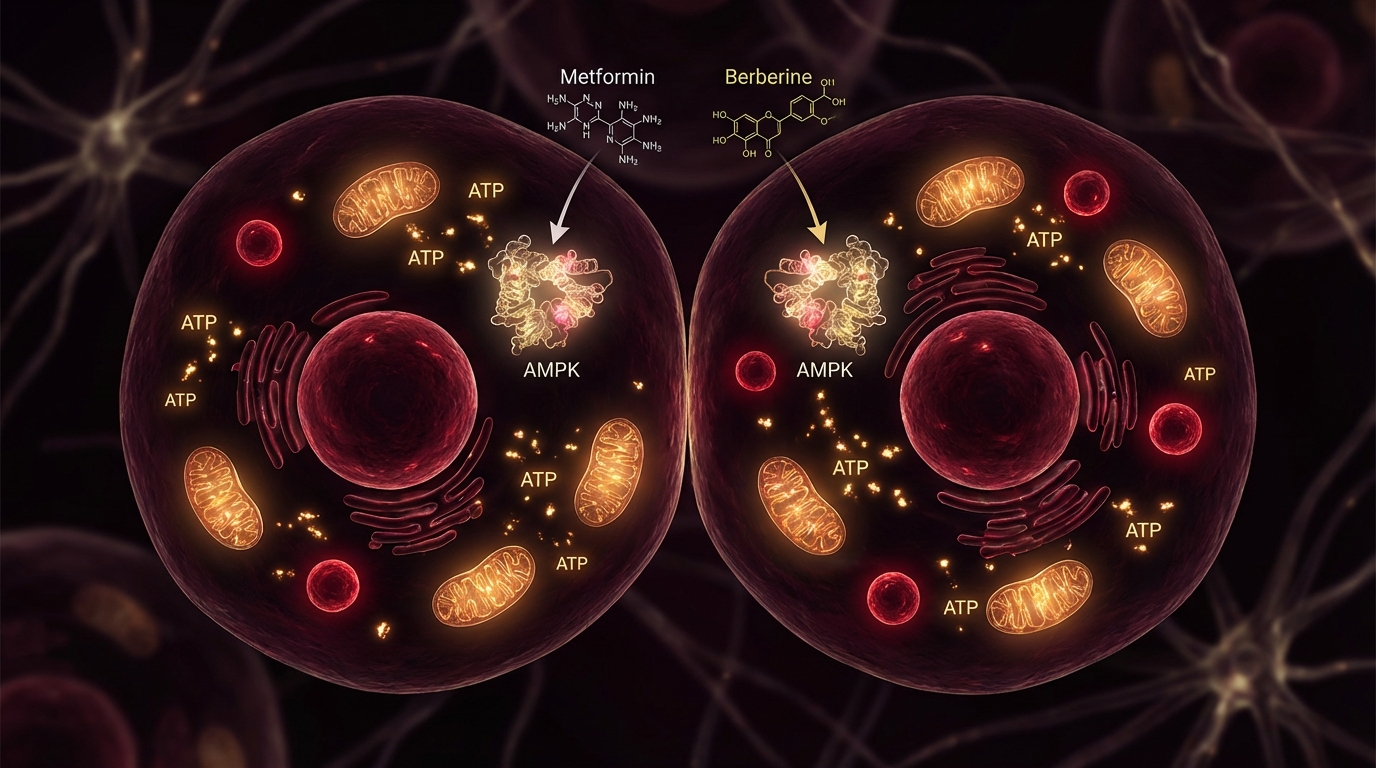
Metformin activates AMPK (AMP-activated protein kinase), a cellular energy sensor that is also activated by caloric restriction and exercise. When AMPK is activated, it:

- Inhibits mTOR (the same pathway targeted by rapamycin)
- Stimulates autophagy
- Improves mitochondrial function
- Reduces hepatic glucose production
- Lowers insulin and IGF-1 levels
- Reduces systemic inflammation (particularly IL-6 and TNF-alpha)
Many of these pathways overlap with the known mechanisms of caloric restriction — the most consistently demonstrated lifespan-extending intervention in biology. Metformin, in essence, may partially mimic the metabolic effects of eating less without requiring patients to eat less.
Additionally, metformin:
- Modulates the gut microbiome in ways that may influence systemic inflammation and metabolic health
- Has demonstrated anti-cancer properties in multiple observational studies, potentially through its effects on insulin, IGF-1, and AMPK
- Reduces advanced glycation end products (AGEs), which contribute to tissue aging
The Evidence
Epidemiological Data
The most cited study is Bannister et al. (2014), which found that type 2 diabetics on metformin had 15% lower all-cause mortality than matched non-diabetic controls [1]. This is a striking finding — people with diabetes, a disease that typically shortens lifespan, living longer than people without diabetes, apparently because of their medication.
Other epidemiological studies have shown reduced cancer incidence, cardiovascular events, and dementia risk in metformin users compared to both diabetics on other medications and non-diabetic populations [2].
The TAME Trial
The Targeting Aging with Metformin (TAME) trial, led by Nir Barzilai at the Albert Einstein College of Medicine, is designed to be the definitive test. This randomized, placebo-controlled trial will enroll approximately 3,000 adults aged 65-79 and follow them for six years, measuring not a single disease endpoint but a composite of age-related diseases (cardiovascular events, cancer, dementia, mortality).
TAME is significant beyond its specific results. It is the first trial to use “aging” as a treatable condition, which could establish a regulatory framework for future longevity drugs. As of this writing, enrollment is underway.
The Exercise Interaction
One finding that tempers enthusiasm: a 2019 study suggested that metformin may blunt some of the metabolic adaptations to aerobic exercise, particularly improvements in mitochondrial function and insulin sensitivity [3]. This has led to a practical question: should metformin be avoided on days when a patient exercises?
The honest answer is that we do not know definitively. The study was small and measured cellular adaptations, not long-term clinical outcomes. In my practice, I discuss this finding with patients and some choose to skip metformin on days they do intensive aerobic training. This is a pragmatic decision based on incomplete data.
How I Use Metformin in Practice
I prescribe metformin for longevity purposes in selected patients — typically those with:
- Prediabetic metabolic profiles (elevated fasting glucose, insulin resistance)
- Family history of age-related diseases (cancer, cardiovascular disease, dementia)
- Elevated inflammatory markers
- Interest in pharmacological longevity interventions after understanding the evidence level
I do not prescribe metformin for lean, metabolically healthy, physically active individuals who show no signs of insulin resistance. In these patients, the marginal benefit is likely smaller, and the potential interaction with exercise adaptations is a relevant consideration.
Dosing
Typical longevity dosing in my practice: 500-1,000 mg daily, usually in the evening with food. This is lower than the diabetes treatment dose (which can reach 2,000-2,500 mg daily) and is generally well-tolerated.
Extended-release formulations reduce the primary side effect — gastrointestinal disturbance (nausea, diarrhea, bloating) — which affects approximately 20-30% of patients at initiation and usually resolves within two to four weeks.
Monitoring
- Vitamin B12 levels (metformin can reduce B12 absorption over time; supplementation is often necessary)
- Kidney function (metformin is contraindicated in significant renal impairment)
- Fasting glucose and insulin
- Lactate (lactic acidosis is extremely rare but is a known, serious risk)
- Standard metabolic panel
The Honest Assessment
Metformin has genuine longevity potential. The mechanistic rationale is sound. The epidemiological data is consistent and compelling. The safety profile over decades of use is excellent.
But — and this matters — we do not yet have proof that metformin extends lifespan in healthy, non-diabetic humans. The epidemiological data is observational, with all the limitations that entails. The TAME trial may provide a clearer answer, but until those results are available, metformin for longevity remains a rational bet, not an established fact.
What I tell patients: metformin is one of the more conservative pharmacological longevity interventions available. The downside risk is low, the potential upside is meaningful, and the drug has the longest safety track record of any longevity candidate. For patients who are interested in going beyond lifestyle optimization, it is a reasonable starting point.

References
- Bannister CA, et al. Can people with type 2 diabetes live longer than those without? A comparison of mortality in people initiated with metformin or sulphonylurea monotherapy and matched, non-diabetic controls. Diabetes, Obesity and Metabolism. 2014;16(11):1165-1173.
- Campbell JM, et al. Metformin reduces all-cause mortality and diseases of ageing independent of its effect on diabetes control: A systematic review and meta-analysis. Ageing Research Reviews. 2017;40:31-44.
- Konopka AR, et al. Metformin inhibits mitochondrial adaptations to aerobic exercise training in older adults. Aging Cell. 2019;18(1):e12880.
This content is educational and does not constitute medical advice. Metformin is a prescription medication and its use for longevity purposes should be discussed with a qualified physician.