At a Glance
| Property | Value |
|---|---|
| Evidence Level | Moderate (cardiovascular outcomes from Finnish studies; recovery data from exercise physiology RCTs) |
| Primary Use | Cardiovascular conditioning, post-exercise recovery, stress resilience |
| Key Mechanism | Repeated vasodilation/vasoconstriction cycling, norepinephrine surge, HSP70/HSP90 upregulation |
Contrast Therapy Protocol: The Evidence-Based Approach
You have probably seen the influencer version of this: dramatic shots of someone going from a glowing sauna into a freezing plunge pool, gasping for air, then proclaiming it changed their life. Let me be direct. The underlying physiology is real and interesting, but the way most people execute contrast therapy is based on vibes, not evidence.
Here is what the research actually says about combining heat and cold exposure for health and longevity, and how to build a protocol that makes physiological sense.
Why Alternating Heat and Cold Works
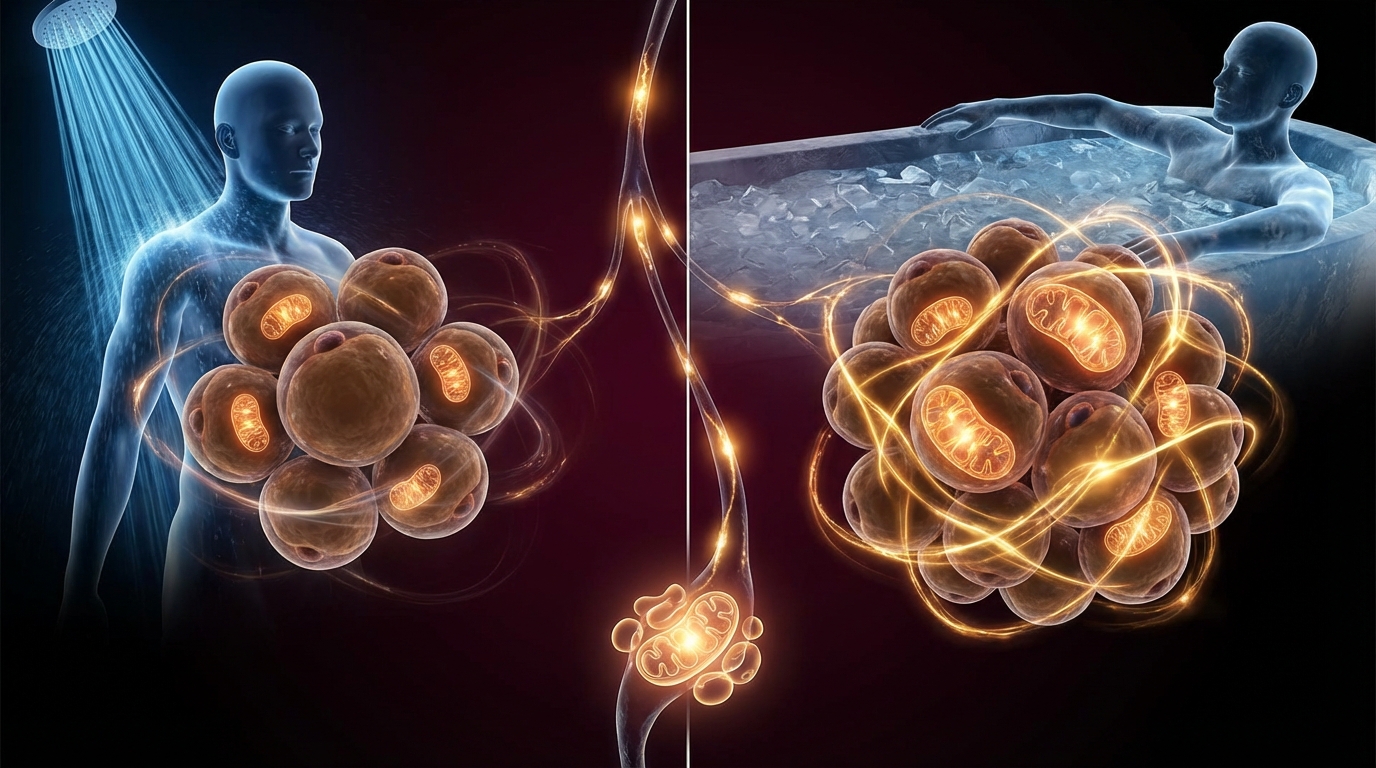
The core mechanism of contrast therapy is vascular cycling. When you expose your body to heat, peripheral blood vessels dilate — blood rushes to the skin surface to dissipate warmth. When you then plunge into cold water, those same vessels constrict rapidly, redirecting blood to the core and vital organs. Repeating this cycle creates a pumping action through the vascular system that is distinct from anything you can achieve with exercise alone.
The Molecular Response
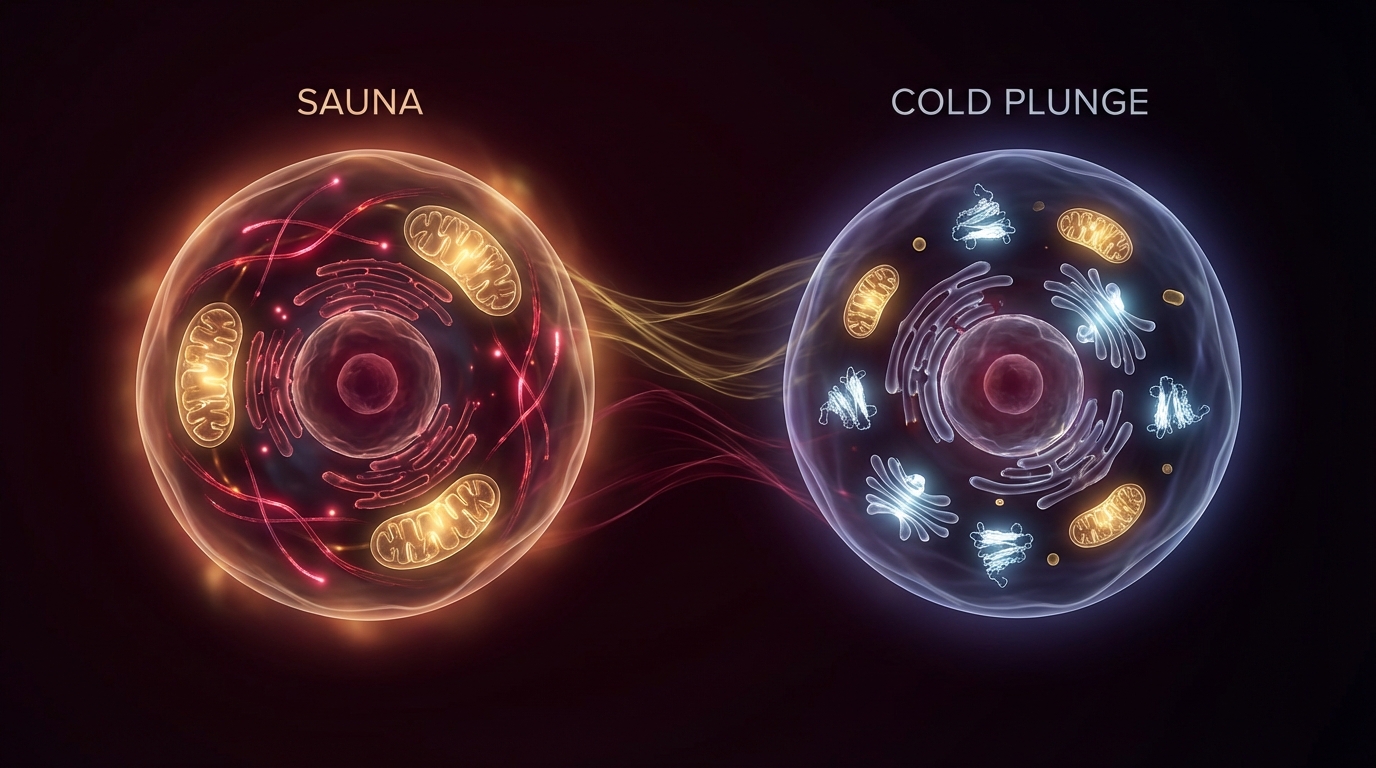
Each temperature transition triggers a cascade of molecular events:
During heat exposure (sauna, 80-100°C air):
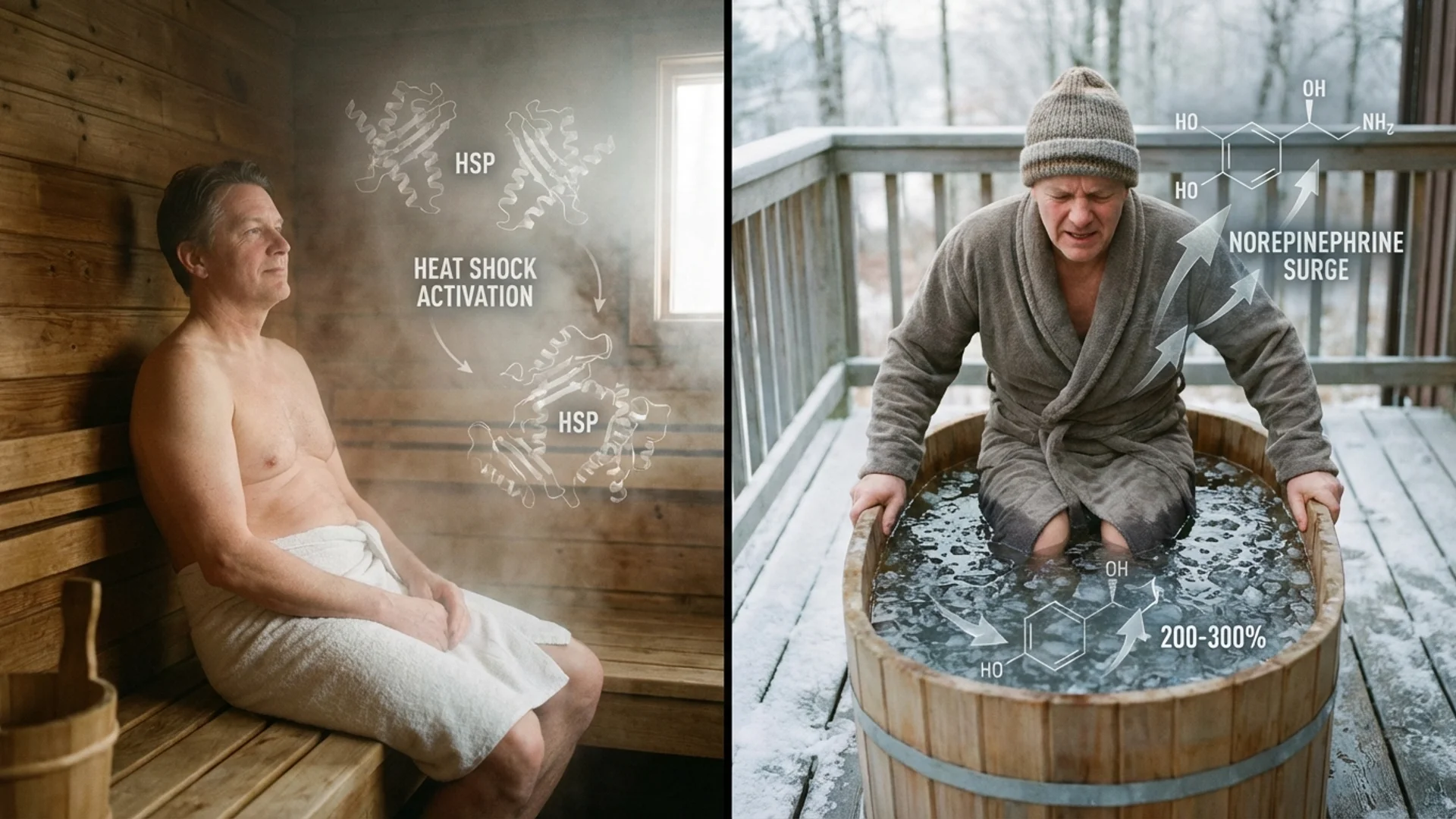
- Heat shock proteins HSP70 and HSP90 are upregulated. These molecular chaperones protect cells from damage, assist in protein folding, and serve as immune system activators. Laukkanen et al. demonstrated that regular sauna use producing HSP activation correlates with reduced cardiovascular mortality in the Finnish Kuopio Ischemic Heart Disease cohort (1).
- Growth hormone can increase 2-5 fold during a single 20-minute session at 80°C, though this effect is transient and should not be overstated for body composition purposes.
- Blood plasma volume increases as an adaptive response to repeated heat stress, improving cardiovascular efficiency.
During cold exposure (3-10°C water):
- Norepinephrine surges 200-300% within minutes. This is the primary driver of the alertness, mood elevation, and focus that people report after cold exposure. Srámek et al. measured this catecholamine response in subjects immersed in 14°C water and found a robust, dose-dependent increase (2).
- Brown adipose tissue activation increases metabolic rate. More on this in the cold shower vs ice bath comparison.
- Anti-inflammatory cytokine profiles shift — IL-10 increases while pro-inflammatory markers decrease with repeated exposure.
The contrast effect specifically:
- The repeated vasodilation/vasoconstriction cycle acts as a form of vascular exercise. The endothelium — the inner lining of blood vessels — gets trained to respond more efficiently to these signals.
- Venous return is enhanced by the pumping action, which may explain the observed benefits for post-exercise recovery, particularly reduction in delayed-onset muscle soreness (DOMS).
Sauna First or Cold First? The Order Matters
This is the most common question, and the answer is clear: start with heat.
The Physiological Rationale
Starting with sauna makes sense for three reasons:
-
Vasodilation before vasoconstriction. Warming the body first opens blood vessels fully, increasing the magnitude of the vascular cycling effect when cold is applied. Going cold-first means you are starting from a constricted baseline, reducing the total range of vascular response.
-
Heat shock protein priming. HSP production requires sustained heat exposure. Starting with a full 15-20 minute sauna session ensures adequate HSP upregulation before the cold exposure. If you start cold and try to sauna after, you spend the first portion of your sauna session simply rewarming — wasted time from an HSP perspective.
-
Safety margin. Entering a cold plunge from a heated state produces the maximal cardiovascular demand at a point when the body is warm and well-perfused. The reverse — entering a hot sauna while cold and vasoconstricted — can cause a more abrupt blood pressure spike, particularly in individuals with existing cardiovascular concerns.
What About Ending on Cold vs. Ending on Heat?
If your goal is recovery and inflammation reduction, end on cold. The final cold exposure locks in the anti-inflammatory norepinephrine response and reduces residual inflammation from training.
If your goal is relaxation and sleep, end on heat. The gradual cooling after a final sauna session triggers a drop in core body temperature over the next 60-90 minutes, which promotes melatonin release and sleep onset. This connects directly to what I discuss in my deep sleep optimization protocol.
In my clinical experience, most patients benefit more from ending on cold — the mood, energy, and anti-inflammatory effects are more immediately impactful for the majority of people I see.
The Protocol: Temperatures, Timing, and Frequency
Here is what I recommend based on the aggregate evidence and clinical observation:
Session Structure
| Phase | Temperature | Duration | Notes |
|---|---|---|---|
| Sauna round 1 | 80-100°C (176-212°F) air | 15-20 min | Full warmup; reach core temp elevation |
| Cold plunge 1 | 3-10°C (37-50°F) water | 2-5 min | Full immersion to shoulders |
| Sauna round 2 | 80-100°C | 10-15 min | Shorter; body reaches temp faster |
| Cold plunge 2 | 3-10°C | 2-5 min | |
| Sauna round 3 | 80-100°C | 10-15 min | Optional but recommended |
| Cold plunge 3 | 3-10°C | 2-3 min | Final; end here for recovery |
Total session time: 45-75 minutes including transitions.
Temperature Guidelines
Sauna: A traditional Finnish sauna at 80-100°C is the gold standard. This is the modality used in the Kuopio Ischemic Heart Disease cohort that demonstrated the all-cause mortality reduction. Infrared saunas operate at lower air temperatures (45-65°C) but still elevate core temperature — they are an acceptable alternative, though the cardiovascular data is less robust. For guidance on frequency, see how often should you sauna for longevity.
Cold plunge: 3-10°C (37-50°F) is the therapeutic range. Below 3°C adds risk without proportional benefit. Above 10°C may not be cold enough to produce the full norepinephrine response in adapted individuals. If you are new to cold exposure, start at 10-15°C and work down over weeks.
Frequency
The Finnish sauna studies used frequency as a primary variable. The data from Laukkanen et al. showed a dose-response relationship: 4-7 sauna sessions per week produced the greatest reduction in cardiovascular events compared to 1 session per week (1). For a combined contrast protocol, 2-4 sessions per week is a reasonable target that balances benefit with practical sustainability.
Adaptation Period
Weeks 1-2: Start with 2 rounds (sauna-cold-sauna-cold). Use warmer cold water (12-15°C) and shorter cold durations (1-2 minutes). Focus on controlled breathing — in through the nose, out through the mouth.
Weeks 3-4: Progress to 3 rounds. Lower cold temperature to 5-10°C. Extend cold duration to 2-3 minutes.
Weeks 5+: Full protocol. 3-4 rounds if desired. Cold at 3-7°C. Duration 2-5 minutes based on tolerance. The norepinephrine response does not require suffering — if you are shivering uncontrollably, you have gone too far.
The Evidence: What We Know and What We Don’t
What We Know (Human Data)
The cardiovascular evidence is strongest for sauna alone. The landmark Kuopio Ischemic Heart Disease Risk Factor Study followed 2,315 Finnish men for a median of 20.7 years. Those using sauna 4-7 times per week had a 63% lower risk of sudden cardiac death and a 40% lower all-cause mortality compared to once-weekly users (1). This is among the most compelling observational evidence in preventive cardiology.
For cold water immersion specifically, Srámek et al. demonstrated the norepinephrine and immune modulation effects in controlled studies (2). Post-exercise recovery studies consistently show reduced DOMS and improved subjective recovery with contrast water therapy, though the evidence for actual performance improvement is less clear.
What We See in the Lab (Preclinical)
Animal models consistently show that heat stress activates the FOXO3 pathway — one of the major longevity-associated pathways — through HSP-mediated signaling. Cold exposure in animal models shows robust brown fat activation, improved insulin sensitivity, and enhanced mitochondrial biogenesis.
What I See in Practice
In my clinical experience, patients who adopt a consistent contrast therapy practice report improvements in three main areas: sleep quality, stress resilience, and subjective energy. The sleep effect is particularly reliable — I believe this is largely mediated by the post-session core temperature drop, which is one of the most powerful natural sleep-onset triggers I know of.
I also observe that the discipline required to deliberately enter cold water builds a psychological resilience that extends beyond the physiological benefits. The ability to choose discomfort, stay calm, and control your breathing is a skill that transfers to other stressors. This is not something I can measure in a lab, but it is something I see consistently in patients who commit to the practice.
Safety and Considerations
Who Should Not Do Contrast Therapy
- Uncontrolled cardiovascular disease. The rapid shifts in blood pressure and heart rate during temperature transitions are a significant cardiovascular stressor. Anyone with uncontrolled hypertension, recent myocardial infarction, unstable angina, or arrhythmias should avoid this practice or only undertake it under direct medical supervision.
- Pregnancy. Core temperature elevation above 38.9°C (102°F) during the first trimester is associated with neural tube defects. Pregnant women should avoid sauna and hot tub use.
- Active infections with fever. If your body is already mounting a febrile response, adding external heat stress is counterproductive and potentially dangerous.
- Recent alcohol consumption. Alcohol impairs thermoregulation, blunts the cardiovascular reflexes needed for safe temperature transitions, and increases the risk of syncope. Do not combine them.
Hydration
You will lose 0.5-1 liter of sweat per 20-minute sauna session. Replace this with water and electrolytes before, during, and after the protocol. Dehydration blunts the cardiovascular benefits and increases the risk of hypotension.
Timing Relative to Exercise
If you are using contrast therapy for recovery, perform it 1-4 hours after training. There is emerging evidence that cold water immersion immediately after resistance training may blunt the hypertrophic signaling cascade (mTOR pathway suppression), so avoid cold plunging within 60 minutes of a strength session if muscle growth is a primary goal.
The Bottom Line
Contrast therapy is a legitimate physiological intervention with meaningful cardiovascular, recovery, and stress-resilience benefits. The protocol is straightforward: sauna first, cold second, 3-4 rounds, 2-4 times per week. Start conservatively and progress over weeks. The nuance matters — temperature ranges, order, timing, and frequency all influence outcomes.
What I tell my patients: this is not a hack. It is a practice. The benefits compound over months of consistent application, not from a single dramatic session.
References
-
Laukkanen T, Khan H, Zaccardi F, Laukkanen JA. Association between sauna bathing and fatal cardiovascular and all-cause mortality events. JAMA Internal Medicine. 2015;175(4):542-548. doi:10.1001/jamainternmed.2014.8187
-
Srámek P, Simecková M, Janský L, Savlíková J, Vybíral S. Human physiological responses to immersion into water of different temperatures. European Journal of Applied Physiology. 2000;81(5):436-442. doi:10.1007/s004210050065
-
Versey NG, Halson SL, Dawson BT. Water immersion recovery for athletes: effect on exercise performance and practical recommendations. Sports Medicine. 2013;43(11):1101-1130. doi:10.1007/s40279-013-0063-8
-
Hussain J, Cohen M. Clinical effects of regular dry sauna bathing: a systematic review. Evidence-Based Complementary and Alternative Medicine. 2018;2018:1857413. doi:10.1155/2018/1857413