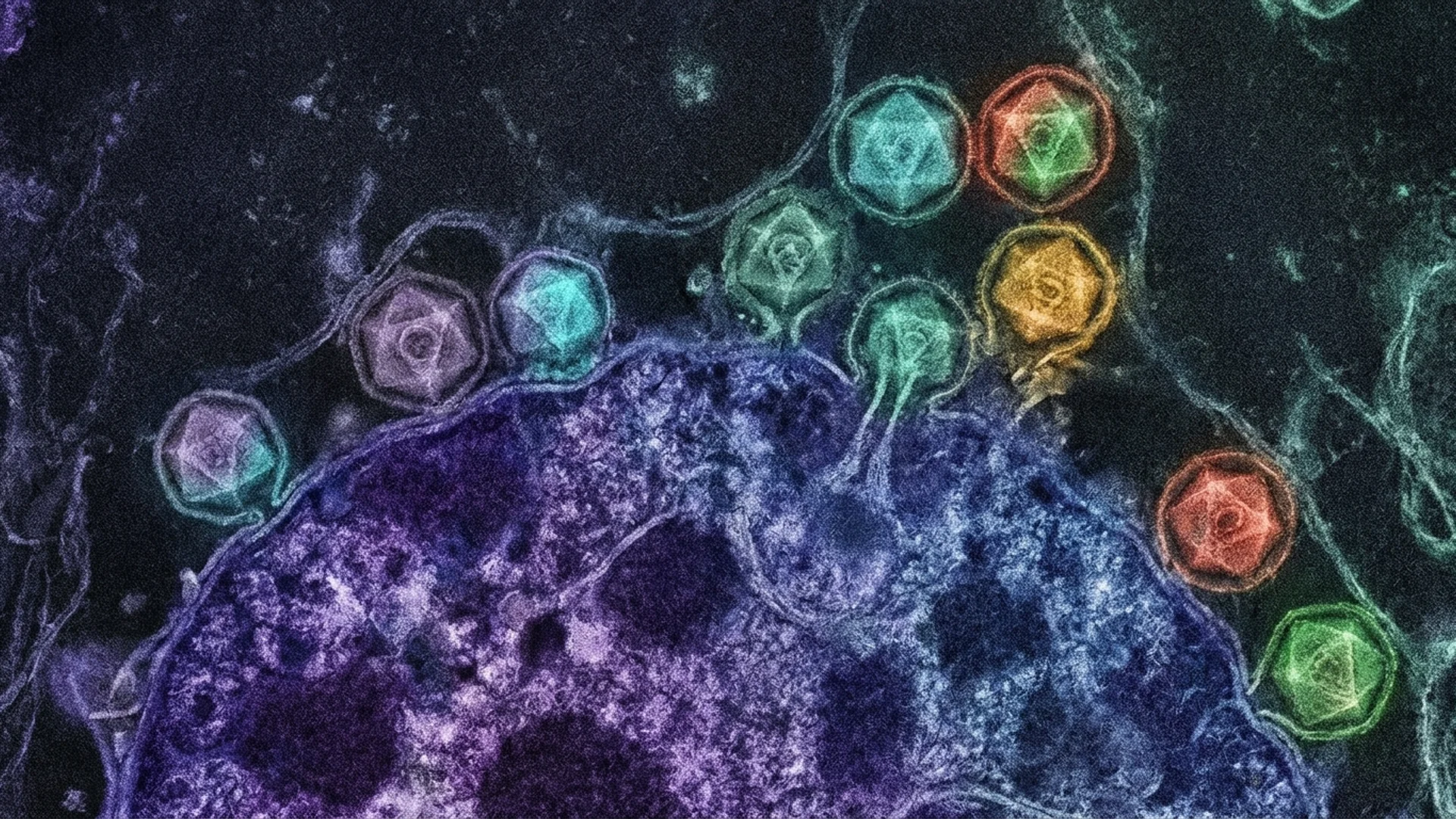
Most adults carry latent herpesviruses. Epstein-Barr virus (EBV) infects approximately 95% of the global adult population. Cytomegalovirus (CMV) infects 50-80%. Human herpesvirus 6 (HHV-6) infects nearly 100% of humans by age two. In a healthy individual with a competent immune system, these viruses remain dormant — controlled but not eliminated.
When the immune system is compromised — by another infection, chronic stress, immunosuppressive medication, or aging — these latent viruses can reactivate. And reactivated herpesviruses are not benign passengers. They can drive significant clinical disease.
This is one of the most commonly overlooked contributors to chronic illness in my practice.
Epstein-Barr Virus (EBV)
EBV establishes lifelong latency in B lymphocytes. Primary infection (mononucleosis) resolves, but the virus persists. When it reactivates, it can produce:
- Profound fatigue — EBV reactivation is one of the most documented triggers of chronic fatigue syndrome/ME-CFS
- Lymphadenopathy
- Pharyngitis
- Low-grade fever
- Hepatosplenomegaly
- Neurological symptoms (encephalitis in severe cases, cognitive dysfunction more commonly)
The landmark 2022 study by Bjornevik et al. demonstrated a 32-fold increased risk of multiple sclerosis following EBV infection [1], establishing EBV as likely a necessary (though not sufficient) cause of MS. This finding has broad implications for how we think about latent viral infections and autoimmune disease.
Diagnosing EBV Reactivation
Standard EBV serology includes:
- VCA IgG: Positive in past infection (nearly universal in adults) — not helpful alone
- VCA IgM: Positive in acute/recent infection or reactivation
- EBNA IgG: Develops weeks after primary infection; its absence in a VCA IgG-positive patient suggests recent primary infection
- EA-D IgG (Early Antigen - Diffuse): Elevated in approximately 70-80% of patients with active EBV reactivation. This is the most clinically useful reactivation marker.
The key pattern for reactivation: VCA IgG positive, EBNA positive, EA-D elevated, VCA IgM may or may not be positive.
EBV PCR (quantitative viral load) from blood provides direct evidence of viral replication and is useful for monitoring treatment response.
Cytomegalovirus (CMV)
CMV establishes latency in monocytes and myeloid progenitor cells. Reactivation is well-documented in immunocompromised patients (transplant recipients, HIV/AIDS) but is increasingly recognized in patients with more subtle immune compromise.
CMV reactivation can produce:
- Fatigue
- Low-grade fever
- Hepatitis (elevated liver enzymes)
- Colitis (in severe cases)
- Retinitis (primarily in severe immunocompromise)
- Potentially accelerated immune aging (CMV-positive individuals show markers of immunosenescence)
Diagnosis
CMV IgG and IgM serology, plus CMV PCR for quantitative viral load. IgM positivity or rising IgG titers suggest reactivation. PCR provides the most direct evidence.
Human Herpesvirus 6 (HHV-6)
HHV-6 is the most ubiquitous of the three — virtually all humans are infected in early childhood (roseola/sixth disease). Two variants exist: HHV-6A and HHV-6B, with HHV-6A having greater neurotropic potential.
HHV-6 reactivation has been associated with:
- Chronic fatigue syndrome/ME-CFS
- Encephalitis and cognitive dysfunction
- Multiple sclerosis
- Seizures
- Myocarditis
- Hepatitis
HHV-6 has a unique property: it can integrate its genome into human chromosomal DNA (chromosomally integrated HHV-6, ciHHV-6), which affects approximately 1% of the population. These individuals can have very high viral loads in the blood that do not necessarily indicate active replication. This complicates interpretation of PCR results.
Diagnosis
HHV-6 IgG serology, HHV-6 PCR (quantitative), and ideally distinction between HHV-6A and HHV-6B. Chromosomal integration should be considered if viral loads are unusually high.
The Clinical Pattern
In my practice, I see viral reactivation most commonly in the following contexts:
- Post-COVID patients. SARS-CoV-2 infection is a potent trigger for herpesvirus reactivation. Studies have shown elevated EBV, CMV, and HHV-6 markers in a significant proportion of Long COVID patients.
- Chronic Lyme disease patients. The immune suppression caused by Borrelia and its co-infections creates conditions favorable for viral reactivation.
- Patients with chronic fatigue syndrome/ME-CFS. Viral reactivation is one of the most consistent findings in this population.
- Patients under severe chronic stress. Cortisol-mediated immune suppression allows latent viruses to escape immune control.
- Aging patients. Immunosenescence (age-related immune decline) reduces the immune surveillance that keeps latent viruses in check.
The clinical significance is not the reactivation itself — it is what the reactivation tells us and what it does. Reactivated herpesviruses:
- Further suppress immune function, creating a feedback loop
- Drive chronic inflammation through persistent antigen presentation
- Can directly damage tissues (neural tissue, liver, blood cells)
- May trigger autoimmune responses through molecular mimicry
Treatment
Antiviral Therapy
- Valacyclovir (1 g two to three times daily): Effective against EBV and HHV-6. Well-tolerated for extended courses.
- Valganciclovir (450-900 mg twice daily): More potent against CMV and HHV-6 but carries greater toxicity (bone marrow suppression). Requires monitoring.
- Famciclovir: Alternative for EBV.
Treatment duration for chronic reactivation is typically three to six months, guided by clinical response and viral load monitoring.
Immune Support
Antiviral therapy alone is insufficient if the underlying immune compromise persists. A healthy immune system is the primary defense against viral reactivation. Treatment must address:
- The condition that caused immune compromise in the first place (treat the Lyme, manage the stress, optimize the metabolic health)
- Nutritional support for immune function (zinc, vitamin D, vitamin C, selenium)
- Sleep optimization
- Stress management
- Consideration of immune-modulatory therapies in select cases
Monitoring
Serial viral load (PCR) measurements provide objective feedback on treatment response. I typically recheck viral loads every four to six weeks during active treatment.
The Bottom Line
Reactivated herpesviruses are underdiagnosed contributors to chronic illness. In any patient with persistent fatigue, cognitive dysfunction, or post-infectious symptoms, viral reactivation should be assessed. The viruses are common. The testing is straightforward. And when reactivation is identified and treated, many patients experience meaningful improvement.
References
- Bjornevik K, et al. Longitudinal analysis reveals high prevalence of Epstein-Barr virus associated with multiple sclerosis. Science. 2022;375(6578):296-301.
This content is educational and does not constitute medical advice. Viral reactivation assessment and antiviral therapy require medical supervision.