At a Glance
| Property | Value |
|---|---|
| Evidence Level | Emerging to Moderate (Hopkins data, established microbiome-immune pathways) |
| Primary Use | Understanding and addressing gut dysfunction in Lyme disease patients |
| Key Mechanism | Antibiotic-driven dysbiosis + infection-driven intestinal permeability = gut ecosystem collapse |
The Gut-Lyme Connection Nobody Talks About
When a patient comes to me after months or years of Lyme disease treatment, they typically want to discuss their fatigue, their brain fog, and their joint pain. What they often do not mention — because they do not realize it is connected — is the bloating, the food sensitivities, the alternating diarrhea and constipation, and the feeling that their gut has never been the same since treatment started.
Here is what the evidence shows: the gut is not a bystander in Lyme disease. It is a casualty — damaged by both the infection and the treatment. And until it is restored, recovery remains incomplete.
How Lyme Disease Disrupts the Gut
Mechanism 1: Antibiotic-Driven Dysbiosis
Lyme disease treatment typically requires weeks to months of antibiotic therapy. Common regimens include doxycycline (4-8 weeks for acute, often longer for chronic), ceftriaxone (IV, 2-4 weeks), and combination protocols using multiple antibiotics for co-infections.
The impact on the gut microbiome is severe:
- Doxycycline reduces Bifidobacterium species by 50-80% within the first week and alters anaerobic populations for months after discontinuation
- Ceftriaxone (IV) has profound effects on the gut — reducing diversity by 50-60% and promoting C. difficile colonization
- Combination protocols using doxycycline + rifampin, or doxycycline + azithromycin + metronidazole, create cascading disruptions that compound with each additional antibiotic
- Repeated courses (common in chronic Lyme treatment) prevent the microbiome from recovering between assaults
The result is a gut ecosystem that has been strip-mined: severely reduced diversity, depleted keystone species (Bifidobacterium, Faecalibacterium, Akkermansia), and overgrowth of opportunistic organisms — particularly Candida species and Clostridium species.
In our hospital, where I have treated over 12,000 Lyme patients since we began seeing our first Lyme patients in 1994, antibiotic-associated gut dysfunction is essentially universal in patients who have undergone prolonged treatment. The severity varies, but some degree of dysbiosis is present in virtually every case.
Mechanism 2: Infection-Driven Intestinal Permeability
Separate from antibiotic effects, Borrelia burgdorferi infection itself appears to increase intestinal permeability through inflammatory mechanisms:
- Systemic pro-inflammatory cytokines (TNF-alpha, IL-6, IL-1beta) produced during the immune response to Borrelia disrupt tight junction proteins in the intestinal epithelium
- Tight junctions (claudin, occludin, zonulin) are the molecular seals between intestinal epithelial cells. When inflammatory cytokines degrade these proteins, the spaces between cells widen, allowing bacterial endotoxins, undigested food proteins, and microbial metabolites to enter the bloodstream [1]
- This “leaky gut” triggers further immune activation as the body responds to molecules that should not be in the blood — creating a self-perpetuating inflammatory cycle
The Double Hit
Lyme disease patients experience both mechanisms simultaneously. The infection increases intestinal permeability. The antibiotics destroy the microbiome that maintains barrier function. The depleted microbiome cannot produce the short-chain fatty acids (particularly butyrate) that colonocytes need for energy and tight junction maintenance. The result is a gut that is simultaneously leaky and lacking the microbial ecosystem to repair itself.
The Hopkins Microbiome Discovery
In a landmark study, researchers at the Johns Hopkins Lyme Disease Research Center identified a distinct gut microbiome signature in patients with post-treatment Lyme disease syndrome (PTLDS) compared to healthy controls [2].
Key findings:
- PTLDS patients had significantly altered microbial community composition
- Specific taxa were differentially abundant between PTLDS patients and controls
- The microbiome alterations correlated with symptom severity
- The findings suggest that gut dysbiosis may contribute to the persistent inflammatory state in PTLDS — not just as a consequence of treatment but potentially as a driver of ongoing symptoms
This is significant because it challenges the conventional view that post-treatment Lyme symptoms are purely related to residual tissue damage. If the disrupted gut microbiome is actively contributing to immune dysregulation and inflammation, then restoring the microbiome is not merely supportive care — it is addressing one of the mechanisms perpetuating the disease.

The Evidence
What We Know (Human Data)
- Hopkins PTLDS microbiome study: Distinct gut microbiome alterations in post-treatment Lyme disease [2]
- Antibiotic impact on microbiome: Multiple studies document that doxycycline, ceftriaxone, and combination regimens reduce microbial diversity by 30-60% with recovery times of months to years
- Intestinal permeability and systemic inflammation: Established through decades of mucosal immunology research. Elevated zonulin and LPS levels in systemic inflammatory conditions confirm the leaky gut mechanism
- Butyrate and barrier function: RCT data demonstrating that butyrate supplementation improves intestinal barrier function markers in inflammatory conditions
- Global Lyme Alliance research: GLA has documented the gut-Lyme connection and the importance of microbiome restoration as part of comprehensive treatment [3]
What I See in Practice
In our hospital, microbiome testing is part of the standard workup for chronic Lyme patients. The patterns I see most frequently:
- Severely depleted diversity — particularly after multiple antibiotic courses
- Absent or very low Bifidobacterium — the first casualty of doxycycline
- Candida overgrowth — detected on both stool testing and organic acids testing (elevated arabinitol)
- Elevated Clostridium species — producing neurotoxic metabolites (HPHPA) that worsen brain fog and neuropsychiatric symptoms
- Reduced butyrate production — insufficient short-chain fatty acids to maintain barrier function
- Elevated zonulin — direct marker of increased intestinal permeability
The clinical correlation is consistent: patients with the most severe gut dysbiosis tend to have the most persistent fatigue, the most refractory brain fog, and the most food sensitivities. This is not a coincidence — it is a direct mechanistic link through the gut-immune-brain axis.
What I tell my patients: treating your Lyme disease without restoring your gut is like rebuilding a house without fixing the foundation. The infection is the fire. The antibiotics are the fire trucks that saved the house but flooded the basement in the process. Now we need to pump out the water and rebuild.
Practical Application
The 5R Gut Restoration Protocol
For Lyme patients with documented gut dysbiosis, I use a systematic approach:
1. Remove: Eliminate gut pathogens and problematic organisms
- Address Candida overgrowth (nystatin, fluconazole, or botanical antifungals)
- Manage Clostridium overgrowth (Saccharomyces boulardii, targeted interventions)
- Remove dietary triggers (gluten, dairy, and refined sugar during the restoration phase)
2. Replace: Restore digestive capacity
- Digestive enzymes (many chronic illness patients have reduced pancreatic enzyme output)
- Betaine HCl if appropriate (low stomach acid is common after chronic illness)
- Bile acid support if fat digestion is impaired
3. Reinoculate: Rebuild the microbial ecosystem
- High-diversity, multi-strain probiotics (targeting depleted species)
- Saccharomyces boulardii (protects against C. difficile and Candida)
- Soil-based organisms (Bacillus species — more resilient during antibiotic use)
- Consider Akkermansia muciniphila supplementation (now commercially available)
4. Repair: Heal the intestinal lining
- L-glutamine (5-10g daily — primary fuel for enterocytes)
- Butyrate supplementation (sodium butyrate or tributyrin)
- Colostrum or immunoglobulin-based supplements
- Zinc carnosine (gastric and intestinal mucosal support)
- Omega-3 fatty acids (anti-inflammatory, barrier-supportive)
5. Rebalance: Support long-term ecosystem stability
- Dietary fiber diversity (30+ different plant foods per week)
- Prebiotic fibers (partially hydrolyzed guar gum, inulin, FOS, GOS — introduce gradually)
- Fermented foods (if tolerated — histamine sensitivity is common in Lyme patients)
- Stress management (cortisol directly impacts gut permeability)
- Sleep optimization (microbiome has circadian rhythms)
Testing and Monitoring
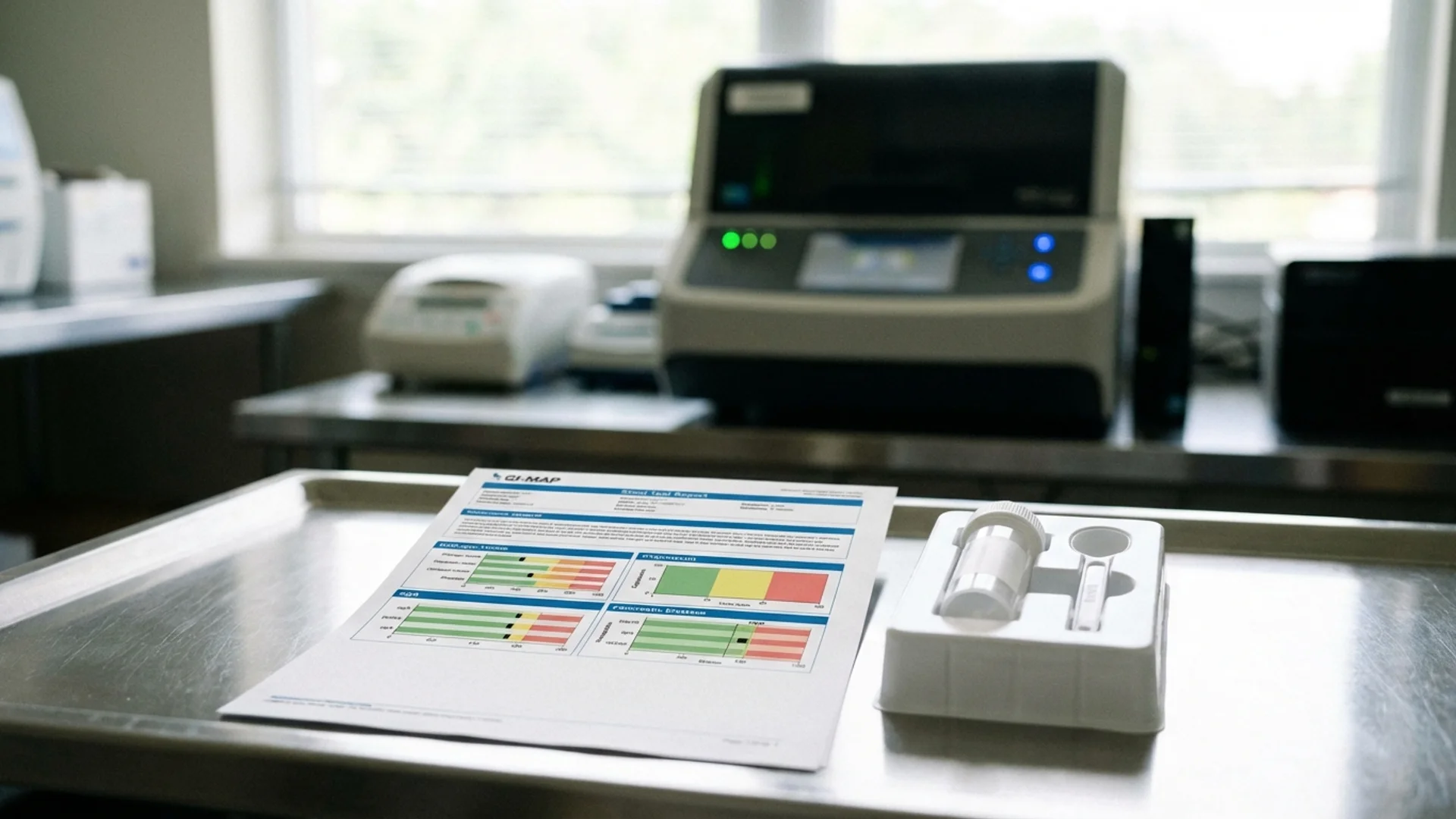
- Baseline: GI-MAP or equivalent stool analysis before or shortly after completing antibiotics
- During restoration: Monitor symptoms, food tolerance, and GI function clinically
- Follow-up testing: Repeat microbiome testing at 3-6 months to assess restoration progress
- Organic acids testing: Check Candida markers and Clostridium metabolites

Timeline for Recovery
Gut microbiome restoration after prolonged antibiotic use is not fast. Realistic expectations:
- Weeks 1-4: Symptomatic improvement (reduced bloating, more regular bowel movements)
- Months 1-3: Rebuilding of dominant commensal populations
- Months 3-6: Diversity begins to recover
- Months 6-12: Approach to pre-treatment baseline (some studies suggest full recovery may take 1-2 years after prolonged antibiotic courses)
Safety and Considerations
Gut restoration is generally very safe. The most common issues:
- Die-off reactions when addressing Candida (similar to Herxheimer — manage with gradual introduction)
- FODMAP sensitivity when introducing prebiotics (start low, increase slowly)
- Histamine intolerance to fermented foods (common in Lyme patients — avoid if symptomatic)
- Probiotic intolerance in SIBO patients (specific strains can worsen SIBO symptoms)
Always assess for SIBO (small intestinal bacterial overgrowth) before aggressive probiotic supplementation, particularly in patients with upper GI symptoms.
The Bottom Line
Lyme disease disrupts the gut through a double mechanism: antibiotic-mediated dysbiosis and infection-mediated intestinal permeability. The Hopkins research confirms that this disruption is not incidental — it is a measurable feature of post-treatment Lyme disease that likely contributes to persistent symptoms. Restoring the gut ecosystem is not optional supportive care. It is a necessary component of comprehensive recovery. The 5R protocol — remove, replace, reinoculate, repair, rebalance — provides a systematic framework for rebuilding what chronic illness and its treatment have dismantled.
References
- Global Lyme Alliance. Leaky Gut and Lyme Disease. GLA. 2023. https://www.globallymealliance.org/blog/leaky-gut-and-lyme-disease
- Johns Hopkins Lyme Disease Research Center. Distinct Gut Microbiome Signature in Post-Treatment Lyme Disease. Johns Hopkins. 2023. https://www.hopkinslyme.org/news/distinct-gut-microbiome-signature-in-lyme-disease-patients/
- Dethlefsen L, Relman DA. Incomplete recovery and individualized responses of the human distal gut microbiota to repeated antibiotic perturbation. Proceedings of the National Academy of Sciences. 2011;108(Suppl 1):4554-4561. PMC3063582.