
At a Glance
| Property | Value |
|---|---|
| Evidence Level | Strong (well-established toxicology for major metals) |
| Primary Use | Identifying metal-specific symptom patterns to guide testing decisions |
| Key Mechanism | Each metal has different target organs, accumulation patterns, and mechanisms of toxicity |
Why Metal-Specific Symptoms Matter
“Heavy metal toxicity” is not one condition. It is a category of conditions, each with distinct mechanisms, target organs, and symptom profiles. Mercury does not affect the body the same way lead does. Arsenic does not produce the same symptoms as cadmium. Lumping them together under a generic “heavy metal detox” label obscures the clinical reality and leads to inappropriate testing and treatment.
In my clinical experience, understanding which metals produce which symptoms is the key to deciding when metal testing is warranted — and which metals to test for. This is particularly important for chronic illness patients whose symptoms may be attributed entirely to their Lyme disease or chronic fatigue when metal toxicity is a contributing or primary factor.
Mercury
Sources of Exposure
- Methylmercury (organic): Fish and seafood consumption (bioaccumulation through the food chain). The primary source for most people.
- Elemental mercury (inorganic vapor): Dental amalgam fillings (continuous low-level vapor release), broken thermometers, industrial exposure.
- Ethylmercury: Previously in thimerosal (vaccine preservative). Rapidly cleared; not a significant clinical concern at vaccine doses.
Target Organs
Mercury is primarily a neurotoxin. It crosses the blood-brain barrier and accumulates in the central nervous system. Inorganic mercury also concentrates in the kidneys.
Symptom Profile
Neurological (most prominent):
- Brain fog and cognitive decline — difficulty concentrating, memory impairment, slowed processing speed
- Tremors — fine tremor of the hands, initially subtle (the “hatter’s shakes” from the phrase “mad as a hatter”)
- Peripheral neuropathy — tingling, numbness, burning sensations in extremities
- Emotional changes — anxiety, irritability, depression, social withdrawal (“erethism”)
- Insomnia and sleep disturbance
Other systems:
- Metallic taste in mouth
- Excessive salivation
- Fatigue (often profound)
- Kidney dysfunction (proteinuria, particularly with inorganic mercury)
- Immune dysregulation — mercury can trigger autoimmune responses
Why It Gets Missed
Mercury toxicity symptoms — brain fog, fatigue, anxiety, insomnia, neuropathy — are nearly identical to post-treatment Lyme disease symptoms. A patient with both chronic Lyme and dental amalgam mercury exposure may have their mercury symptoms entirely attributed to Lyme. This is why I include mercury testing in the workup for any patient with persistent neurological symptoms disproportionate to their infection burden.
Lead
Sources of Exposure
- Pre-1978 paint (residential lead paint is the primary source in children)
- Contaminated water (old lead pipes, particularly in older infrastructure)
- Occupational exposure (construction, battery manufacturing, shooting ranges)
- Imported ceramics, spices, and traditional remedies
- Soil contamination near industrial sites
Target Organs
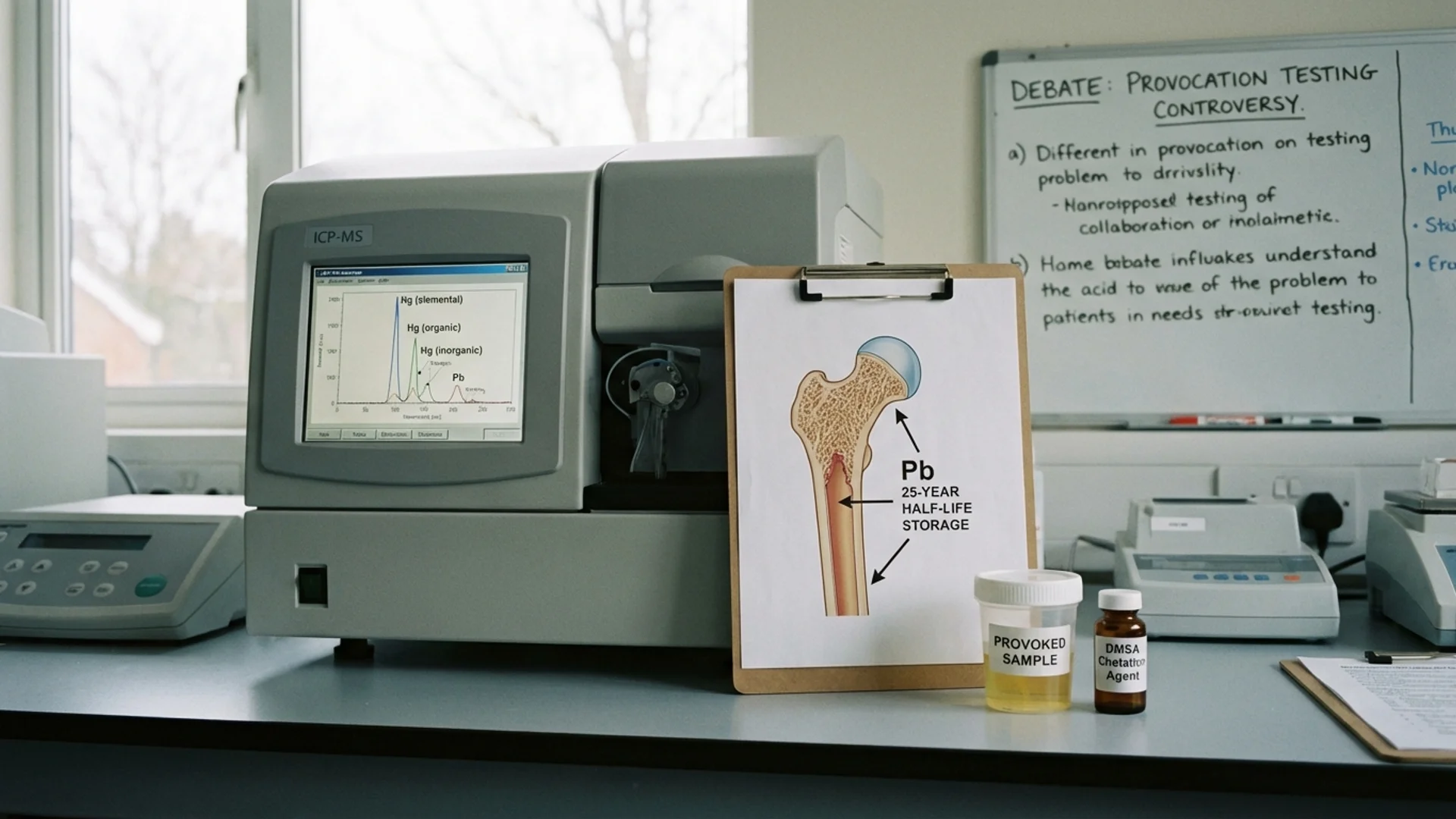
Lead targets the brain, kidneys, bone marrow, and bones (where it accumulates with a half-life of 10-30 years).
Symptom Profile
Neurological:
- Cognitive decline — particularly executive function and processing speed
- Memory impairment
- Irritability and mood changes
- In children: developmental delay, learning disabilities, behavioral problems
- Peripheral neuropathy (classically wrist drop in severe cases)
Hematological:
- Anemia — lead inhibits heme synthesis at multiple points. Microcytic, hypochromic anemia is characteristic.
- Basophilic stippling on blood smear (classic but not always present)
Renal:
- Chronic lead nephropathy — progressive renal insufficiency
- Hyperuricemia and gout (lead impairs uric acid excretion)
Other:
- Abdominal pain (“lead colic”) — cramping, constipation
- Hypertension — even at low levels, lead contributes to elevated blood pressure
- Reproductive effects — reduced fertility, increased miscarriage risk
Why It Gets Missed
Most adults with chronic low-level lead exposure (from decades of living in older homes, occupational exposure, or contaminated water) have symptoms that are attributed to aging, stress, or other conditions. The cognitive decline and hypertension of chronic lead exposure look identical to “normal” age-related changes. Unless blood lead is specifically tested, it is invisible.

Arsenic
Sources of Exposure
- Contaminated drinking water (the primary global source — affects millions in Bangladesh, India, parts of the western US)
- Rice and rice products (rice accumulates arsenic from soil)
- Pesticide residues
- Pressure-treated wood (CCA-treated lumber)
- Occupational exposure (mining, smelting)
Target Organs
Arsenic affects the skin, GI tract, peripheral nervous system, and cardiovascular system. It is also a Group 1 carcinogen.
Symptom Profile
Skin (often the first sign):
- Hyperkeratosis — thickening of skin, particularly on palms and soles
- Mee’s lines on fingernails (horizontal white lines)
- Hyperpigmentation — “raindrop” pattern on trunk
- Skin cancers with chronic exposure
Gastrointestinal (acute exposure):
- Severe diarrhea, nausea, vomiting, abdominal pain
- “Rice water stools” in acute poisoning
Neurological:
- Peripheral neuropathy — symmetric, ascending (similar to Guillain-Barre)
- Cognitive effects with chronic exposure
Cardiovascular:
- Peripheral vascular disease (“blackfoot disease” in endemic areas)
- QT prolongation
- Increased cardiovascular mortality
Carcinogenic:
- Lung, bladder, skin, liver cancers with chronic exposure
Cadmium
Sources of Exposure
- Cigarette smoking (the single largest source — cadmium is concentrated in tobacco)
- Occupational exposure (battery manufacturing, welding, pigment production)
- Contaminated food (leafy vegetables grown in contaminated soil)
- Phosphate fertilizers
Target Organs
Cadmium accumulates primarily in the kidneys (half-life: 10-30 years) and bones.
Symptom Profile
Renal:
- Proximal tubular damage (low molecular weight proteinuria — beta-2 microglobulin)
- Progressive renal insufficiency
- Fanconi syndrome in severe cases
Skeletal:
- Osteoporosis and osteomalacia — cadmium disrupts calcium and vitamin D metabolism
- “Itai-itai disease” in severe environmental exposure (painful bone disease)
Respiratory (inhalation exposure):
- Chronic bronchitis
- Emphysema
- Lung cancer (Group 1 carcinogen via inhalation)
Other:
- Fatigue
- Hypertension
- Impaired glucose metabolism
Aluminum
Sources of Exposure
- Antiperspirants (aluminum chlorohydrate)
- Antacids (aluminum hydroxide)
- Cookware
- Drinking water treatment
- Food additives
Target Organs
The brain is the primary concern. Aluminum accumulates in brain tissue with chronic exposure.
Symptom Profile
- Cognitive decline — memory impairment, processing speed reduction
- Bone disease (aluminum interferes with bone mineralization)
- Dialysis-associated encephalopathy (in dialysis patients — historical concern)
- The role in Alzheimer’s disease remains debated — aluminum deposits are found in AD brains, but a causal relationship has not been established
When to Test for Heavy Metals
Based on the symptom profiles above, I recommend heavy metal testing when:
- Neurological symptoms out of proportion to the diagnosed condition — brain fog, neuropathy, tremor, or cognitive decline that does not fully explain itself by the known diagnosis
- Treatment plateau — a patient whose Lyme or post-COVID symptoms improved partially but plateaued despite adequate treatment
- Known exposure history — dental amalgams, old housing, occupational exposure, smoking history, contaminated water
- Unexplained anemia — particularly microcytic anemia with basophilic stippling (think lead)
- Unexplained kidney dysfunction — proteinuria, declining GFR without clear cause (think cadmium, lead)
- Skin changes — hyperkeratosis, unusual pigmentation (think arsenic)
- Concurrent autoimmune symptoms — mercury can trigger autoimmunity
What I tell my patients: heavy metals do not announce themselves. Their symptoms masquerade as other conditions. The only way to know is to test. And the test you need depends on which metal you suspect.

The Evidence
What We Know (Human Data)
Each metal’s toxicity profile is well-established through decades of occupational medicine, environmental health, and clinical toxicology research:
- Mercury neurotoxicity: Established through Minamata disease, occupational studies, and dental amalgam research [1]
- Lead toxicity: One of the most studied environmental health hazards; CDC reference levels have been lowered repeatedly as low-level effects have been documented
- Arsenic carcinogenicity: Classified as Group 1 carcinogen by IARC based on extensive epidemiological evidence [2]
- Cadmium nephrotoxicity: Documented in occupational cohorts and the Itai-itai disease epidemic
What I See in Practice
In our hospital, approximately 15-20% of chronic illness patients have at least one heavy metal at concerning levels when properly tested. The most common finding is elevated urine mercury in patients with multiple dental amalgam fillings, presenting with neurological symptoms attributed entirely to their Lyme disease.
Addressing the metal burden — whether through chelation, amalgam removal (done safely by a biological dentist), or source reduction — often produces improvement in symptoms that had been resistant to infection-directed therapy alone.
Practical Application
Use this symptom-metal matching guide when deciding what to test:
| Primary Symptoms | First Metal to Test | Test Method |
|---|---|---|
| Brain fog, tremor, anxiety, neuropathy + dental amalgams | Mercury | Urine mercury (unprovoked) |
| Cognitive decline, anemia, hypertension + old home/occupational exposure | Lead | Whole blood lead |
| Skin changes, neuropathy, GI symptoms + contaminated water | Arsenic | Urine arsenic with speciation |
| Kidney dysfunction, osteoporosis + smoking history | Cadmium | Urine cadmium |
| Cognitive decline, bone disease + high antacid/antiperspirant use | Aluminum | Serum and urine aluminum |
Safety and Considerations
Testing itself is straightforward (blood draw or urine collection). The safety consideration relates to what comes after: chelation therapy carries real risks that must be weighed against the expected benefit. Not every elevated level requires chelation — source removal and natural excretion may be sufficient for mild elevations.
The Bottom Line
Heavy metal toxicity is not a single condition — it is a family of conditions, each with distinct symptoms, target organs, and mechanisms. Mercury attacks the nervous system. Lead damages the brain, blood, and kidneys. Arsenic targets skin and peripheral nerves. Cadmium accumulates in kidneys and bone. Understanding these distinct patterns guides appropriate testing and prevents the common error of attributing metal toxicity symptoms entirely to another diagnosis. When chronic illness symptoms plateau despite adequate treatment, heavy metals deserve a place in the differential diagnosis.
References
- Clarkson TW, Magos L. The Toxicology of Mercury and Its Chemical Compounds. Critical Reviews in Toxicology. 2006;36(8):609-662. PMID: 16973445.
- IARC Working Group. Arsenic, Metals, Fibres, and Dusts. IARC Monographs on the Evaluation of Carcinogenic Risks to Humans. 2012;100C.
- Jaishankar M, et al. Toxicity, mechanism and health effects of some heavy metals. Interdisciplinary Toxicology. 2014;7(2):60-72. PMC4427717.