At a Glance
| Property | Value |
|---|---|
| Evidence Level | Strong (for statin myopathy, heart failure); Moderate (for general supplementation) |
| Primary Use | Mitochondrial energy production, antioxidant defense, statin-induced depletion |
| Key Mechanism | Essential cofactor in the mitochondrial electron transport chain (Complex I-III) |
| Recommended Dose | 200-400mg daily with fat-containing meal |
| Forms | Ubiquinone (oxidized) and Ubiquinol (reduced) |
CoQ10 Ubiquinol vs Ubiquinone: The Debate Worth Settling
If you have spent any time researching CoQ10 supplements, you have encountered the marketing war between ubiquinol and ubiquinone. Ubiquinol brands claim their product is “8x better absorbed.” Ubiquinone brands counter that it has decades more research behind it. Both sides cite studies. Both sides have financial incentives.
Here is what the evidence actually shows — and what I tell my patients after years of using both forms in clinical practice.
What CoQ10 Does in Your Body
Before comparing forms, you need to understand why CoQ10 matters at all.
Coenzyme Q10 is not optional biochemistry. It is an essential component of the mitochondrial electron transport chain — the process by which your cells convert food into ATP, the energy currency of every biological process in your body. Specifically, CoQ10 shuttles electrons between Complex I, Complex II, and Complex III of the electron transport chain. Without adequate CoQ10, this process slows down. Less ATP is produced. Cells underperform.
CoQ10 also functions as a lipid-soluble antioxidant — one of the few that operates directly within cell membranes and mitochondrial membranes, protecting against lipid peroxidation. This is not a minor role. Mitochondria generate reactive oxygen species as a byproduct of normal energy production. CoQ10 is one of the primary defenses against that oxidative damage occurring right where it is produced.
Your body synthesizes CoQ10 endogenously, primarily in the liver, through a pathway that shares early steps with cholesterol synthesis — a fact that becomes critically important when we discuss statins. Production peaks around age 20-25 and declines progressively thereafter. By age 80, tissue CoQ10 levels can be 50-65% lower than peak levels [1]. This decline is one of the factors contributing to age-related mitochondrial dysfunction, a core hallmark of aging.
The Redox Cycle
Here is where the ubiquinol vs ubiquinone question begins. CoQ10 exists in two interconvertible forms:
Ubiquinone (oxidized form): This is the form that accepts electrons in the electron transport chain. When it accepts electrons, it becomes…
Ubiquinol (reduced form): This is the electron-carrying form. It is also the form that functions as an antioxidant. When it donates electrons (either in the ETC or as an antioxidant), it converts back to ubiquinone.
Your body continuously cycles between these two forms. This is not a one-way conversion — it is a dynamic equilibrium. In healthy tissues, approximately 90-95% of CoQ10 exists in the ubiquinol (reduced) form [2]. The ratio shifts toward more ubiquinone under conditions of increased oxidative stress, aging, or disease.
The Absorption Question
The marketing claims center on absorption, so let me address this directly.
What the Pharmacokinetic Data Shows
Several head-to-head pharmacokinetic studies have compared ubiquinol and ubiquinone absorption in humans:
Hosoe et al. (2007) conducted a single-dose comparison in healthy adults and found that ubiquinol produced higher plasma CoQ10 levels than ubiquinone at the same dose. The magnitude was roughly 1.5-2x, not the 8x sometimes claimed in marketing [3].
Langsjoen and Langsjoen (2014) studied patients with advanced heart failure — a population with particularly impaired CoQ10 status — and found that ubiquinol achieved significantly higher plasma levels than ubiquinone in this specific patient group [4]. This is an important distinction: the sicker the patient, the more the form seems to matter.
Miles et al. (2002) demonstrated that the delivery system (softgel with lipid carrier vs powder-filled capsule vs tablet) had a larger impact on absorption than the form of CoQ10 [5]. A well-formulated ubiquinone softgel absorbed better than a poorly formulated ubiquinol capsule.
The Nuance Matters
The absorption difference between ubiquinol and ubiquinone is real but modest in healthy individuals. It becomes more significant in three populations:
- Older adults (65+): Reduced capacity to convert ubiquinone to ubiquinol in the gut and liver
- Patients with significant oxidative stress: Advanced heart failure, chronic inflammatory conditions, post-chemotherapy
- Patients with impaired liver function: The liver performs much of the ubiquinone-to-ubiquinol conversion
For a 35-year-old healthy person taking CoQ10 for general wellness? The form probably does not matter much. For a 72-year-old heart failure patient on statins? Ubiquinol is the more rational choice.
But in both cases, the delivery system and whether you take it with fat matter more than the form.
The Evidence for Supplementation
Where the Evidence Is Strong
Statin-induced CoQ10 depletion. This is not controversial. Statins inhibit HMG-CoA reductase, the rate-limiting enzyme in cholesterol synthesis. CoQ10 synthesis shares this pathway. Statins reduce circulating CoQ10 levels by 16-54% depending on the statin, dose, and study [6]. Whether this depletion causes statin-associated muscle symptoms (SAMS) remains debated, but a 2018 meta-analysis of 12 RCTs found that CoQ10 supplementation significantly reduced statin-associated muscle pain compared to placebo [7].
In my clinical experience, the effect is dose-dependent. I typically start statin patients at 200mg daily and increase to 400mg if myalgia persists.
Heart failure. The Q-SYMBIO trial — a randomized, double-blind, placebo-controlled trial of 420 patients with chronic heart failure — found that CoQ10 (300mg/day as ubiquinone) reduced cardiovascular mortality by 43% and all-cause mortality by 42% over two years [8]. This is one of the most significant supplement trials ever conducted, yet it remains surprisingly underrecognized by mainstream cardiology.
Migraine prevention. Multiple RCTs support CoQ10 at 300-400mg daily for migraine frequency reduction. A 2021 meta-analysis confirmed a significant reduction in migraine frequency, duration, and severity [9]. The Canadian Headache Society includes CoQ10 in its prophylaxis guidelines.
Where the Evidence Is Moderate
Male fertility. Several RCTs show improved sperm parameters (motility, morphology, concentration) with CoQ10 supplementation at 200-400mg daily. The evidence is consistent enough that many fertility specialists now recommend it as part of preconception protocols [10].
Blood pressure. A Cochrane review found a modest but significant reduction in systolic blood pressure (approximately 11mmHg) with CoQ10 supplementation, though the quality of included studies was variable [11].
Periodontal disease. Both topical and systemic CoQ10 have shown benefit in reducing gingival inflammation, though the studies are small.
Where the Evidence Is Emerging
Neurodegenerative disease. Preclinical data for Parkinson’s, Alzheimer’s, and ALS is extensive and biologically plausible — mitochondrial dysfunction and cellular energy is central to all three conditions. However, large clinical trials have been disappointing. The QE3 trial in Parkinson’s disease (2,400mg/day CoQ10) showed no benefit over placebo [12]. This may reflect the difficulty of achieving adequate brain tissue concentrations with oral supplementation, the advanced stage of disease in trial participants, or genuine lack of efficacy.
Exercise performance. Some evidence for reduced oxidative damage during intense exercise, but the performance enhancement data is inconsistent. I do not recommend CoQ10 primarily for athletic performance.
What I See in Practice
In our clinical experience treating patients with chronic fatigue, post-infectious syndromes, and mitochondrial dysfunction, CoQ10 is a foundational supplement — not because it is a standalone solution, but because mitochondrial energy production is compromised in virtually all of these conditions. CoQ10 addresses one rate-limiting factor in that energy production. Pairing it with alpha-lipoic acid — which protects the matrix enzyme complexes rather than the electron transport chain — covers complementary mitochondrial compartments and provides additional glutathione-recycling support.
The patients who respond most noticeably are those with documented low CoQ10 levels (yes, this can be measured — serum CoQ10 testing is available) and those on statins who present with fatigue and myalgia. The response typically takes 4-8 weeks to become apparent. This is not a supplement that works overnight.
Practical Application: How to Supplement
Dosing
| Indication | Dose | Form Preference |
|---|---|---|
| General wellness / prevention | 100-200mg daily | Either form |
| Statin users | 200-400mg daily | Ubiquinol preferred |
| Heart failure | 300mg daily (per Q-SYMBIO protocol) | Either; ubiquinol if severe |
| Migraine prevention | 300-400mg daily | Either form |
| Fertility support | 200-400mg daily | Either form |
| Chronic fatigue / mitochondrial support | 300-600mg daily | Ubiquinol preferred |
How to Take It
With fat. CoQ10 is lipid-soluble. Taking it with a fat-containing meal increases absorption by 3-5x compared to taking it on an empty stomach [13]. This is probably the single most important practical recommendation — more important than ubiquinol vs ubiquinone.
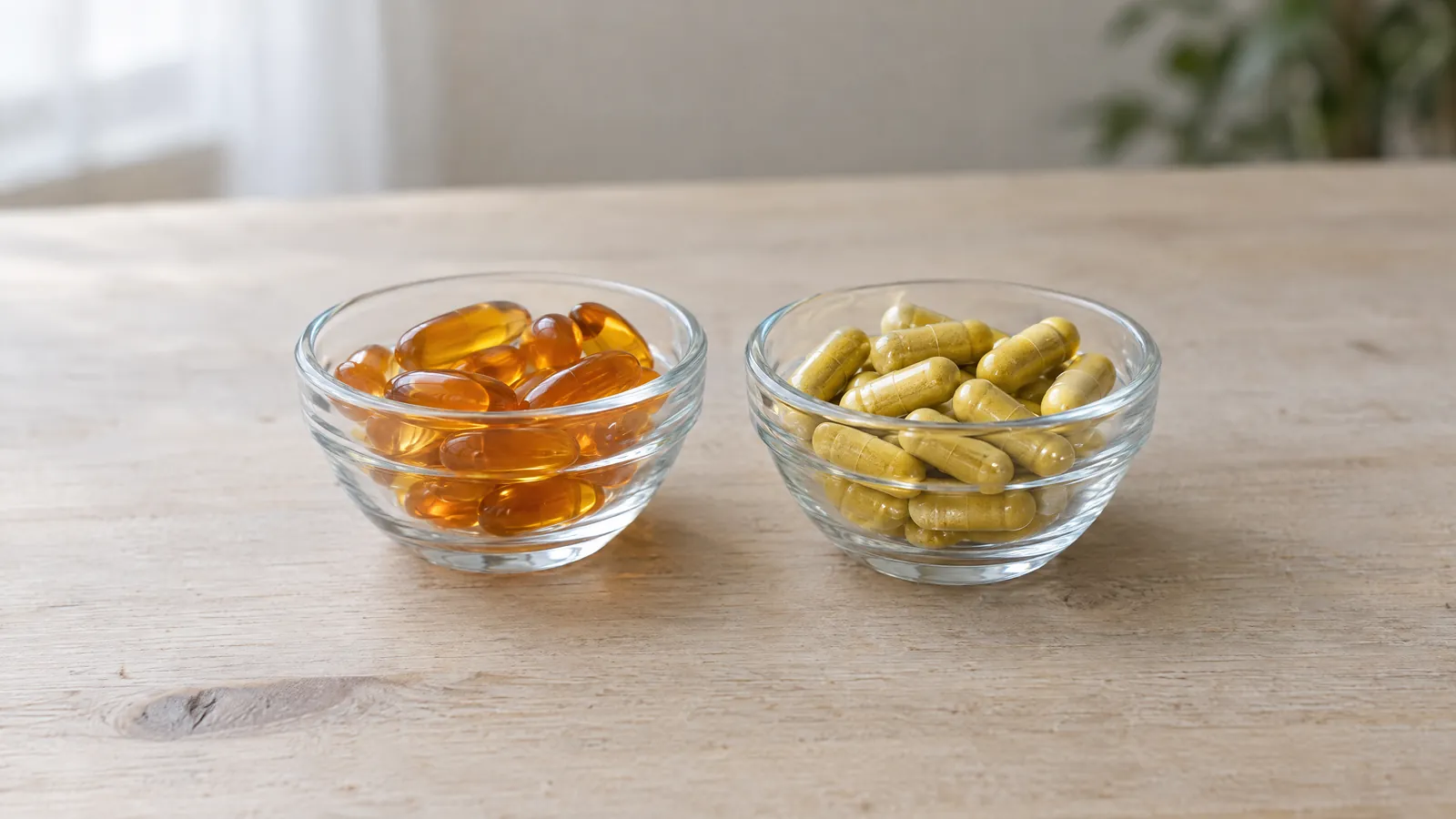
Softgel formulations. Solubilized softgels (where CoQ10 is dissolved in a lipid carrier within the capsule) absorb significantly better than powder-filled capsules or tablets. If you are taking a dry powder capsule, you are already at a disadvantage regardless of form.
Split dosing. For doses above 200mg, splitting into two doses (morning and evening, both with meals) may improve total absorption compared to a single large dose.
Consistency. CoQ10 has a relatively long half-life (approximately 33 hours), and steady-state levels take 2-3 weeks to establish. Consistent daily dosing matters more than precise timing.

What to Look for in a Product
The quality variation in CoQ10 supplements is staggering, and it makes me angry. I have seen products that contain less than 30% of their labeled dose. I have seen products with degraded CoQ10 that has oxidized because of poor manufacturing or storage.
What to verify:
- Third-party testing. Look for NSF, USP, or ConsumerLab verification. If the brand does not submit to independent testing, ask why.
- Kaneka CoQ10. Kaneka is the dominant raw material supplier for quality CoQ10 (both ubiquinone and ubiquinol). Many quality brands use Kaneka raw material and disclose this on the label.
- Softgel formulation. As discussed above, this is the most reliable delivery system.
- Proper storage. CoQ10, particularly ubiquinol, is sensitive to heat, light, and oxygen. Products should be in opaque containers and stored at controlled temperatures.
- No excessive claims. Any CoQ10 product that claims to “reverse aging” or “cure heart disease” is signaling that the company prioritizes marketing over science.
Safety and Considerations
CoQ10 has an excellent safety profile. Doses up to 1,200mg daily have been used in clinical trials without serious adverse effects [14].
Common side effects (uncommon even at high doses):
- Mild GI upset (nausea, diarrhea): usually resolves with dose adjustment or taking with food
- Insomnia if taken late in the day (CoQ10 can be mildly energizing)
Drug interactions:
- Warfarin: CoQ10 has structural similarity to vitamin K and may reduce warfarin efficacy. Monitor INR if adding CoQ10 to warfarin therapy. This interaction is well-documented but clinically modest in most cases.
- Antihypertensives: CoQ10 may have additive blood pressure-lowering effects. Monitor accordingly.
- Chemotherapy: The antioxidant properties of CoQ10 have raised theoretical concerns about interference with oxidative chemotherapy agents. Discuss with your oncologist before supplementing during active treatment.
Pregnancy and lactation: Limited safety data. The theoretical risk is low given CoQ10 is an endogenous molecule, but large-scale safety studies in pregnancy do not exist.
The Bottom Line
The ubiquinol vs ubiquinone debate generates far more heat than it deserves. Both forms work. Ubiquinol has a modest absorption advantage that becomes clinically meaningful in older adults, sicker patients, and those with impaired redox capacity. For everyone else, the delivery system, the dose, and taking it with fat matter more than which form you choose.
Pick a quality product from a brand that submits to third-party testing, take it with your fattiest meal of the day, be consistent, and give it 6-8 weeks before judging efficacy. The evidence is strong enough — particularly for statin users, heart failure patients, and migraine sufferers — that CoQ10 supplementation is one of the more defensible recommendations in the supplement space.
References
- Kalén A, Appelkvist EL, Dallner G. Age-related changes in the lipid compositions of rat and human tissues. Lipids. 1989;24(7):579-584. PMID: 2779364
- Aberg F, Appelkvist EL, Dallner G, Ernster L. Distribution and redox state of ubiquinones in rat and human tissues. Arch Biochem Biophys. 1992;295(2):230-234. PMID: 1586151
- Hosoe K, Kitano M, Kishida H, et al. Study on safety and bioavailability of ubiquinol (Kaneka QH) after single and 4-week multiple oral administration to healthy volunteers. Regul Toxicol Pharmacol. 2007;47(1):19-28. PMID: 16919858
- Langsjoen PH, Langsjoen AM. Comparison study of plasma coenzyme Q10 levels in healthy subjects supplemented with ubiquinol versus ubiquinone. Clin Pharmacol Drug Dev. 2014;3(1):13-17. PMID: 27128225
- Miles MV, Horn P, Miles L, et al. Bioequivalence of coenzyme Q10 from over-the-counter supplements. Nutr Res. 2002;22(8):919-929.
- Banach M, Serban C, Ursoniu S, et al. Statin therapy and plasma coenzyme Q10 concentrations — A systematic review and meta-analysis of placebo-controlled trials. Pharmacol Res. 2015;99:329-336. PMID: 26192349
- Qu H, Guo M, Chai H, et al. Effects of Coenzyme Q10 on Statin-Induced Myopathy: An Updated Meta-Analysis of Randomized Controlled Trials. J Am Heart Assoc. 2018;7(19):e009835. PMID: 30371340
- Mortensen SA, Rosenfeldt F, Kumar A, et al. The effect of coenzyme Q10 on morbidity and mortality in chronic heart failure: results from Q-SYMBIO — a randomized double-blind trial. JACC Heart Fail. 2014;2(6):641-649. PMID: 25282031
- Sazali S, Badrin S, Norhayati MN, Idris NS. Coenzyme Q10 supplementation for prophylaxis in adult patients with migraine — a meta-analysis. BMJ Open. 2021;11(1):e039358. PMID: 33402403
- Lafuente R, González-Comadrán M, Solà I, et al. Coenzyme Q10 and male infertility: a meta-analysis. J Assist Reprod Genet. 2013;30(9):1147-1156. PMID: 23912751
- Ho MJ, Li EC, Wright JM. Blood pressure lowering efficacy of coenzyme Q10 for primary hypertension. Cochrane Database Syst Rev. 2016;3:CD007435. PMID: 26935713
- Beal MF, Oakes D, Shoulson I, et al. A randomized clinical trial of high-dosage coenzyme Q10 in early Parkinson disease: no evidence of benefit. JAMA Neurol. 2014;71(5):543-552. PMID: 24664227
- Bhagavan HN, Chopra RK. Coenzyme Q10: absorption, tissue uptake, metabolism and pharmacokinetics. Free Radic Res. 2006;40(5):445-453. PMID: 16551570
- Hathcock JN, Shao A. Risk assessment for coenzyme Q10 (Ubiquinone). Regul Toxicol Pharmacol. 2006;45(3):282-288. PMID: 16814438
This content is educational and does not constitute medical advice. Supplement protocols should be discussed with a qualified physician, particularly if you are taking prescription medications.