“Boost your immune system” is a phrase I avoid because it is imprecise and misleading. The immune system is not a volume dial. It is a sophisticated regulatory network where the goal is appropriate, well-calibrated responses — not simply more activity.
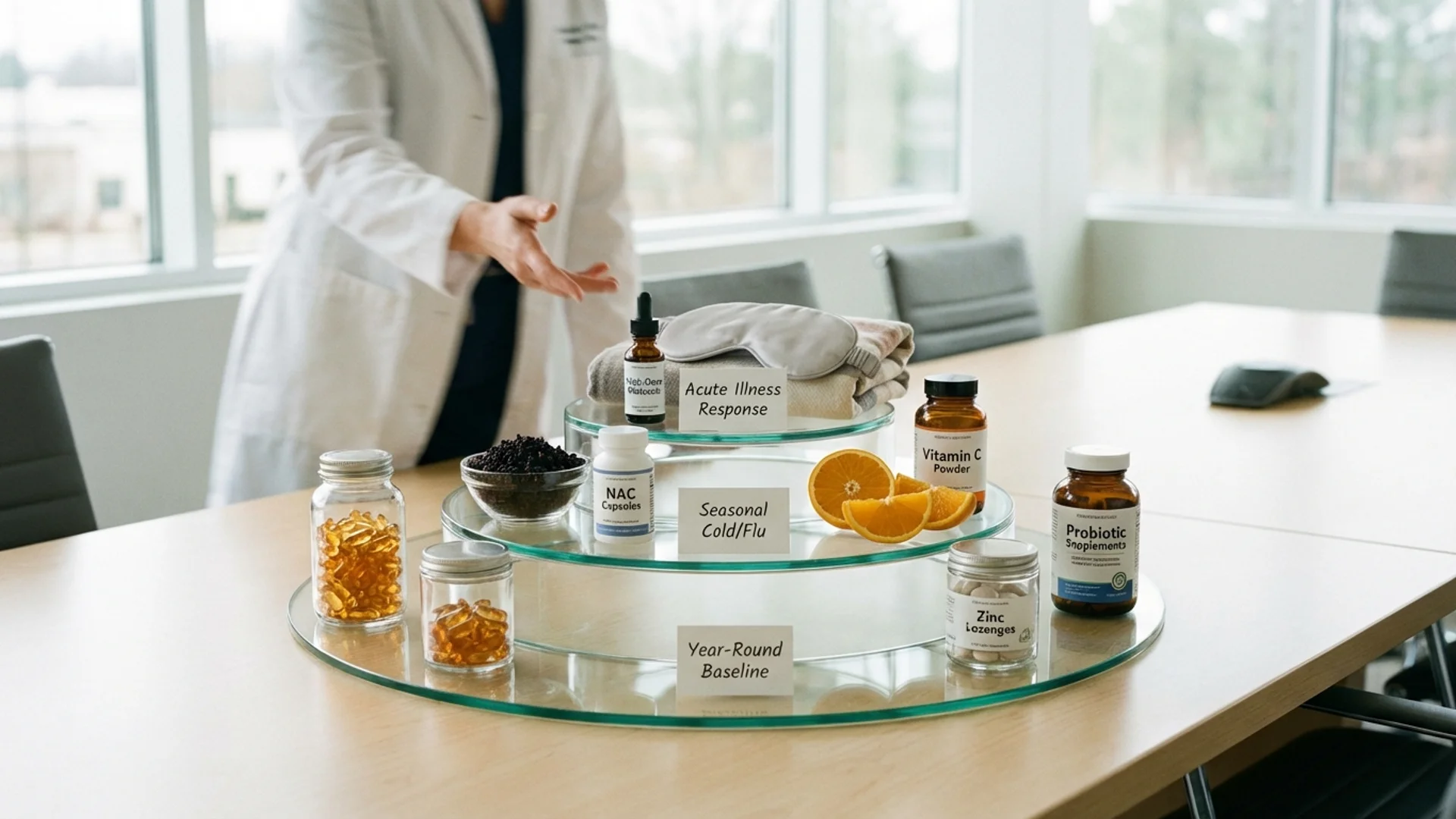
That said, there are evidence-based interventions that support immune competence, reduce the frequency and severity of infections, and help the immune system respond effectively when challenged. This protocol organizes those interventions into three tiers based on the level of immune support needed.
Tier 1: Baseline Maintenance (Year-Round)
These are foundational interventions for ongoing immune competence. They cost relatively little, have strong evidence, and carry minimal risk.

Lifestyle Foundations
Intervention Target Evidence Level
Exercise 150 min/week moderate or 75 min/week vigorous Strong (RCTs, systematic reviews)
Stress management Daily practice (meditation, breathwork, nature) Strong (controlled studies for immune effects)
Dietary pattern Mediterranean-style, 30+ plants/week Strong (RCTs, epidemiological data)
Alcohol Minimize or eliminate Strong (human data for immune impairment)
Baseline Supplements
Supplement Dose Evidence Level Rationale
Zinc 15 mg daily Strong (RCTs) Immune cell function. Over 100 immune-related enzymes require zinc
Vitamin C 500-1,000 mg daily Strong (RCTs, meta-analyses) Immune cell support, antioxidant
Probiotics 25-50 billion CFU daily Moderate (strain-specific RCTs) Gut-immune axis maintenance
Tier 2: Seasonal Intensification (Cold/Flu Season, Pre-Travel)
During periods of increased immune challenge — winter respiratory season, before travel, during high-stress periods — intensify the baseline protocol.
Additional Supplements
Supplement Dose Evidence Level Rationale
Medicinal mushrooms (turkey tail, reishi, or chaga) Per product dosing Moderate (controlled studies) Beta-glucan immune activation, NK cell support
Selenium 200 mcg daily Strong (RCTs) NK cell function, selenoprotein synthesis
NAC 600 mg twice daily Moderate (RCTs) Glutathione support, mucosal defense; an Italian RCT showed reduced influenza symptom severity
Vitamin C increase 2,000 mg daily (divided) Strong (meta-analyses) Dose-dependent immune support during high-challenge periods
Lifestyle Intensification
- Sleep discipline becomes more critical during high-challenge periods. Even one night of short sleep during cold season significantly increases infection risk.
- Cold exposure (cold showers) — the Buijze et al. RCT demonstrated 29% fewer sick days with routine cold showers.
- Sauna use — regular sauna use (2-3 times per week) reduces the incidence of common cold. Evidence level: controlled studies (Ernst et al., Annals of Medicine).
Tier 3: Acute Onset Protocol (First Signs of Illness)
At the first sign of a cold or respiratory infection — sore throat, nasal congestion, fatigue, body aches — the window for intervention is narrow. The first 24-48 hours are when interventions are most effective.
Immediate Response
Supplement Dose Duration Evidence Level
Vitamin C 4,000-6,000 mg daily (divided into hourly doses) 3-5 days Moderate (meta-analyses show modest duration reduction at higher doses)
Elderberry 1,000-2,000 mg daily Until symptom resolution Moderate (RCTs)
Raw honey (Manuka preferred) 1-2 teaspoons, 3-4 times daily Until sore throat resolves Moderate (controlled studies show superiority to some cough suppressants)
Garlic (fresh, crushed) 2-3 raw cloves daily or aged garlic extract 2,400 mg 5-7 days Moderate (controlled studies for allicin-mediated immune activation)
Supportive Measures
- Rest. This is not a suggestion. The immune system requires energy to mount an effective response. Physical activity during acute illness diverts resources and can prolong recovery.
- Hydration. Warm fluids (bone broth, herbal tea) support mucosal hydration and immune function.
- Throat care. Gargling with warm salt water (1/2 teaspoon salt in 250 mL warm water) reduces viral load in the oropharynx. Evidence level: controlled studies (Satomura et al., Am J Prev Med).
- Nasal irrigation. Saline nasal rinse reduces viral load and symptom duration. Evidence level: RCTs.
Zinc Lozenge Specifics
The evidence for zinc in acute cold treatment is specific to the delivery method. Zinc must be released slowly in the oral cavity to exert local antiviral effects. The Cochrane review (Singh & Das, 2013) found that zinc lozenges started within 24 hours of symptom onset reduced cold duration by approximately one-third.
Important details:
- The zinc must be in a bioavailable form (zinc acetate or zinc gluconate — not zinc citrate, which chelates zinc and prevents release)
- Lozenges should be dissolved slowly in the mouth, not chewed or swallowed
- Doses above 75 mg elemental zinc per day may cause nausea
- Effectiveness diminishes significantly if started more than 48 hours after symptom onset
What Does Not Work
In the interest of honesty, several popular immune interventions have weak or negative evidence:
- Echinacea — the evidence is mixed at best. Some studies show modest benefit; others show none. The quality of echinacea products varies enormously, which complicates interpretation. I do not include it in my protocols because better-supported alternatives exist.
- Colloidal silver — no credible evidence for efficacy; potential for toxicity (argyria). I do not recommend it.
- High-dose vitamin A for adults — while vitamin A supports immune function, high-dose supplementation carries toxicity risk and is not supported by RCT evidence for infection prevention in vitamin A-replete adults. (Vitamin A supplementation in deficient populations is a different story — the evidence there is strong.)
Disclaimer: This protocol is provided for educational purposes and reflects one physician’s clinical approach. It is not a substitute for individualized medical care. If symptoms are severe, persistent, or include high fever, chest pain, or difficulty breathing, seek medical attention immediately.