Key Takeaways:
- Chronic low-grade inflammation drives most chronic diseases
- Diet and lifestyle changes produce the largest anti-inflammatory effect
- Targeted supplements can accelerate improvement
- Testing inflammatory markers provides objective feedback
Understanding Chronic Inflammation
Acute inflammation is protective. Chronic inflammation is destructive. The difference is duration and context. When inflammatory pathways remain activated for weeks, months, or years, they damage the tissues they were designed to protect.
Common drivers: processed food, poor sleep, chronic stress, gut dysbiosis, hidden infections, environmental toxins, excess visceral fat.
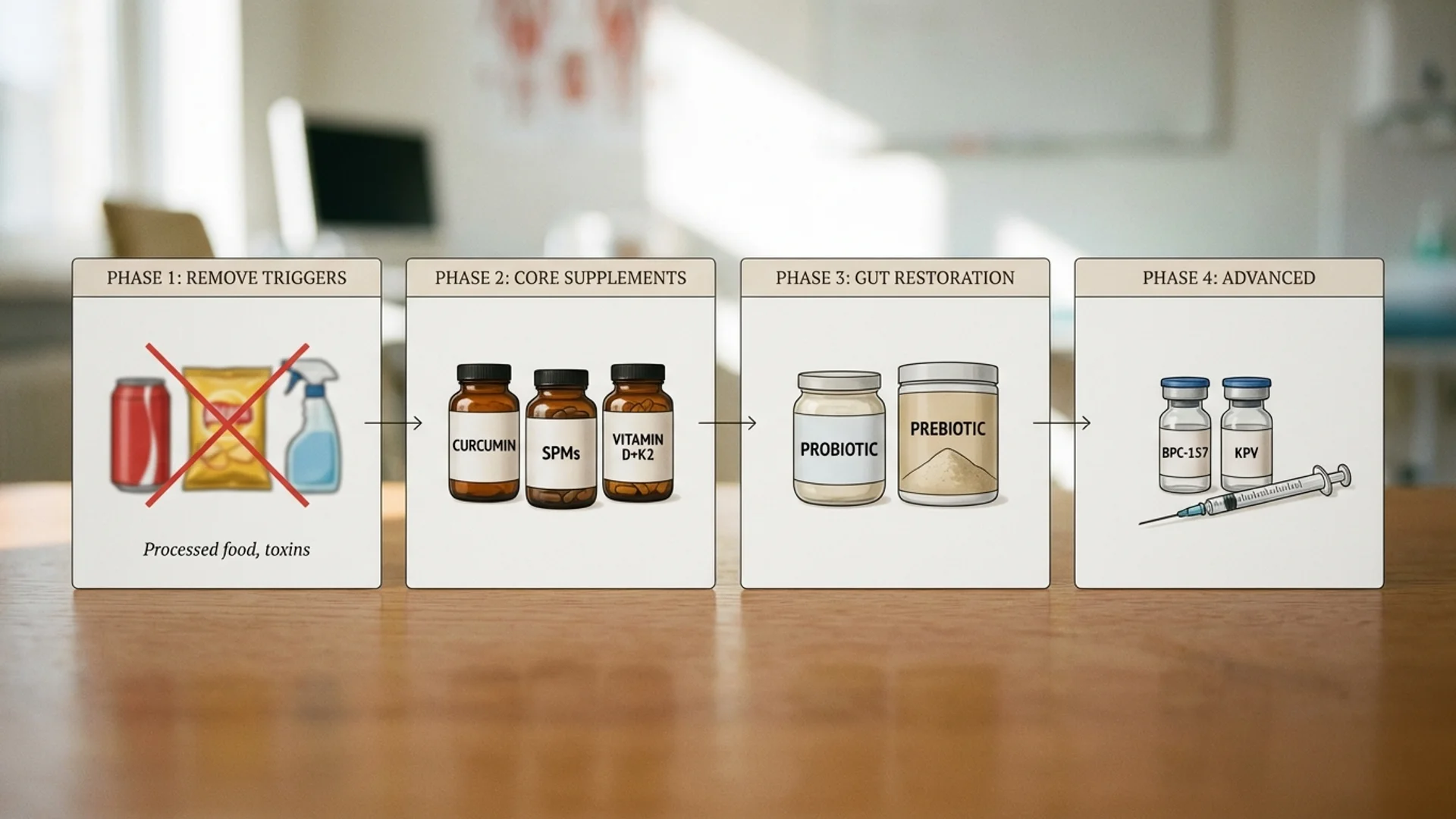
Phase 1: Remove Inflammatory Triggers (Weeks 1-2)
Dietary changes:
- Eliminate: refined sugar, seed oils (soybean, canola, corn, sunflower), ultra-processed foods, excessive alcohol
- Reduce: gluten and dairy for 2 weeks (reintroduce and observe)
- Increase: fatty fish (3x/week), olive oil, colorful vegetables, berries, turmeric, ginger
Lifestyle:
- Sleep: prioritize 7-9 hours (sleep deprivation raises IL-6 and CRP)
- Movement: 30 minutes daily (walking counts — excessive exercise increases inflammation)
- Stress: daily practice (meditation, breathwork, cold exposure)
Phase 2: Core Anti-Inflammatory Supplements (Weeks 2-8)
Supplement Dose Evidence Mechanism
Curcumin (with piperine) 1g daily Strong NF-kB inhibition, COX-2 suppression
SPMs (Specialized Pro-Resolving Mediators) Per label Moderate Resolution of inflammation, not just suppression
Vitamin D3 + K2 4000-5000 IU D3 + 200mcg K2 Strong Immune modulation, T-regulatory cell support
Magnesium Glycinate 400mg daily Strong Reduces CRP, supports hundreds of enzymatic reactions
Phase 3: Gut Restoration (Weeks 3-6)
Gut permeability is a primary driver of systemic inflammation:
- L-Glutamine (5g daily) — intestinal barrier repair
- Zinc Carnosine (75mg daily) — mucosal healing
- Probiotics (multi-strain, 50B+ CFU) — microbiome diversity
- Bone broth or collagen (daily) — glycine, proline for gut lining
Phase 4: Advanced Support (Physician-Supervised)
- BPC-157 — anti-inflammatory peptide, gut healing (see peptides section)
- KPV — NF-kB inhibition, gut-specific anti-inflammatory
- Ozone therapy — immune modulation, oxidative stress management
- H.E.L.P. Apheresis — removal of inflammatory proteins from blood (for severe cases)
Testing: Track Your Progress
Baseline and 8-week retest:
- hs-CRP — general inflammation marker (target 8% (most people are 3-5%)
- Vitamin D (25-OH) — target 50-80 ng/mL
- Fasting insulin — metabolic inflammation marker (target < 5 uIU/mL)
Clinical Perspective
Inflammation is not the enemy — uncontrolled inflammation is. I see patients who take every anti-inflammatory supplement available but still eat poorly, sleep five hours, and carry 30 pounds of visceral fat. The supplements cannot compensate for a pro-inflammatory lifestyle. Fix the foundations first, then layer in targeted support. That is the sequence that actually works.
Related Reading
- Chronic Inflammation: The Root of Disease
- The Gut-Immune Axis
- 30-Day Gut Reset Protocol
- KPV: Anti-Inflammatory Peptide
This protocol is for educational purposes only and does not constitute medical advice.