
The most common question I receive about Selank is deceptively simple: how much should I take, and for how long? The answer requires understanding that Selank dosing is derived almost entirely from Russian clinical protocols and manufacturer guidance, not from dose-finding studies published in Western peer-reviewed journals. This creates an unusual situation where we have an approved medication dosing framework in one country, but limited independent pharmacokinetic data by international standards.
Let me be direct about what we know and what we are extrapolating.
At a Glance
| Property | Value |
|---|---|
| Evidence Level | Moderate (Russian clinical data); Limited (Western replication) |
| Standard Dose | 200-400 mcg intranasally, 2-3x daily |
| Cycle Length | 14-21 days on, 7-14 days off |
| Onset | Minutes (anxiolytic); days (cognitive) |
| Route | Intranasal (preferred) |
| Dependence Risk | None documented |
Selank Dosage: What the Protocols Actually Say
If you are searching for Selank dosing information, you have probably encountered a range of numbers with little explanation of where they come from. Here is what the evidence shows.
The Russian Clinical Standard
Selank was developed at the Institute of Molecular Genetics of the Russian Academy of Sciences and is manufactured as a 0.15% nasal spray solution under the brand name Selanx. The approved clinical dosing is:
- Concentration: 0.15% solution (1.5 mg/mL)
- Dose per spray: Approximately 200 mcg per actuation
- Frequency: 2-3 sprays per nostril, 2-3 times daily
- Total daily dose: Approximately 400-900 mcg
- Course duration: 14 days (standard), up to 21 days
- Courses per year: 2-3, separated by rest periods
This dosing framework comes from the clinical trials that led to Selank’s approval in Russia in 2009 for generalized anxiety disorder and neurasthenia. The trials used standardized psychometric instruments (the Hamilton Anxiety Scale, Spielberger State-Trait Anxiety Inventory) and demonstrated anxiolytic effects comparable to medazepam, a benzodiazepine, without sedation or dependence (Seredenin et al., 2009).
Pharmacokinetics: Why Intranasal Works
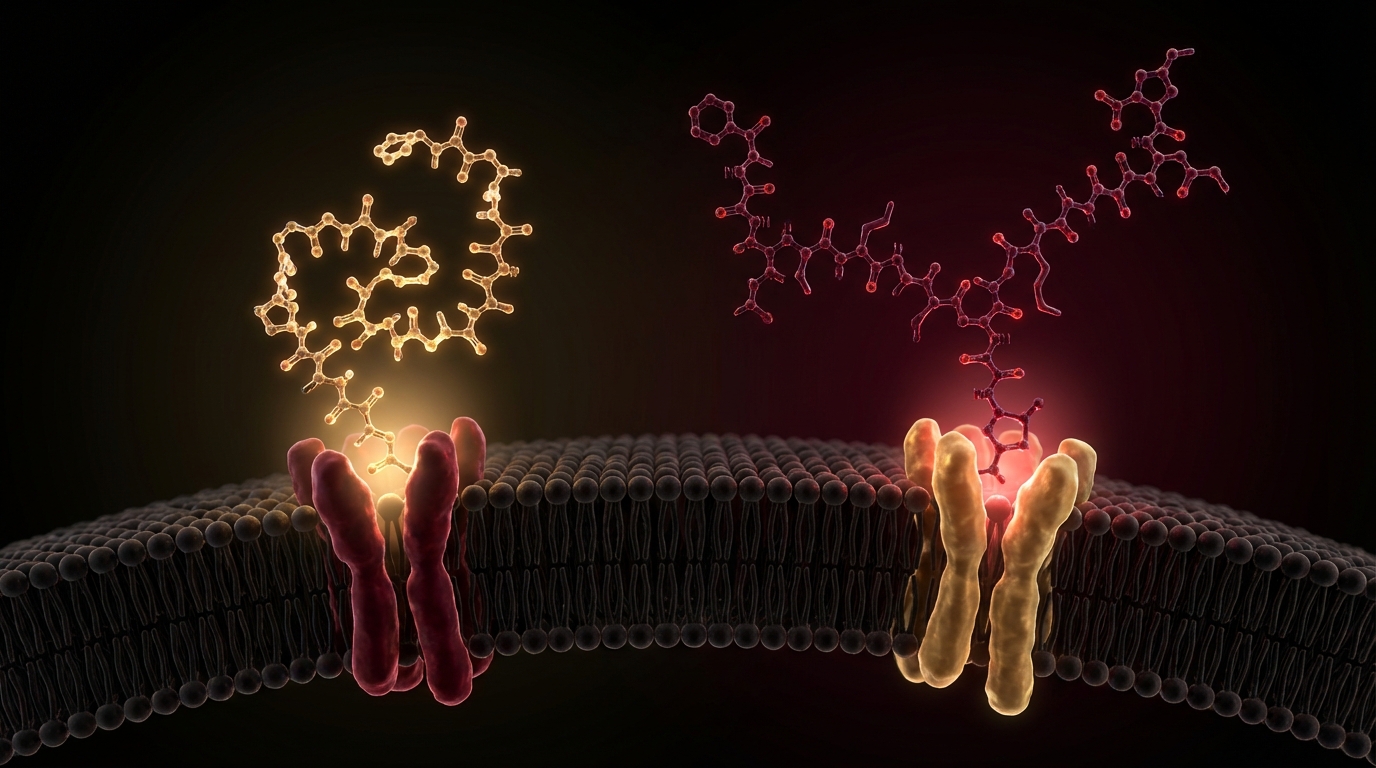
Selank is a heptapeptide (Thr-Lys-Pro-Arg-Pro-Gly-Pro) based on the endogenous immunomodulatory peptide tuftsin, with an added Pro-Gly-Pro sequence that dramatically increases metabolic stability. The intranasal route is preferred for several reasons:
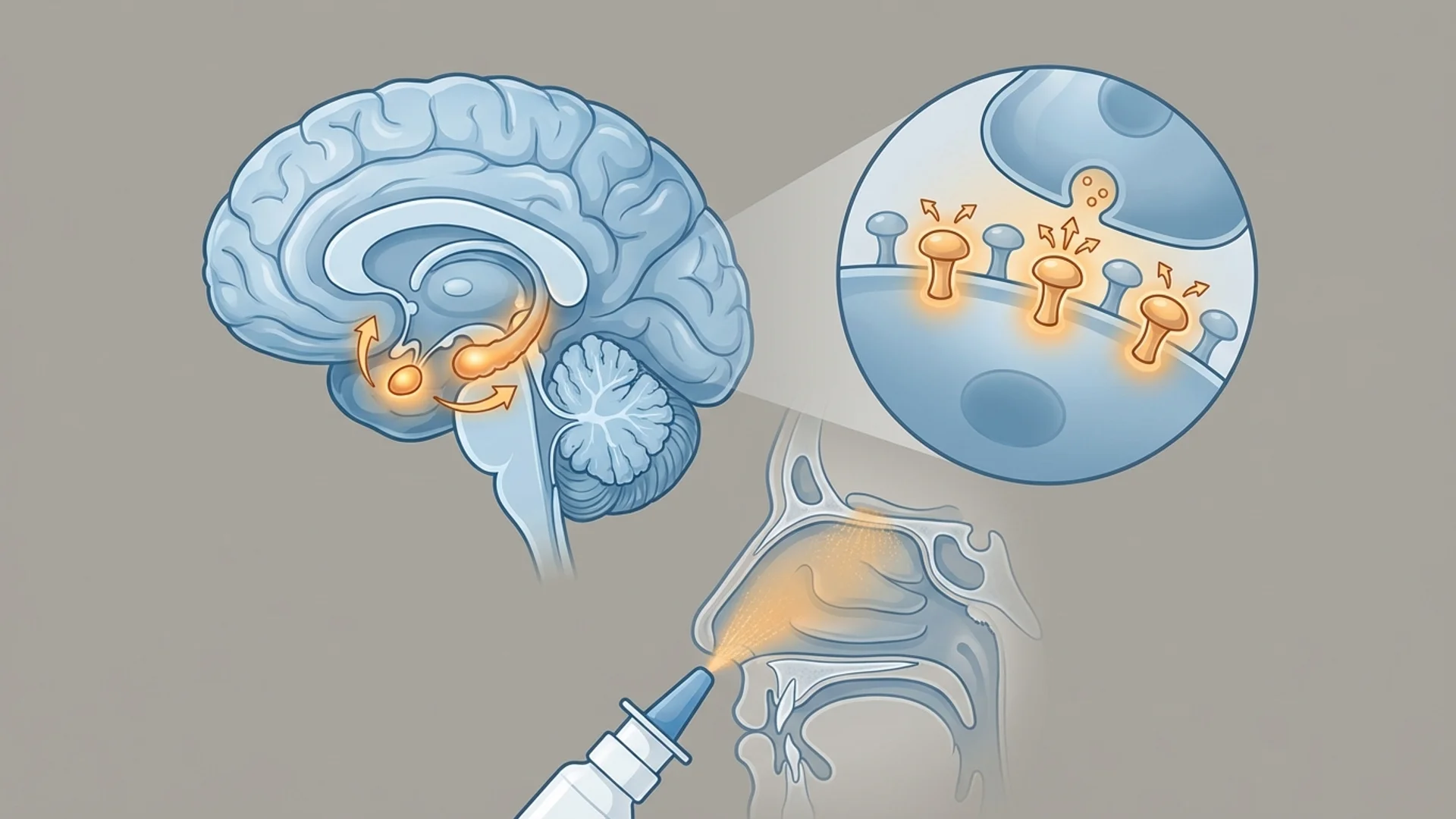
Rapid absorption. Intranasal peptides bypass first-pass hepatic metabolism and access the CNS through the olfactory and trigeminal nerve pathways. Selank reaches detectable brain concentrations within minutes of nasal administration.
Improved bioavailability. Oral peptides are degraded by gastrointestinal proteases. Selank’s proline-rich sequence provides some protease resistance, but nasal delivery circumvents the problem entirely.
Practical compliance. A nasal spray is simpler than subcutaneous injection, which matters for a peptide taken multiple times daily over weeks.
The plasma half-life of Selank is short — estimates range from several minutes to approximately 30 minutes — which is why multiple daily administrations are required. However, downstream effects on gene expression (particularly BDNF upregulation and enkephalin metabolism) persist beyond the circulating half-life, which is why cognitive effects build over the course of treatment rather than appearing acutely.
The Evidence for Current Dosing
What We Know (Human Data)
The Russian clinical trials provide the strongest human dosing data. Key findings at the 200-400 mcg per dose range:
Anxiolytic efficacy. In a randomized, double-blind trial comparing Selank nasal spray to medazepam in patients with generalized anxiety disorder, Selank at the approved dose showed comparable anxiolytic efficacy on the Hamilton Anxiety Scale. Critically, Selank did not produce the sedation, cognitive impairment, or dependence associated with benzodiazepine therapy (Seredenin et al., 2009).
Cognitive effects. A separate trial in patients with anxiety-related cognitive impairment showed improvements in memory and attention metrics over a 14-day course. These effects were more pronounced in the second week, suggesting a cumulative mechanism rather than acute pharmacological action (Kozlovskii & Danchev, 2003).
Safety. Across published trials, no serious adverse events, physical dependence, tolerance, or withdrawal symptoms were reported at the approved dose range. The most commonly reported side effect was mild nasal irritation.
The limitation I must be transparent about: these trials were conducted primarily in Russia, published largely in Russian-language journals, and have not been independently replicated by Western research groups. The methodology appears sound from what has been translated and summarized in English-language reviews, but the absence of independent replication means we are relying heavily on a single research ecosystem.
What We See in the Lab (Preclinical)
Animal studies provide dose-response data that contextualizes the human protocols:
- In rodent models, Selank at doses equivalent to the human clinical range (adjusted for body surface area) modulated BDNF expression in the hippocampus, with effects peaking after 5-7 days of administration
- The anxiolytic effect in elevated plus-maze testing showed a dose-response relationship, with efficacy plateauing above a certain threshold rather than continuing to increase linearly
- Selank influenced serotonin metabolism, specifically the balance between serotonin and its metabolite 5-HIAA, in a dose-dependent manner (Narkevich et al., 2008)
What I See in Practice
In my clinical experience, Selank at the lower end of the dosing range (200 mcg twice daily) is sufficient for most patients seeking anxiolytic effects. Patients consistently report a calming effect without sedation — a “clarity under stress” quality that distinguishes it from benzodiazepines and even from adaptogenic herbs.
The patients who seem to benefit most from the higher end of the dosing range (400 mcg three times daily) are those with comorbid anxiety and cognitive complaints — patients whose anxiety is not just emotional but is actively interfering with concentration, memory, and executive function. In these patients, the cognitive benefits at higher doses appear more pronounced.
What I tell my patients: start at the lower dose. If you notice anxiolytic effects but want more cognitive support, titrate up in the second week. There is no evidence that higher doses produce proportionally better results, and the dose-response curve in animal data suggests a ceiling effect.
Practical Dosing Protocol
Standard Anxiolytic Protocol
| Parameter | Recommendation |
|---|---|
| Starting dose | 200 mcg per nostril, twice daily (morning and afternoon) |
| Maximum dose | 400 mcg per nostril, three times daily |
| Cycle length | 14 days (can extend to 21 days) |
| Rest period | 7-14 days between cycles |
| Cycles per year | 2-3 recommended |
Timing Considerations
- Morning dose: Take within 30 minutes of waking. Selank does not cause sedation, so morning dosing supports both anxiolytic and cognitive function throughout the day.
- Afternoon dose: Take between 1-3 PM. This covers the natural cortisol dip and the period when anxiety-driven cognitive impairment often peaks.
- Third dose (if used): Take in the late afternoon, ideally before 5 PM. While Selank does not disrupt sleep, late-evening dosing is unnecessary given the short half-life and the fact that sleep is not the target.
Administration Technique
The effectiveness of intranasal peptides depends on proper administration:
- Clear nasal passages before administration
- Tilt head slightly forward (not back)
- Insert spray tip just inside the nostril, angling slightly toward the outer wall
- Actuate while gently inhaling through the nose
- Avoid sniffing forcefully — this drives the solution past the absorptive mucosa into the pharynx
- Wait 30-60 seconds before administering to the other nostril
Cycling Rationale
The nuance matters here. Selank does not produce tolerance in the traditional pharmacological sense — there is no receptor downregulation or tachyphylaxis documented in the literature. The recommendation to cycle is based on:
- Standard neuropeptide practice. Most peptide therapies are administered in courses rather than continuously, based on the principle that intermittent stimulation may maintain responsiveness better than continuous exposure.
- The original clinical trial design. The trials used 14-day courses, so our efficacy data applies to this duration. Longer continuous use has not been studied systematically.
- Clinical observation. Some patients report that Selank’s anxiolytic effects are most pronounced in the first 10-14 days of each course, suggesting that periodic breaks may optimize the response.
Stacking Considerations
Selank is frequently discussed in the context of “stacking” with other nootropic peptides, particularly Semax. Here is what the evidence supports:
Selank + Semax. The most common combination. Selank provides anxiolytic and GABAergic modulation; Semax provides dopaminergic and nootropic stimulation. In practice, patients who combine these often report the cognitive enhancement of Semax without the occasional overstimulation or anxiety that Semax can produce in sensitive individuals. There are no published interaction studies, but the mechanisms are complementary rather than overlapping. For variant-specific dosing of Semax — including the NA-Semax and NA-Semax Amidate forms that are commonly stacked with Selank — see the Semax Dosage and Nasal Protocol guide.
Selank + adaptogens. Combination with ashwagandha for stress and adrenal support or rhodiola has no published data, but the mechanisms do not conflict. In clinical observation, some patients find the combination provides more sustained anxiolytic effects than either alone.
Selank + benzodiazepines. This is where caution is warranted. Selank modulates GABAergic transmission, and combining it with direct GABA receptor agonists (benzodiazepines) has not been studied for safety. I do not recommend this combination without physician oversight, particularly during benzodiazepine tapering — which is ironically one of the situations where Selank could theoretically be most useful.
Safety and Considerations
Selank has a remarkably clean safety profile across all published data:
- No dependence. Unlike benzodiazepines, Selank does not produce physical dependence or withdrawal symptoms upon discontinuation.
- No sedation. Cognitive function is preserved or improved, not impaired.
- No tolerance. Efficacy does not appear to diminish within standard 14-21 day courses.
- Minimal side effects. Nasal irritation and mild headache are the most commonly reported adverse effects.
Contraindications and cautions:
- Pregnancy and lactation (no safety data)
- Active nasal infection or significant nasal inflammation (impairs absorption)
- Concomitant use of immunosuppressants (Selank has immunomodulatory properties via its tuftsin origin)
- Patients with autoimmune mechanismse conditions should consult their physician, as immune modulation strategies could theoretically influence disease activity
The Bottom Line
Selank dosing is straightforward: 200-400 mcg intranasally, 2-3 times daily, for 14-21 day courses. The evidence supporting this protocol is moderate — it is based on approved clinical use in Russia and consistent preclinical data, but it lacks independent Western replication. The safety profile is excellent, with no dependence, tolerance, or significant adverse effects documented. Start at the lower dose, assess response over the first week, and titrate based on whether anxiolytic effects alone are sufficient or cognitive support is also desired.
This is what the research actually says — not a miracle anxiolytic, but a well-tolerated peptide with a specific niche in anxiety management that does not compromise cognitive function.
Back to Selank Overview | All Peptide Articles
References
- Seredenin SB, Kozlovskaia MM, Blednov IuA, et al. “Anxiolytic action of selank.” Zh Vyssh Nerv Deiat Im I P Pavlova. 2009;59(1):100-107. PMID: 19340054.
- Kozlovskii II, Danchev ND. “Optimizing effect of selank on the disturbances of the cognitive function caused by the neurotoxin 192 IgG-saporin.” Eksp Klin Farmakol. 2003;66(5):12-15. PMID: 14628570.
- Narkevich VB, Kudrin VS, Klodt PM, et al. “Effects of Selank on serotonin metabolism in the rat brain.” Bull Exp Biol Med. 2008;145(6):665-667. DOI: 10.1007/s10517-008-0181-0.
- Uchakina ON, Uchakin PN, Miasoedov NF, et al. “Immunomodulatory effects of selank in patients with anxiety-asthenic disorders.” Zh Nevrol Psikhiatr Im S S Korsakova. 2008;108(5):71-75.
Disclaimer: This article is provided for educational purposes and reflects one physician’s clinical approach. Selank is approved in Russia but not by the FDA or EMA. It is not a substitute for individualized medical care. Consult a qualified physician before beginning any peptide protocol.