At a Glance
| Property | Detail |
|---|---|
| Evidence Level | Limited for Lyme specifically; moderate for general biofilm disruption |
| Primary Mechanism | Membrane destabilization, biofilm matrix disruption |
| Target Organism | Borrelia burgdorferi (and co-infections) |
| Clinical Context | Adjunct to antimicrobial therapy in chronic/persistent Lyme disease |
| Route | Subcutaneous injection |
| Key Limitation | No human clinical trials for Lyme disease |
Why Do Chronic Lyme Patients Struggle to Get Better?
If you are dealing with chronic Lyme disease, you know the pattern: antibiotics help, but the improvement plateaus or symptoms recur after treatment ends. You have been told the bacteria should be gone, but your body says otherwise. This is one of the most frustrating experiences in medicine, and it deserves an honest explanation.
One of the leading hypotheses for persistent symptoms after Lyme treatment is biofilm formation. Borrelia burgdorferi — the spirochete that causes Lyme disease — has been demonstrated in laboratory studies to form biofilms: structured communities of bacteria encased in a self-produced extracellular matrix. This matrix acts as a physical and chemical barrier that protects the bacteria from antibiotics and from your immune system.
At Klinik St. Georg, where we have treated over 12,000 Lyme patients since 1994, biofilm disruption is a component of our treatment philosophy. LL-37 is one of the tools we evaluate in this context. Here is what the research actually shows.
What Are Biofilms and Why Do They Matter in Lyme Disease?
Biofilm Basics
A biofilm is not just bacteria sitting on a surface. It is a complex, organized community of microorganisms embedded in a self-produced matrix of polysaccharides, proteins, and extracellular DNA. Biofilms are found throughout nature and medicine — from dental plaque to chronic wound infections to medical device contamination.
Biofilm formation confers several survival advantages to bacteria:
| Advantage | Mechanism | Clinical Impact |
|---|---|---|
| Antibiotic resistance | Physical barrier limits drug penetration | Antibiotics effective against planktonic bacteria may fail against biofilm bacteria |
| Immune evasion | Matrix shields bacteria from phagocytes and antibodies | Immune system cannot effectively clear the infection |
| Metabolic heterogeneity | Bacteria within biofilm exist in varying metabolic states | Dormant “persister” cells are inherently resistant to antibiotics that target active metabolism |
| Communication | Quorum sensing coordinates bacterial behavior | Bacteria can coordinate gene expression for defense |
Borrelia Biofilms: The Evidence
Sapi et al. (2012) demonstrated that Borrelia burgdorferi can form biofilm-like aggregates in vitro. These aggregates contained extracellular matrix material including alginate, a polysaccharide not typically associated with Borrelia but well-characterized in biofilms of other pathogenic bacteria such as Pseudomonas aeruginosa.
Subsequent studies by the same group showed that these Borrelia biofilms were significantly more resistant to antibiotics than free-floating (planktonic) Borrelia. Doxycycline, the standard first-line antibiotic for Lyme, showed reduced efficacy against biofilm-associated Borrelia compared to planktonic organisms.
More recent research has demonstrated that Borrelia can also adopt other resistant morphological forms — round bodies and L-forms — which may exist within or alongside biofilm structures. The picture that emerges is of a pathogen with multiple strategies for evading both antimicrobials and immune clearance.
This is the context in which biofilm-disrupting agents like LL-37 become relevant.
How LL-37 Disrupts Biofilms
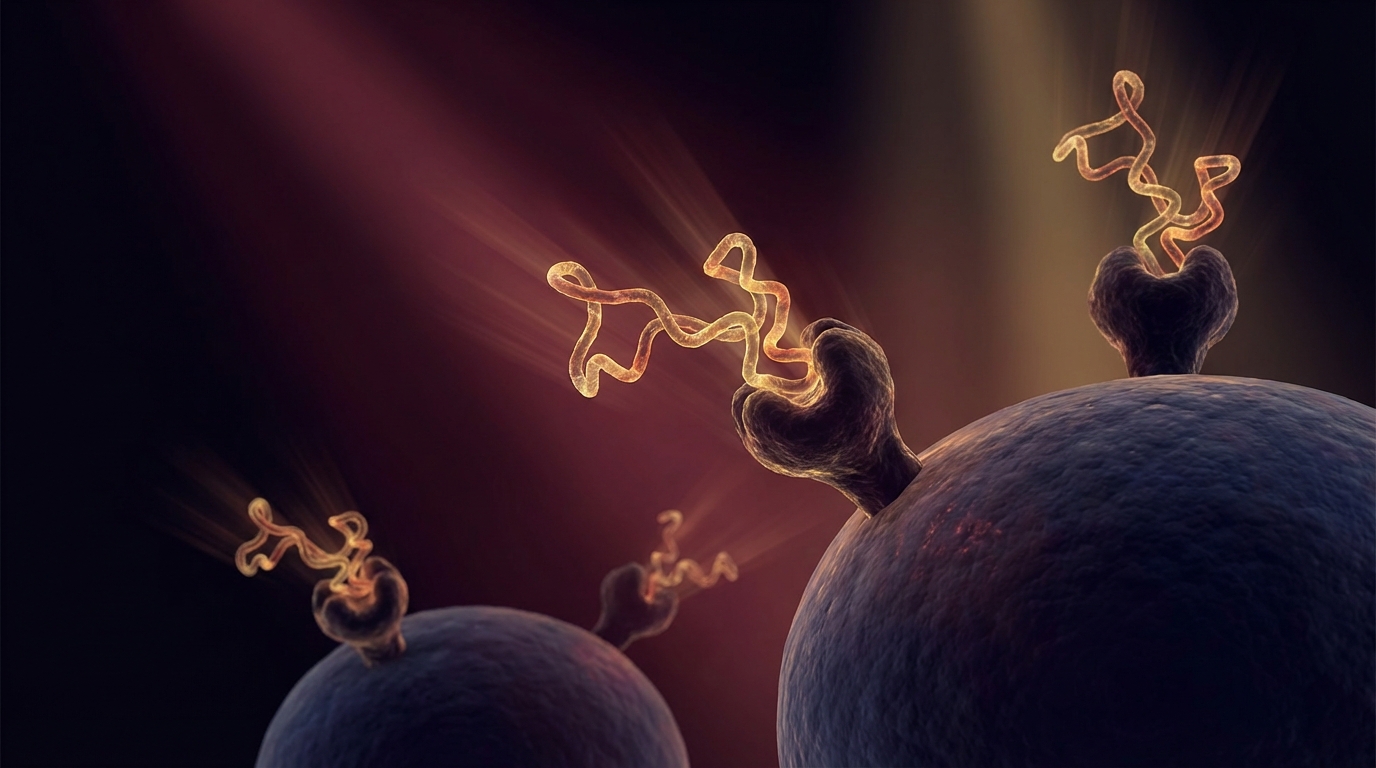
LL-37 (also called cathelicidin) is the only human cathelicidin antimicrobial peptide — a 37-amino-acid peptide cleaved from the precursor protein hCAP18. It is a natural component of your innate immune system, produced by neutrophils, macrophages, epithelial cells, and other immune cells.
Mechanism of Biofilm Disruption
LL-37 disrupts biofilms through multiple complementary mechanisms:
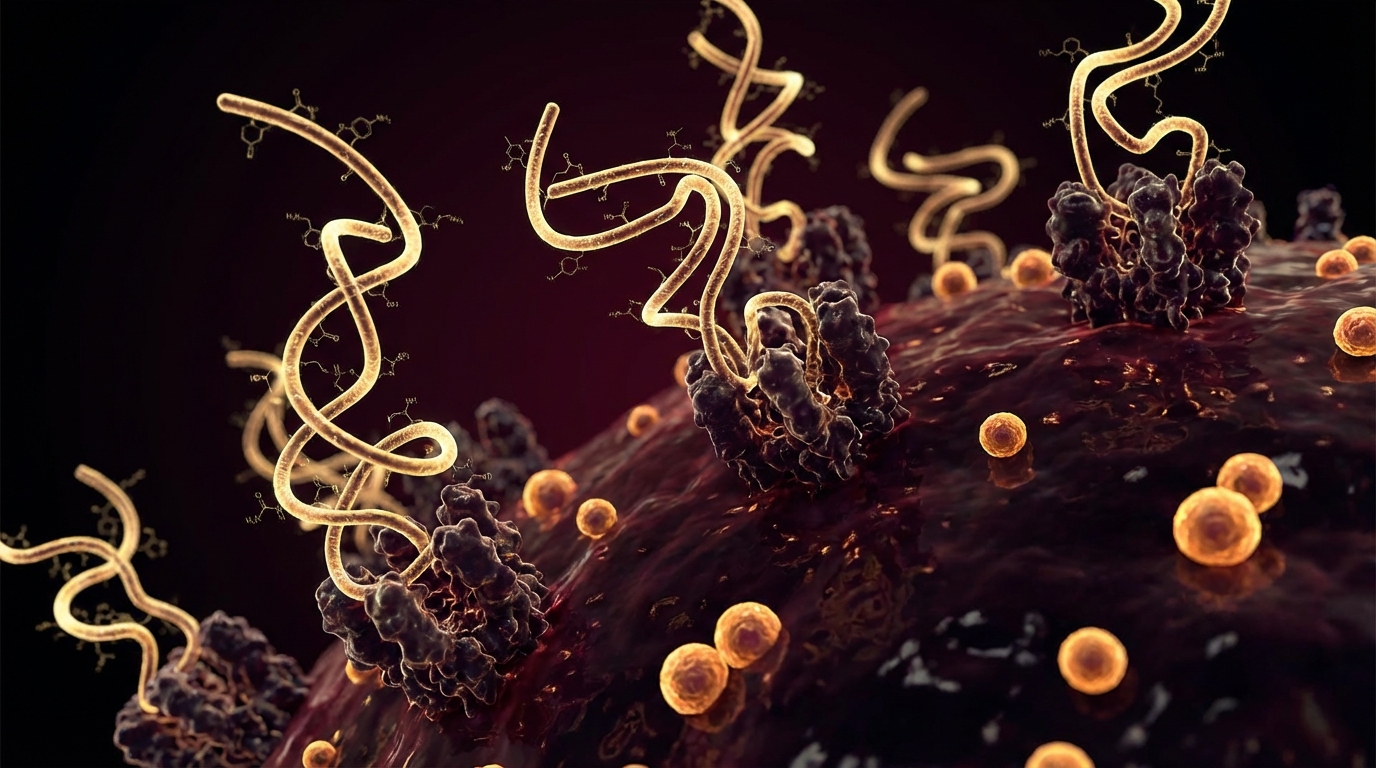
1. Membrane destabilization. LL-37 is an amphipathic peptide — it has both hydrophilic (water-loving) and hydrophobic (fat-loving) regions. This allows it to insert into bacterial membranes and destabilize them, creating pores that compromise membrane integrity. This mechanism works against both planktonic bacteria and bacteria within biofilms.
2. Biofilm matrix interference. LL-37 interacts with the extracellular polymeric substances that form the biofilm matrix. Studies by Overhage et al. (2008) demonstrated that LL-37, even at sub-inhibitory concentrations, prevented Pseudomonas aeruginosa biofilm formation and reduced pre-formed biofilm biomass. The mechanism involves disruption of the matrix architecture that holds the biofilm together.
3. Inhibition of quorum sensing. Bacterial biofilm formation is coordinated through quorum sensing — chemical signaling between bacteria. LL-37 has been shown to interfere with quorum sensing pathways, potentially disrupting the bacterial communication necessary for maintaining organized biofilm communities.
4. Immune cell recruitment. Beyond its direct antimicrobial activity, LL-37 acts as a chemoattractant for neutrophils, monocytes, and T-cells. By recruiting immune cells to the site of infection, LL-37 amplifies the immune response against biofilm-associated bacteria that have been exposed by matrix disruption.
Relevance to Borrelia Specifically
While the biofilm disruption studies of LL-37 have been conducted primarily with Pseudomonas, Staphylococcus, and other common biofilm-forming pathogens, the mechanisms are not species-specific. Membrane destabilization and matrix disruption act on fundamental structures shared across bacterial species. LL-37’s broad-spectrum antimicrobial activity — effective against 38+ bacterial species, 16 fungi, and 16 viruses — supports the hypothesis that it can act against Borrelia biofilms.
Direct studies of LL-37 against Borrelia biofilms specifically are limited. This is an honest assessment of where the evidence stands. The mechanistic rationale is strong. The direct Borrelia data is thin.
What the Evidence Shows
LL-37 Against Biofilms (General)
| Study | Pathogen | Finding |
|---|---|---|
| Overhage et al., 2008 | Pseudomonas aeruginosa | LL-37 prevented biofilm formation and disrupted existing biofilms at sub-MIC concentrations |
| Dean et al., 2011 | Staphylococcus aureus | LL-37 reduced biofilm biomass and enhanced antibiotic penetration |
| Dosler & Karaaslan, 2014 | Multiple species | LL-37 showed broad anti-biofilm activity at concentrations achievable in vivo |
| Feng et al., 2013 | General biofilm model | LL-37 fragments retained anti-biofilm activity, suggesting the active domain is well-characterized |
LL-37 and Lyme Disease
Direct evidence for LL-37 against Borrelia is limited to:
- In vitro studies showing LL-37 has antimicrobial activity against spirochetes
- Mechanistic reasoning that biofilm disruption mechanisms are not species-specific
- Clinical observation from practitioners using LL-37 in chronic Lyme protocols
No randomized controlled trials of LL-37 for Lyme disease have been published. This is a critical evidence gap.
Vitamin D and LL-37 Production
An important connection: LL-37 production is regulated by vitamin D. Vitamin D receptor activation induces hCAP18 expression, which is then cleaved to produce LL-37. Many chronic Lyme patients have suboptimal vitamin D levels, which may contribute to impaired endogenous LL-37 production and reduced antimicrobial defense.
This creates a potential therapeutic triangle: optimize vitamin D to support endogenous LL-37 production, supplement with exogenous LL-37 to directly address biofilm barriers, and use conventional antimicrobials that can now penetrate the disrupted biofilm.
For more on the vitamin D connection, see LL-37 and Vitamin D: The Immune Connection.
Clinical Application: How I Approach Biofilms in Lyme Treatment
In my clinical experience treating Lyme patients at Klinik St. Georg, biofilm disruption is one component of a multi-faceted treatment protocol. LL-37 is not used in isolation — it is part of an approach that includes:
- Antimicrobial therapy — targeted antibiotics based on clinical presentation and testing
- Biofilm disruption — agents including LL-37 that may compromise the biofilm barrier
- Immune support — Thymosin Alpha-1, vitamin D optimization, and other immune modulators
- Whole-body hyperthermia — 2 sessions at 41.6-41.8°C, which addresses both the infection (thermolability of Borrelia) and the biofilm structure (heat destabilizes biofilm matrix)
- Supportive detoxification — addressing the metabolic burden of infection and treatment
LL-37 Protocol for Chronic Lyme (Clinical Observation)
| Parameter | Detail |
|---|---|
| Dose | 50-100 mcg subcutaneously |
| Frequency | 2-3 times per week |
| Duration | 4-8 weeks, coordinated with antimicrobial therapy |
| Timing | Initiated 1-2 weeks before or concurrently with antimicrobial intensification |
| Monitoring | Clinical symptoms, inflammatory markers, vitamin D levels |
What I Observe
In patients receiving LL-37 as part of comprehensive Lyme protocols, I observe a pattern that is consistent with biofilm disruption theory: an initial worsening of symptoms (consistent with increased immune exposure to previously shielded bacterial antigens — a Herxheimer-like reaction) followed by a more robust improvement than was achieved with antimicrobials alone in previous treatment attempts.
I want to be clear about the limitations of this observation. These patients are receiving multiple concurrent interventions. I cannot isolate the specific contribution of LL-37. The observation is consistent with the hypothesis but does not prove it. This is clinical observation, not a controlled trial.
Safety Considerations in Lyme Patients
Herxheimer Reactions
Biofilm disruption can theoretically release large quantities of bacterial antigens and endotoxins into the circulation, triggering a Jarisch-Herxheimer reaction — a temporary worsening of symptoms caused by the immune response to microbial die-off. In chronic Lyme patients, this can be intense.
In my practice, I manage this by:
- Starting LL-37 at the lower end of the dose range
- Ensuring adequate detoxification support is in place before initiating biofilm disruption
- Monitoring closely in the first 1-2 weeks
- Adjusting the treatment pace based on the patient’s tolerance
Autoimmune Risk
LL-37 has been implicated in certain autoimmune conditions (psoriasis, SLE) when present at chronically elevated levels. In the context of short-term therapeutic use for Lyme disease, this risk appears to be low, but it should be discussed with patients who have a history of autoimmune conditions.
Immune Status
Chronic Lyme patients often have dysregulated immune function. LL-37’s immunomodulatory effects — including immune cell recruitment and cytokine modulation — may interact with this existing dysregulation. Close clinical monitoring is essential.
Limitations and Honest Uncertainties
Here is what the evidence shows: LL-37 disrupts biofilms through well-characterized mechanisms. Borrelia forms biofilms. The logical inference is that LL-37 may disrupt Borrelia biofilms.
Here is what the evidence does not show: that LL-37 administered subcutaneously reaches Borrelia biofilms in sufficient concentration to disrupt them in vivo. That biofilm disruption meaningfully improves outcomes in chronic Lyme patients. That the dose and duration used in clinical practice are optimal.
These are not trivial gaps. They are the difference between a promising hypothesis and a validated therapy. I use LL-37 in chronic Lyme because the mechanistic rationale is strong, the safety profile is acceptable, and clinical observation has been cautiously encouraging. But I never represent it as proven therapy.
The Bottom Line
LL-37 is a human antimicrobial peptide with well-demonstrated biofilm-disrupting activity. Borrelia burgdorferi, the Lyme disease pathogen, forms biofilms that protect it from antibiotics and immune clearance. LL-37 may help disrupt these biofilms, improving the efficacy of conventional antimicrobial therapy. The evidence is preclinical and the clinical application is based on mechanistic reasoning and observation, not randomized trials. It is most appropriately used as one component of a comprehensive Lyme treatment protocol, not as a standalone intervention.
For the full LL-37 overview, see LL-37: The Body’s Antimicrobial Peptide. For the vitamin D connection, see LL-37 and Vitamin D: The Immune Connection.
References
- Overhage J, et al. “Human host defense peptide LL-37 prevents bacterial biofilm formation.” Infect Immun. 2008;76(9):4176-4182. PMID: 18591225.
- Sapi E, et al. “Characterization of biofilm formation by Borrelia burgdorferi in vitro.” PLoS One. 2012;7(10):e48277. PMID: 23110225.
- Dean SN, et al. “A carpet-based mechanism for direct antimicrobial peptide activity against vaccinia virus membranes.” Peptides. 2011;32(11):2261-2265. PMID: 21854826.
- Feng X, et al. “The human antimicrobial peptide LL-37 and its fragments possess both antimicrobial and antibiofilm activities against multidrug-resistant Acinetobacter baumannii.” Peptides. 2013;49:131-137. PMID: 24012858.
- Sapi E, et al. “Evaluation of in-vitro antibiotic susceptibility of different morphological forms of Borrelia burgdorferi.” Infect Drug Resist. 2011;4:97-113. PMID: 21753890.
Disclaimer: This article is for educational purposes and reflects current published research and clinical observation. It is not medical advice. LL-37 is not FDA-approved for any therapeutic indication. Lyme disease treatment should be managed by a qualified physician experienced in tick-borne infections. Consult a physician before pursuing any peptide therapy.