At a Glance
| Property | Detail |
|---|---|
| Evidence Level | Moderate — multiple clinical studies for topical use; limited data for injection |
| Key Mechanism | Collagen synthesis, gene expression modulation, copper delivery |
| Natural Decline | Plasma GHK-Cu drops from ~200 ng/mL (age 20) to ~80 ng/mL (age 60) |
| Topical Concentration | 1-2% in cream or serum formulations |
| Key Study Result | 55.8% wrinkle volume reduction in 12-week clinical study |
| Comparison | Similar collagen-stimulating efficacy to retinoic acid without irritation |
Why Does Your Skin Age — and What Does GHK-Cu Have to Do with It?
Skin aging is driven by two parallel processes: intrinsic aging (genetically programmed decline in cellular function) and extrinsic aging (UV damage, pollution, oxidative stress). Both converge on the same downstream problems — reduced collagen synthesis, accumulated collagen degradation, decreased hyaluronic acid, impaired wound healing, and thinning of the dermal layer.
GHK-Cu sits at the intersection of these processes because it is one of the body’s endogenous signaling molecules for tissue maintenance and repair. When you were young, your body had abundant GHK-Cu. It was constantly telling your skin cells to produce collagen, remodel damaged tissue, and maintain structural integrity. By the time you reach your 60s, your circulating GHK-Cu levels have dropped by more than 60%.
This is not a pharmaceutical pitch. It is basic biochemistry. The question is whether replacing what your body has lost can meaningfully reverse or slow the visible signs of skin aging. Here is what the evidence shows.
Mechanism: How GHK-Cu Works in Skin
Collagen Synthesis Stimulation
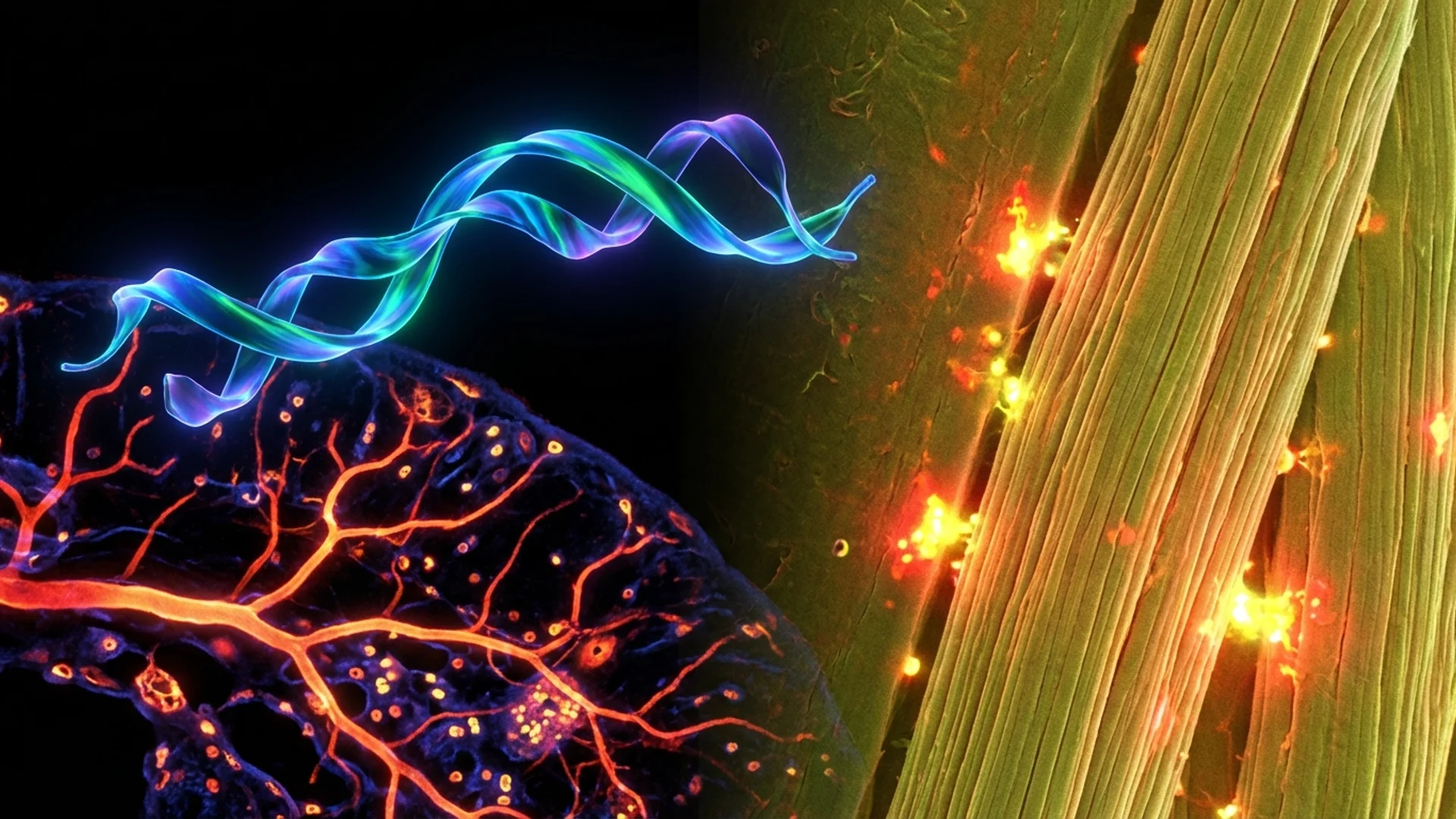
GHK-Cu directly stimulates the production of collagen types I, III, and V in dermal fibroblasts. Pickart et al. demonstrated that GHK-Cu increases collagen synthesis in fibroblast cultures at concentrations achievable through topical application. This is the primary mechanism behind its anti-aging effects — more collagen means firmer, more resilient skin with fewer fine lines.
The mechanism involves upregulation of tissue inhibitors of metalloproteinases (TIMPs), which slow collagen breakdown, while simultaneously stimulating new collagen production. The net effect is a positive collagen balance — production exceeds degradation.
Gene Expression Modulation
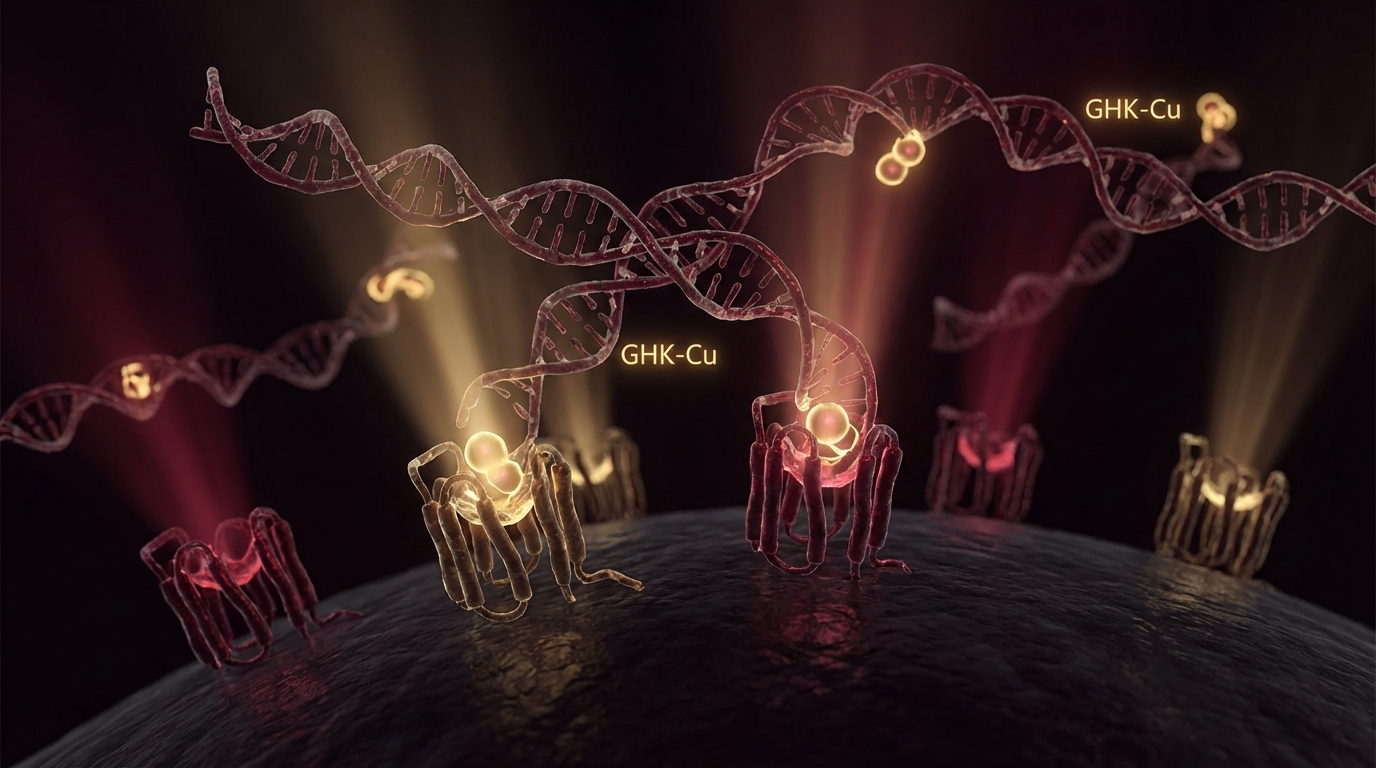
This is where GHK-Cu becomes particularly interesting from a scientific standpoint. Genome-wide studies have shown that GHK-Cu modulates the expression of over 4,000 genes — roughly 31.8% of the human genome. Many of these genes are involved in tissue repair, anti-inflammatory responses, and antioxidant defense. Specifically relevant to skin aging:
- Upregulation of genes involved in collagen production and extracellular matrix assembly
- Upregulation of antioxidant genes (superoxide dismutase, glutathione)
- Downregulation of genes associated with inflammation and fibrosis
- Modulation of genes involved in DNA repair
This broad gene expression profile is not typical for a simple growth factor. It suggests that GHK-Cu acts more like a systemic repair signal — telling cells to shift from a damaged/aging phenotype toward a healthier, more youthful pattern of gene expression.
Copper Delivery
GHK-Cu’s copper-binding function is not merely structural. Copper is a cofactor for lysyl oxidase, the enzyme responsible for collagen and elastin cross-linking. By delivering bioavailable copper directly to skin cells, GHK-Cu supports the enzymatic machinery required for proper collagen maturation. Immature, uncross-linked collagen is structurally weak. GHK-Cu helps ensure that newly synthesized collagen achieves full structural integrity.
Antioxidant and Anti-Inflammatory Effects
GHK-Cu has demonstrated antioxidant properties through upregulation of superoxide dismutase and other antioxidant enzymes. It also modulates inflammatory mediators, reducing the chronic low-grade inflammation (“inflammaging”) that contributes to skin aging. These effects complement the direct collagen-stimulating activity.
Clinical Evidence for Skin Anti-Aging
Wrinkle Reduction
The most frequently cited clinical study, conducted by Leyden et al., examined GHK-Cu cream applied twice daily for 12 weeks in women with photodamaged facial skin. Results included:
| Outcome | Result |
|---|---|
| Wrinkle volume reduction | 55.8% average reduction |
| Skin thickness improvement | Significant increase vs baseline |
| Skin clarity/appearance | Measurable improvement on photographic assessment |
This is a meaningful clinical result. For context, topical retinoids — the gold standard in dermatological anti-aging — typically produce 20-40% wrinkle volume reduction over similar timeframes, though direct head-to-head comparisons are limited.
Skin Density and Firmness
Studies using high-frequency ultrasound to measure dermal density have shown that GHK-Cu application increases skin density after 8-12 weeks of use. Increased density correlates with improved collagen content and is an objective measure of dermal improvement.
Wound Healing and Barrier Function
GHK-Cu’s tissue repair properties extend to skin barrier function. Studies show improved wound healing, reduced time to re-epithelialization, and enhanced barrier recovery. While these are not purely cosmetic endpoints, they reflect the peptide’s ability to support skin health at a functional level.
Evidence Summary
| Application | Evidence Level | Key Finding |
|---|---|---|
| Wrinkle reduction (topical) | Moderate | 55.8% volume reduction in clinical study |
| Skin density (topical) | Moderate | Measurable increase on ultrasound |
| Collagen synthesis (in vitro) | Strong | Consistent increase in fibroblast cultures |
| Gene expression modulation | Strong | Genome-wide studies confirm broad activity |
| Wound healing | Moderate | Accelerated re-epithelialization |
| Anti-aging via injection | Limited | Minimal published clinical data |
GHK-Cu vs. Retinol: An Honest Comparison
This is the comparison most patients ask about, so let me address it directly.
| Property | GHK-Cu | Retinol/Retinoic Acid |
|---|---|---|
| Collagen stimulation | Yes — comparable to retinoic acid | Yes — gold standard |
| Irritation potential | Very low | Significant (dryness, peeling, redness) |
| Sun sensitivity | No increase | Yes — requires sunscreen compliance |
| Gene expression effects | Broad (4,000+ genes) | Narrower (primarily retinoid receptor-mediated) |
| Evidence depth | Moderate (fewer studies) | Extensive (decades of research) |
| Regulatory status | Cosmetic ingredient | Prescription (tretinoin) or OTC (retinol) |
| Onset of visible results | 8-12 weeks | 8-16 weeks |
| Suitable for sensitive skin | Yes | Often not tolerated |
The honest assessment: retinoids have a deeper evidence base because they have been studied for decades. GHK-Cu has comparable collagen-stimulating activity in the studies that exist, with a significantly better tolerability profile. For patients who cannot tolerate retinoids — and that is a substantial percentage — GHK-Cu is a scientifically legitimate alternative, not a weaker substitute.
In my clinical perspective, the optimal approach for many patients is to use both — GHK-Cu serum in the morning and retinoid at night. The mechanisms are complementary, and the tolerability of GHK-Cu makes it easy to add to an existing routine.
Topical Protocols
Standard Anti-Aging Protocol
| Parameter | Detail |
|---|---|
| Concentration | 1-2% GHK-Cu in serum or cream |
| Application | Twice daily (morning and evening) |
| Area | Face, neck, decolletage |
| Duration | Continuous use; results typically visible at 8-12 weeks |
| Layering | Apply to clean skin before heavier creams and sunscreen |
Product Quality Considerations
Not all copper peptide products are equivalent. The quality issues I see most commonly:
- Concentration not disclosed. If the product does not state the percentage of GHK-Cu, you cannot assess whether it contains an effective concentration.
- Copper peptide vs. GHK-Cu. “Copper peptide” is a marketing term that may refer to various copper-binding peptides, not specifically GHK-Cu. Specificity matters.
- Formulation stability. GHK-Cu is sensitive to pH and can degrade in poorly formulated products. Look for airless pump packaging and independent stability testing.
- Blue color. Authentic GHK-Cu solutions have a characteristic blue tint from the copper ion. Absence of color does not always indicate absence of GHK-Cu (concentrations below ~0.5% may not show visible color), but vibrant blue at 1-2% concentrations is expected.
Combining Topical GHK-Cu with Other Actives
| Active | Compatibility | Notes |
|---|---|---|
| Retinol/tretinoin | Compatible | Use at different times of day |
| Vitamin C (L-ascorbic acid) | Caution | Potential copper-catalyzed oxidation; separate by 30 minutes |
| Niacinamide | Compatible | No known interaction |
| Hyaluronic acid | Compatible | GHK-Cu first, then HA |
| AHAs/BHAs | Compatible | Apply acids first, then GHK-Cu after pH normalizes |
| Sunscreen | Compatible | GHK-Cu under sunscreen |
Injectable GHK-Cu for Skin
Injectable GHK-Cu is used by some clinicians, though the evidence base for this route in skin anti-aging is limited compared to topical application.
Subcutaneous Protocol (Where Used)
| Parameter | Detail |
|---|---|
| Dose | 1-2 mg subcutaneously |
| Frequency | 2-3 times per week |
| Cycle | 4-8 weeks |
| Location | Abdominal subcutaneous tissue |
Microneedling with GHK-Cu
A more evidence-supported approach to enhanced delivery is microneedling followed by topical GHK-Cu application. Microneedling creates microchannels in the skin that allow deeper penetration of the peptide into the dermis, where the target fibroblasts reside. Several aesthetic clinicians report enhanced results with this approach compared to topical application alone.
For comprehensive dosing across all routes, see GHK-Cu Dosage: Topical, Injection, and Combination Protocols.
The Age-Related Decline: Why Supplementation Makes Biological Sense
The rationale for GHK-Cu supplementation rests on a straightforward observation: your body produces less of it as you age, and the functions it supports — collagen synthesis, tissue repair, antioxidant defense — decline in parallel.
| Age | Approximate Plasma GHK-Cu | Relative to Peak |
|---|---|---|
| 20 | ~200 ng/mL | 100% |
| 40 | ~150 ng/mL | ~75% |
| 60 | ~80 ng/mL | ~40% |
| 80 | Significantly lower | <30% (estimated) |
This decline correlates with the visible signs of skin aging — wrinkle formation, loss of firmness, slower wound healing, and thinning of the dermal layer. Replacing GHK-Cu topically or systemically is a form of restoration, not pharmacological intervention. You are returning a signaling molecule to levels your body once maintained naturally.
The Bottom Line
GHK-Cu is a naturally occurring copper peptide with moderate clinical evidence supporting its use for skin anti-aging. It stimulates collagen synthesis, modulates thousands of genes involved in tissue repair, and delivers bioavailable copper for collagen cross-linking. Clinical studies show measurable wrinkle reduction and improved skin density. It compares favorably to retinoids with significantly better tolerability. Topical application at 1-2% concentration twice daily is the most evidence-supported protocol, with results typically visible at 8-12 weeks.
For the full GHK-Cu overview, see GHK-Cu: Copper Peptide Science.
References
- Pickart L, et al. “The human tripeptide GHK-Cu in prevention of oxidative stress and degenerative conditions of aging: implications for cognitive health.” Oxid Med Cell Longev. 2012;2012:324832. PMID: 22666519.
- Pickart L, Margolina A. “Regenerative and Protective Actions of the GHK-Cu Peptide in the Light of the New Gene Data.” Int J Mol Sci. 2018;19(7):1987. PMID: 29986520.
- Leyden JJ, et al. “Facial wrinkle reduction with topical copper peptide complex: A placebo-controlled study.” J Cosmet Dermatol. 2002;1(2):72-76.
- Maquart FX, et al. “Stimulation of collagen synthesis in fibroblast cultures by the tripeptide-copper complex glycyl-L-histidyl-L-lysine-Cu2+.” FEBS Lett. 1988;238(2):343-346. PMID: 3169264.
- Pickart L. “The human tri-peptide GHK and tissue remodeling.” J Biomater Sci Polym Ed. 2008;19(8):969-988. PMID: 18644225.
Disclaimer: This article is for educational purposes and reflects current published research and clinical observation. It is not medical advice. GHK-Cu is available as a cosmetic ingredient and is not FDA-approved for medical treatment. Consult a qualified physician or dermatologist before pursuing any peptide therapy.