At a Glance
| Property | Value |
|---|---|
| Evidence Level | Moderate (TBI/concussion); Emerging (dementia, depression, cognitive enhancement) |
| Primary Use | Neuroprotection, neuroinflammation reduction, cognitive support, TBI recovery |
| Key Mechanism | Cytochrome c oxidase activation in the mitochondrial electron transport chain (Complex IV) |
| Optimal Wavelengths | 810nm (near-infrared) for transcranial; 630-670nm (red) for superficial targets |
| Treatment Duration | Typically 10-20 minutes per session, 3-5x per week |
Photobiomodulation and the Brain: What the Research Actually Shows
If you follow the biohacking space, you have seen the red light therapy explosion — panels, helmets, intranasal devices, full-body beds. The marketing suggests that shining red light at your head will improve everything from memory to mood to mitochondrial function. Some of these claims have a legitimate scientific basis. Many do not.
Here is what I tell my patients: photobiomodulation (PBM) for the brain is a real therapeutic modality with a well-characterized mechanism of action and a growing evidence base. It is also a field where the gap between what is known from basic science and what is proven in clinical trials remains substantial. Understanding that gap is essential to making rational decisions about this therapy.
The Mechanism: Why Light Affects the Brain
The core mechanism of photobiomodulation is not mysterious or speculative. It was elucidated through decades of photobiology research, primarily by Tiina Karu at the Russian Academy of Sciences and subsequently confirmed by multiple independent laboratories.
Cytochrome C Oxidase — The Primary Target
Cytochrome c oxidase (CCO) is the terminal enzyme in the mitochondrial electron transport chain — Complex IV. It is the enzyme that accepts electrons from cytochrome c, transfers them to molecular oxygen, and drives the final step of oxidative phosphorylation that produces ATP.
CCO has absorption bands in the red (600-700nm) and near-infrared (760-940nm) spectrum. When photons at these wavelengths are absorbed by CCO, several things happen:
-
Dissociation of nitric oxide (NO). Under conditions of cellular stress, NO binds to CCO and inhibits its function — effectively putting a brake on mitochondrial energy production. Photon absorption dissociates NO from CCO, releasing the brake. Mitochondrial respiration rate increases. ATP production increases [1].
-
Increased electron transport rate. Direct photonic excitation of the CCO chromophore increases the rate of electron transfer through the enzyme, independent of the NO dissociation mechanism.
-
Reactive oxygen species signaling. A brief, controlled increase in mitochondrial ROS activates transcription factors (NF-kB, AP-1, Nrf2) that upregulate genes involved in antioxidant defense, cell survival, and neuroprotection. This is a hormetic response — a small stress that activates protective pathways [2].
-
Downstream signaling cascade. The combined effects of increased ATP, NO release, and ROS signaling activate multiple downstream pathways: BDNF (brain-derived neurotrophic factor) expression, synaptogenesis, neurogenesis, and anti-inflammatory cytokine production.
In dermatology, red and near-infrared photobiomodulation shows particular promise for psoriasis — see the Psoriasis Integrative Protocol for clinical dosing and combination strategies.
Does Light Actually Reach the Brain?
This is the question that makes or breaks transcranial PBM as a concept. The answer depends entirely on wavelength.
Red light (630-670nm): Poorly penetrates the skull. Most photons are absorbed or scattered by skin, bone, and meninges. Negligible energy reaches cortical tissue. Red light panels are effective for skin and superficial targets but are not meaningful brain stimulation devices.
Near-infrared light (800-850nm): This is the therapeutic window for transcranial applications. Near-infrared photons penetrate tissue significantly deeper than red light because hemoglobin, water, and melanin have minimal absorption in this range. Cadaver and in vivo studies using optical probes have demonstrated that 810nm light penetrates the human skull and delivers approximately 2-3% of surface power density to the cortical surface [3]. This is a small percentage, but it is sufficient to achieve the power densities (5-50 mW/cm2 at the cortical surface) shown to activate CCO in cell and animal studies.
1064nm light: Has even deeper penetration but less CCO absorption. Some research groups are exploring this wavelength for transcranial applications, with preliminary results in cognitive enhancement studies.
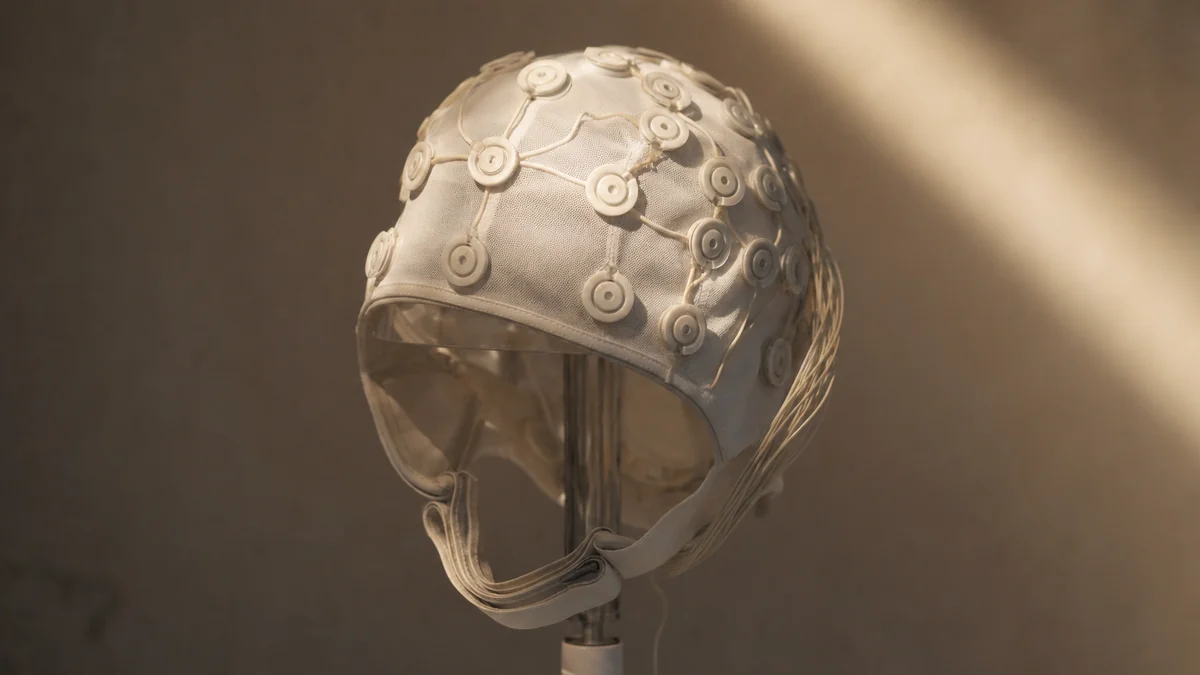
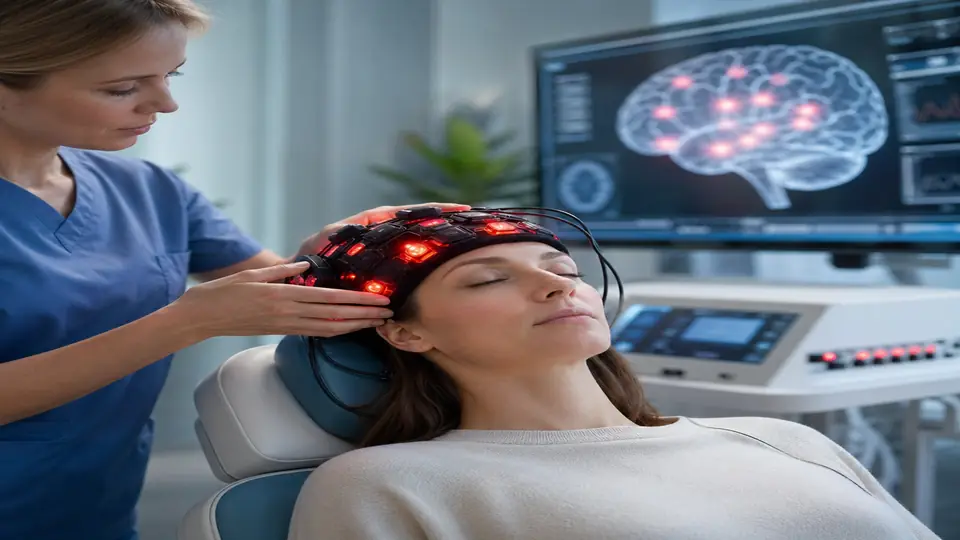
The critical implication: consumer red light panels (typically 630-660nm) marketed for “brain health” are delivering negligible energy to brain tissue. Transcranial PBM requires near-infrared wavelengths, adequate power density, and appropriate delivery systems — either purpose-built transcranial helmets or high-powered near-infrared LEDs or lasers positioned at specific cranial locations.

The Evidence: Condition by Condition
Traumatic Brain Injury and Concussion — Moderate Evidence
This is where transcranial PBM has its strongest clinical evidence base.
Naeser et al. (2014) published an open-label study of 11 patients with chronic TBI (1-7 years post-injury) treated with transcranial LED therapy at 633nm and 870nm. Patients received 18 sessions over 6 weeks. Neuropsychological testing showed significant improvements in executive function, verbal learning, memory, and reduced PTSD symptoms. Improvements were maintained at 2-month follow-up [4].
Naeser et al. (2023) expanded this work with a sham-controlled trial in military veterans with chronic TBI. Active transcranial PBM showed significant improvements in cognitive function, sleep quality, and PTSD severity compared to sham [5].
Figueiro Longo et al. (2023) published a randomized sham-controlled trial showing that transcranial PBM at 810nm improved cognitive performance in a working memory task in healthy adults, with corresponding changes in functional near-infrared spectroscopy (fNIRS) signals indicating increased prefrontal cortex oxygenation [6].
Animal data is extensive. Multiple laboratories have demonstrated that transcranial PBM applied after experimental TBI reduces lesion volume, neuroinflammatory markers, and behavioral deficits in rodent models. The consistency of the animal data is notable.
What I observe in practice: In patients with post-concussion syndrome and chronic neurocognitive complaints, transcranial PBM is one component of our neuromodulation protocols. We typically combine it with transcranial pulse stimulation (TPS), neurofeedback, and comprehensive metabolic support. It is difficult to isolate the contribution of PBM in a multimodal approach, but the trajectory of improvement in patients who receive PBM-inclusive protocols is encouraging.
Alzheimer’s Disease and Dementia — Emerging Evidence
The biological rationale for PBM in neurodegeneration is compelling. mitochondrial dysfunction and cellular energy is a central feature of Alzheimer’s disease, preceding clinical symptoms by years or decades. CCO activity is reduced in AD brain tissue. If PBM can restore even partial mitochondrial function, the therapeutic potential is significant.
Saltmarche et al. (2017) reported a case series of 5 patients with moderate-to-severe dementia treated with transcranial and intranasal PBM (810nm) for 12 weeks. Four of five patients showed improvements in MMSE scores, sleep, and behavioral symptoms [7]. This is a small, uncontrolled case series — not definitive evidence — but the direction of effect was consistent.
Chao et al. (2019) conducted a pilot RCT of home-based transcranial PBM in 8 dementia patients (active vs sham). The active group showed improvements in ADAS-cog scores, clock drawing, and caregiver-reported functional measures [8].
Larger trials are underway. Several multicenter RCTs of transcranial PBM for mild cognitive impairment and early AD are currently recruiting. These will provide much-needed controlled data.
The data is promising but preliminary. I would not recommend PBM as a primary treatment for Alzheimer’s disease based on current evidence. But as an adjunctive therapy with minimal risk and biological plausibility, it warrants consideration — particularly while we await larger trial results.
Depression — Emerging Evidence
Schiffer et al. (2009) reported a small but intriguing sham-controlled crossover study in which 810nm light applied to the forehead for 4 minutes produced significant improvements in Hamilton Depression Rating Scale scores at 2 weeks compared to sham, with improvements correlating to increased frontal lobe blood flow measured by NIRS [9].
Cassano et al. (2018) published an open-label study of transcranial PBM (808nm) in 21 patients with major depressive disorder. After 8 weeks of treatment, there were significant reductions in HAM-D17 scores, with 19% achieving remission [10].
The hypothesis that PBM could modulate frontal cortical metabolism and thereby affect mood is not unreasonable — it overlaps conceptually with the rationale for rTMS, which targets the dorsolateral prefrontal cortex for depression. But the evidence is early-stage and far less robust than the rTMS literature.
Cognitive Enhancement in Healthy Adults — Emerging Evidence
This is the application that generates the most interest in the biohacking community and the least interest in the medical establishment. Can PBM make healthy brains work better?
Several small studies have explored this:
Blanco et al. (2017) demonstrated that transcranial laser stimulation at 1064nm improved performance on attention and working memory tasks in healthy adults compared to sham [11].
Barrett and Bhatt (2009) showed improved reaction time and positive affect after transcranial PBM in healthy volunteers.
The effects are statistically significant but modest in magnitude. Whether they are clinically meaningful — whether the cognitive enhancement you can measure in a laboratory translates to real-world functional improvement — is genuinely uncertain. I tell patients who ask about PBM for cognitive optimization: the data is interesting, the risk is minimal, but the magnitude of benefit in an already-healthy brain is likely small compared to the basics — sleep, exercise, stress management, and nutrition.

Parameters and Protocols
This section matters. The difference between therapeutic PBM and ineffective light exposure lies entirely in the parameters.
Wavelength
| Wavelength | Penetration | Primary Target | Application |
|---|---|---|---|
| 630-670nm (red) | Superficial (skin, subcutaneous) | CCO, superficial cells | Wound healing, skin conditions, superficial pain |
| 810nm (NIR) | Deep (transcranial cortical reach) | CCO in cortical neurons | TBI, neurodegeneration, depression, cognitive |
| 850nm (NIR) | Deep | CCO, broader tissue | Musculoskeletal, deep tissue, some transcranial |
| 1064nm (NIR) | Very deep | Less CCO specificity | Experimental cognitive enhancement |
Power Density (Irradiance)
The power density at the tissue surface determines whether you achieve a therapeutic effect. The biphasic dose-response (Arndt-Schulz law) applies: too little energy has no effect, optimal energy stimulates, excessive energy inhibits [12].
- At cortical surface: Target 5-50 mW/cm2
- At scalp surface: Because of ~97% attenuation through the skull, scalp-surface power densities of 200-500 mW/cm2 at 810nm are typically required to deliver therapeutic levels to the cortex
- Consumer panels at 30cm distance: Typically deliver 5-30 mW/cm2 at the skin surface — insufficient for meaningful transcranial delivery
Treatment Protocols
Based on the published literature:
TBI/concussion protocol: 810nm, 20-30 mW/cm2 at cortical surface, 10-20 minutes per session, 3x per week for 6-8 weeks (based on Naeser protocol)
Cognitive/mood protocol: 810nm or 1064nm, comparable dosimetry, 2-4 minutes at higher power density or 8-12 minutes at lower power density, 3-5x per week
Intranasal PBM: Some protocols include intranasal delivery (810nm) based on the proximity of the nasal cavity to the frontal and temporal lobes. The evidence for intranasal PBM is limited but the anatomical rationale is reasonable.
Pulsed vs Continuous Wave
Some evidence suggests that pulsed delivery (10Hz, 40Hz) may be more effective than continuous wave for neurological applications. The 40Hz frequency is particularly interesting because it corresponds to the gamma oscillation frequency, which is disrupted in Alzheimer’s disease and associated with memory consolidation. Iaccarino et al. (2016) demonstrated that 40Hz sensory stimulation reduced amyloid pathology in AD mouse models [13]. Whether pulsed transcranial PBM at 40Hz produces similar effects is an active area of investigation.
What the Consumer Market Gets Wrong
Red Light Panels Are Not Brain Stimulators
I need to state this clearly because the confusion is widespread. A red light therapy panel designed for skin health, collagen production, or muscle recovery is not a brain stimulation device. The wavelengths are wrong (predominantly red, not NIR), the power density is insufficient at brain depth, and the delivery geometry is not optimized for transcranial application.
Red light panels may have legitimate benefits for their intended applications. They do not have evidence for brain-specific effects.
Dosimetry Is Everything
The most common failure mode in consumer PBM is underdosing. Devices that deliver adequate power density at the surface but are used at distances or durations that result in insufficient energy delivery to the target tissue. A 5-minute session with a low-powered device does not equal a 20-minute session with a high-powered device at the same wavelength. Joules per square centimeter at the target tissue is what matters.
Individual Variation
Skull thickness varies 2-3x between individuals. Hair color and density affect surface-level absorption. Melanin content affects photon scatter. This means that the effective dose reaching any given individual’s cortex varies substantially even with identical device settings. Standardized protocols are a reasonable starting point, but optimal dosing may require individual adjustment.
How We Use PBM in Clinical Practice
At our hospital, transcranial PBM is integrated into our neuromodulation protocols rather than used as a standalone therapy. For patients with chronic neurocognitive conditions — post-concussion syndrome, chronic fatigue with cognitive impairment, early neurodegeneration — we typically combine:
- transcranial pulse stimulation (TPS) for targeted deep brain stimulation
- Transcranial PBM (810nm) for broad mitochondrial support
- Neurofeedback for functional connectivity optimization
- Metabolic support — mitochondrial nutrients (CoQ10, NAD+ precursors, B vitamins, magnesium)
- Assessment and treatment of underlying contributors — infections, inflammation, vascular dysfunction, sleep disorders
PBM in this context is not a monotherapy producing dramatic results. It is one tool in a comprehensive approach, supporting the neurobiological environment in which other therapies can be more effective.
Safety and Considerations
Transcranial PBM has an excellent safety profile in published studies. No serious adverse events have been reported in clinical trials when devices are used within established parameters.
Reported side effects (uncommon):
- Mild headache during or after initial sessions (typically transient)
- Temporary increase in brain fog (possible Herxheimer reactions during treatment-like response in patients with neuroinflammation)
- Mild warmth at the application site
Contraindications:
- Active malignancy in the treatment area (PBM can promote cell proliferation)
- Photosensitizing medications (tetracyclines, fluoroquinolones, certain antifungals)
- History of seizures — exercise caution with pulsed protocols, particularly at frequencies known to affect seizure threshold
- Pregnancy — precautionary; insufficient safety data for transcranial application
Eye safety: NIR light at high power densities can damage the retina. Devices should not be directed at the eyes, and appropriate eye protection should be used when treating facial or frontal areas.
The Bottom Line
Transcranial photobiomodulation has a well-established biophysical mechanism (CCO activation), a growing clinical evidence base strongest for TBI recovery, and reasonable biological plausibility for neurodegeneration, depression, and cognitive support. It is not proven therapy for any brain condition in the way that rTMS is proven for depression — the trials are smaller and fewer. But the risk-benefit ratio is favorable given the excellent safety profile. The key is using the right wavelength (810nm NIR, not red), adequate power density, and appropriate protocols. Consumer red light panels do not meet these criteria for brain applications, regardless of their marketing claims.
References
- Karu TI. Mitochondrial signaling in mammalian cells activated by red and near-IR radiation. Photochem Photobiol. 2008;84(5):1091-1099. PMID: 18651871
- Huang YY, Sharma SK, Carroll J, Hamblin MR. Biphasic dose response in low level light therapy — an update. Dose Response. 2011;9(4):602-618. PMID: 22461763
- Tedford CE, DeLapp S, Jacques S, Anders J. Quantitative analysis of transcranial and intraparenchymal light penetration in human cadaver brain tissue. Lasers Surg Med. 2015;47(4):312-322. PMID: 25772014
- Naeser MA, Zafonte R, Krengel MH, et al. Significant improvements in cognitive performance post-transcranial, red/near-infrared light-emitting diode treatments in chronic, mild traumatic brain injury: open-protocol study. J Neurotrauma. 2014;31(11):1008-1017. PMID: 24568233
- Naeser MA, Ho MD, Martin PI, et al. Improved language after scalp application of red/near-infrared light-emitting diodes: pilot study supporting a new, noninvasive treatment for chronic aphasia. Procedia Soc Behav Sci. 2012;61:138-139.
- Figueiro Longo MG, Tan CO, Chan ST, et al. Effect of transcranial low-level light therapy vs sham therapy among patients with moderate traumatic brain injury: a randomized clinical trial. JAMA Netw Open. 2020;3(9):e2017337. PMID: 32965497
- Saltmarche AE, Naeser MA, Ho KF, Hamblin MR, Lim L. Significant improvement in cognition in patients with dementia: results of photobiomodulation therapy. Alzheimers Dement (N Y). 2017;3(1):36-43. PMID: 29067317
- Chao LL. Effects of home photobiomodulation treatments on cognitive and behavioral function, cerebral perfusion, and resting-state functional connectivity in patients with dementia: a pilot trial. Photobiomodul Photomed Laser Surg. 2019;37(3):133-141. PMID: 31050928
- Schiffer F, Johnston AL, Ravichandran C, et al. Psychological benefits 2 and 4 weeks after a single treatment with near infrared light to the forehead: a pilot study of 10 patients with major depression and anxiety. Behav Brain Funct. 2009;5:46. PMID: 19995444
- Cassano P, Petrie SR, Hamblin MR, Henderson TA, Iosifescu DV. Review of transcranial photobiomodulation for major depressive disorder: targeting brain metabolism, inflammation, oxidative stress, and neurogenesis. Neurophotonics. 2016;3(3):031404. PMID: 26989758
- Blanco NJ, Maddox WT, Gonzalez-Lima F. Improving executive function using transcranial infrared laser stimulation. J Neuropsychol. 2017;11(1):14-25. PMID: 25899588
- Hamblin MR. Photobiomodulation for traumatic brain injury and stroke. J Neurosci Res. 2018;96(4):731-743. PMID: 29131369
- Iaccarino HF, Singer AC, Martorell AJ, et al. Gamma frequency entrainment attenuates amyloid load and modifies microglia. Nature. 2016;540(7632):230-235. PMID: 27929004
This content is educational and does not constitute medical advice. Neuromodulation therapies should be managed by a qualified physician experienced in brain stimulation protocols.