At a Glance
| Property | Value |
|---|---|
| Evidence Level | Moderate (multiple RCTs, consistent findings) |
| Primary Use | Cognitive recovery, TBI, neurodegeneration, depression |
| Key Mechanism | Near-infrared light activates cytochrome c oxidase, boosting mitochondrial ATP production in neurons |
Can Light Actually Reach the Brain?
This is the first question every skeptical physician asks, and it is the right question. If light cannot penetrate the skull, everything else is irrelevant.
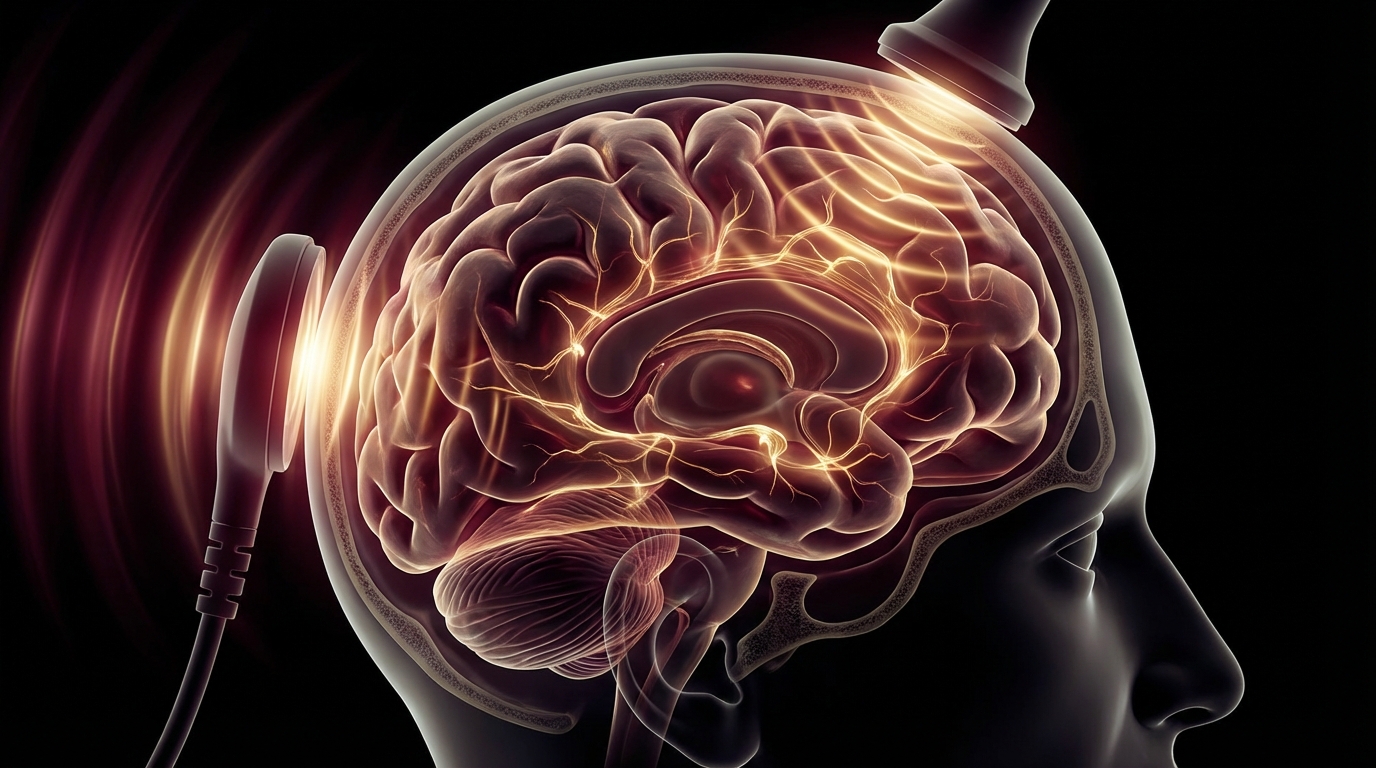
Here is what the evidence shows. Near-infrared light in the 800-1100nm wavelength range penetrates biological tissue far more effectively than visible light. At 810nm, approximately 2-3% of the applied photon energy reaches the cortical surface through the human skull. That sounds low until you consider two things: (1) the devices used in clinical studies deliver 10-60 J/cm2 at the scalp surface, meaning the cortical dose is still within the established therapeutic window, and (2) the primary chromophore, cytochrome c oxidase, requires remarkably little photon energy to shift its redox state [1].
Multiple studies using cadaveric human skulls and in vivo measurements have confirmed that transcranial photobiomodulation delivers biologically meaningful doses to cortical tissue at depths of 2-3 centimeters. The temporal and frontal regions, where the skull is thinnest, allow the greatest penetration.
Let me be direct: the “light cannot reach the brain” objection was reasonable in 2010. It is no longer supported by the data.
The Mechanism: Cytochrome C Oxidase and Beyond
Transcranial photobiomodulation operates through a well-characterized photobiological mechanism. Near-infrared photons are absorbed by cytochrome c oxidase (CCO), the terminal enzyme in the mitochondrial electron transport chain. CCO has absorption peaks at approximately 620-680nm (red) and 760-940nm (near-infrared), making it the primary chromophore for photobiomodulation [2].
When CCO absorbs near-infrared photons, several things happen in sequence:
Primary effects (seconds to minutes):
- Dissociation of inhibitory nitric oxide from CCO, restoring enzyme activity
- Increased electron transport chain throughput
- Increased mitochondrial membrane potential
- Increased ATP synthesis
Secondary effects (minutes to hours):
- Brief, controlled increase in reactive oxygen species that activates signaling pathways
- Activation of NF-kB, MAPK, and other transcription factors
- Upregulation of brain-derived neurotrophic factor (BDNF)
- Increased nitric oxide bioavailability (paradoxically, after the initial displacement from CCO)
- Cerebral vasodilation and improved blood flow
Tertiary effects (hours to weeks):
- Neurogenesis stimulation in the hippocampus
- Synaptogenesis and dendritic sprouting
- Reduced microglial activation and neuroinflammation
- Improved cerebral metabolic rate of oxygen

This is not speculative biology. Each of these steps has been demonstrated in cell culture, animal models, and — increasingly — in human neuroimaging studies showing real-time changes in cerebral blood flow and oxygenation during transcranial PBM application.
The Evidence
What We Know (Human Data)
The human evidence for transcranial PBM has grown substantially over the past decade. Here are the most significant findings:
Traumatic brain injury (TBI): Naeser et al. published a series of studies using transcranial LED devices in patients with chronic TBI. Participants showed significant improvements in executive function, verbal learning, and sleep quality after 18 sessions. Improvements persisted at two-month follow-up. A subsequent sham-controlled study confirmed these findings, with the active treatment group showing measurable improvements in attention and inhibition on neuropsychological testing [3].
Dementia and cognitive decline: Saltmarche et al. reported a case series of five patients with moderate-to-severe dementia treated with combined transcranial and intranasal PBM. All five showed measurable improvements on the Mini-Mental State Examination (MMSE) and the Alzheimer’s Disease Assessment Scale. These were patients whom conventional medicine had essentially given up on. A larger pilot RCT by Chao et al. found significant improvements in executive function, clock drawing, and immediate recall in dementia patients receiving 12 weeks of transcranial PBM versus sham [1].
Major depressive disorder: Schiffer et al. demonstrated that a single session of 810nm transcranial PBM to the forehead produced significant reductions in Hamilton Depression Rating Scale scores compared to sham. Cassano et al. followed with a larger study showing sustained antidepressant effects with repeated treatments. The proposed mechanism involves improved prefrontal cortical metabolism, which is known to be reduced in depression.
Healthy cognition: Blanco et al. showed that a single session of transcranial PBM improved working memory performance and prefrontal oxygenation in healthy young adults. This is important because it demonstrates that the mechanism is not limited to pathological states — even healthy brains can benefit from optimized mitochondrial function.
What We See in the Lab (Preclinical)
The preclinical literature is extensive. Animal studies have demonstrated:
- Reduced amyloid plaque burden and tau hyperphosphorylation in Alzheimer’s models
- Accelerated recovery of motor and cognitive function after experimental TBI
- Reduced infarct volume and improved outcomes after experimental stroke
- Increased hippocampal neurogenesis and BDNF expression
- Attenuation of microglial activation in neuroinflammation models
The consistency of these findings across multiple research groups and animal models supports the biological plausibility of the human clinical results.
What I See in Practice
In my clinical experience, transcranial photobiomodulation is most valuable as part of a multimodal neuromodulation approach for patients with chronic neuroinflammation — particularly those with persistent cognitive dysfunction after Lyme disease, post-COVID syndrome, or mold illness.
What I tell my patients: transcranial PBM is not a standalone solution for complex neurological conditions. But combined with vagus nerve stimulation, neurofeedback, and treatment of the underlying infection or inflammatory driver, it provides a meaningful additional input to brain recovery.
The patients who respond best tend to be those with clear mitochondrial dysfunction markers — low organic acids, reduced CoQ10 levels, and clinical presentations dominated by fatigue and cognitive slowing rather than pain. This makes mechanistic sense: if the primary deficit is mitochondrial energy production, delivering photons directly to the mitochondrial electron transport chain addresses the core problem.
Practical Application
Wavelength and Dosing
The most studied parameters for transcranial PBM:
- Wavelength: 810nm (near-infrared) is the most studied and has the deepest penetration. 660nm (red) has more superficial effects. Some protocols combine both.
- Power density: 50-250 mW/cm2 at the scalp surface
- Energy density: 10-60 J/cm2 per treatment site
- Treatment time: 10-30 minutes per session, depending on the device and protocol
- Frequency: Most studies use 3x weekly for 4-12 weeks
- Delivery mode: Continuous wave (CW) or pulsed at 10-40 Hz. Pulsed delivery at 40 Hz is of particular interest because it aligns with gamma oscillation frequency, which is disrupted in Alzheimer’s disease.
Device Considerations
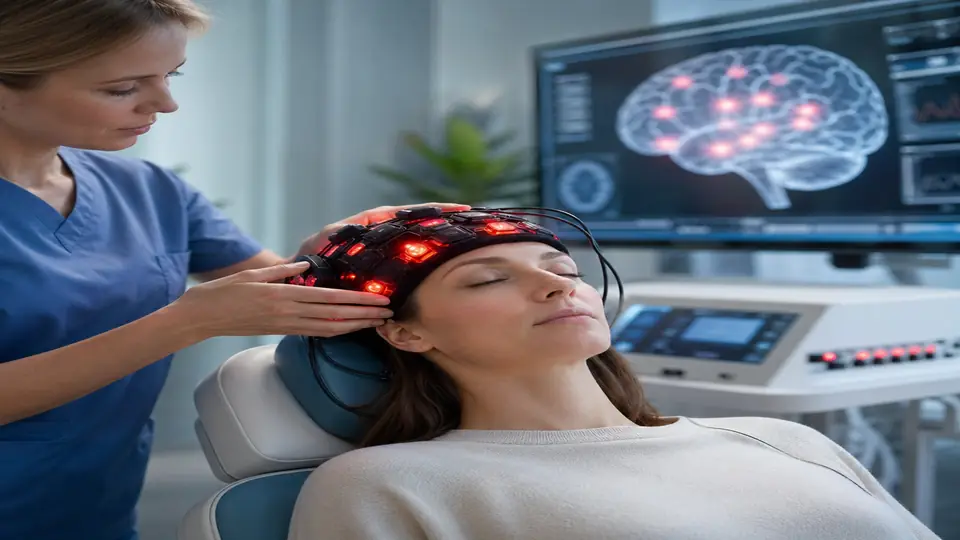
Clinical-grade devices use high-powered LEDs or laser diodes in helmet or headband configurations that deliver consistent power density across targeted brain regions. Consumer-grade “red light therapy” panels are generally not sufficient for transcranial application — they lack the power density and the correct wavelength targeting. This distinction matters, and I address it in detail in PBM vs Red Light Therapy: What’s the Difference?.

Who Is a Good Candidate?
Based on the evidence and my clinical observation, transcranial PBM is worth considering for:
- Chronic cognitive dysfunction after tick-borne disease treatment
- Post-COVID brain fog persisting beyond 6 months
- Mild cognitive impairment (MCI) with mitochondrial markers
- Treatment-resistant depression, particularly with prefrontal hypometabolism
- Post-TBI cognitive and mood symptoms
- Neurodegenerative conditions as adjunctive therapy
Safety and Considerations
Transcranial PBM has an excellent safety profile. Across all published human studies, adverse events are rare and minor — typically limited to transient headache in the first few sessions. No serious adverse events have been reported in any controlled trial.
Contraindications are few:
- Active malignancy in the treatment area (theoretical concern about promoting tumor growth)
- Photosensitizing medications (check with your physician)
- Seizure disorders (limited data; the 40 Hz pulsed mode should be used with caution)
The nuance matters here: while the safety profile is reassuring, the evidence base is still building. Most studies are small (20-60 participants). We need larger, multi-center RCTs to confirm effect sizes and identify optimal protocols. This is an area where the science is moving fast, but we are not yet at the level of certainty we have for, say, TMS for depression.
The Bottom Line
Transcranial photobiomodulation is a non-invasive, well-tolerated neuromodulation technique with a sound mechanistic basis and a growing body of human clinical evidence. It works by delivering near-infrared light through the skull to activate mitochondrial function in neurons. For patients with cognitive dysfunction driven by neuroinflammation and mitochondrial impairment, it represents a promising addition to a comprehensive treatment approach. The evidence supports it — but we are honest about where it stands: moderate, not yet definitive.
References
- Chao LL. Effects of Home Photobiomodulation Treatments on Cognitive and Behavioral Function, Cerebral Perfusion, and Resting-State Functional Connectivity in Patients with Dementia. Photobiomodulation, Photomedicine, and Laser Surgery. 2019;37(3):133-141. PMID: 31050928.
- Hamblin MR. Shining light on the head: Photobiomodulation for brain disorders. BBA Clinical. 2016;6:113-124. PMC5066074.
- Naeser MA, et al. Significant improvements in cognitive performance post-transcranial, red/near-infrared light-emitting diode treatments in chronic, mild traumatic brain injury. Archives of Physical Medicine and Rehabilitation. 2014;95(3):546-555. PMID: 24215985.
- Cassano P, et al. Transcranial Photobiomodulation for the Treatment of Major Depressive Disorder. The ELATED-2 Pilot Trial. Photomedicine and Laser Surgery. 2018;36(12):634-646. PMID: 30346890.