At a Glance
| Property | Value |
|---|---|
| Evidence Level | Moderate |
| Primary Use | Understanding why chronic infections persist despite antibiotic therapy |
| Key Mechanism | Biofilm matrix blocks antibiotic penetration; dormant persister cells survive antimicrobial exposure |
The 30-55% Problem
Here is a number that should change how you think about chronic infection treatment: standard antibiotics achieve only 30-55% reduction of biofilm-embedded bacteria in most in vitro studies. That means even under laboratory conditions — with perfect drug concentrations and no immune system variables — roughly half of the organisms survive.
In the real world, with variable drug absorption, tissue penetration limitations, and the complexity of a living human body, the number is likely worse.
This is not speculation. This is what the research shows. And it explains the clinical pattern that frustrates millions of patients and their physicians: antibiotics help, symptoms improve, treatment stops, symptoms return.
If this is your story — particularly if you have been treated for Lyme disease, Bartonella, or another chronic infection and you keep relapsing — understanding why antibiotics fail against biofilms is the first step toward understanding what needs to change.
Why Antibiotics Were Not Designed for This
Let me be direct about something the pharmaceutical industry does not emphasize: virtually all antibiotics were discovered, developed, and tested against planktonic bacteria — free-floating, actively dividing organisms in liquid culture. This is how Alexander Fleming discovered penicillin. This is how every antibiotic susceptibility test at your hospital laboratory works today.
But planktonic bacteria are not how most chronic infections behave. The National Institutes of Health estimates that up to 80% of chronic bacterial infections involve biofilm formation [1]. When you take a throat swab and test for antibiotic sensitivity, you are testing against the 20% of bacterial behavior. The other 80% — the biofilm-protected community — operates under entirely different rules.
The Five Mechanisms of Biofilm-Mediated Antibiotic Failure
1. Physical Barrier — The Matrix Blocks Penetration
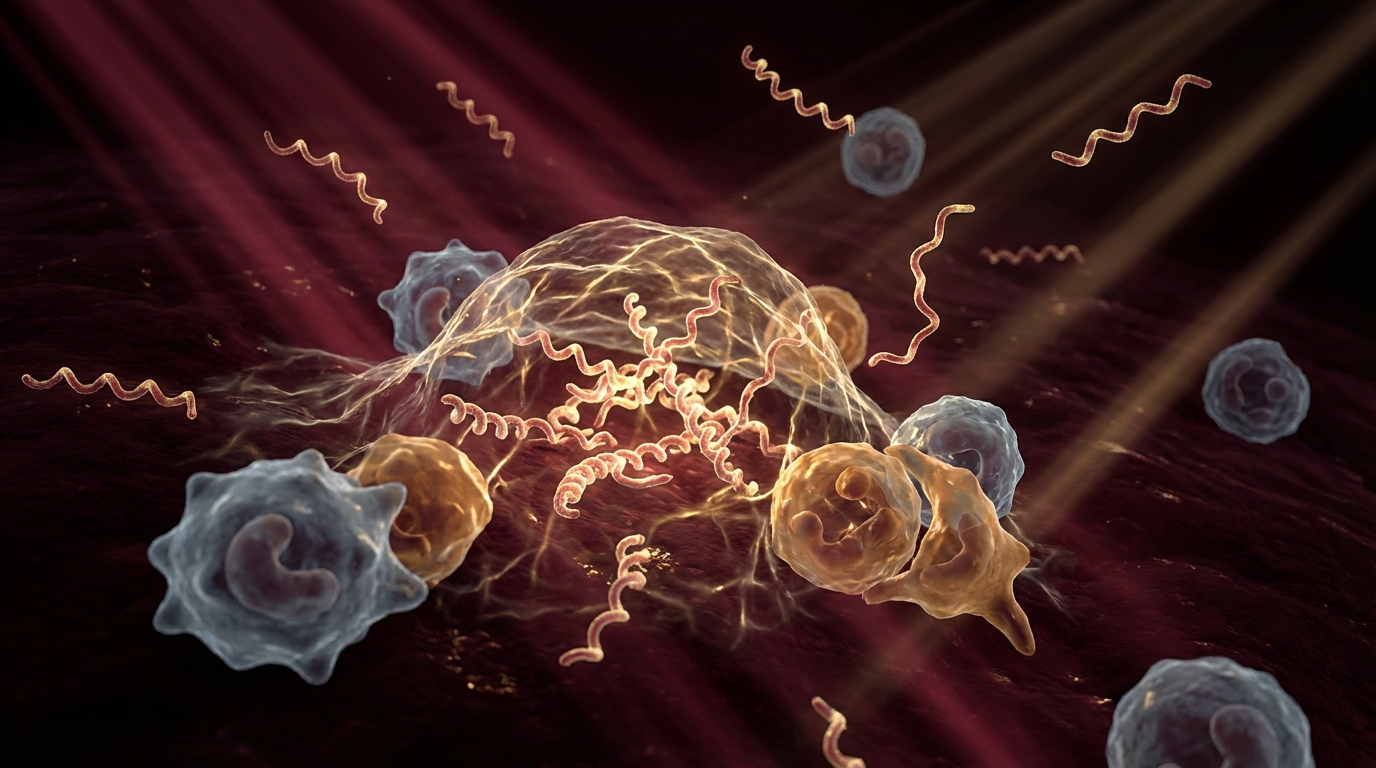
The extracellular polymeric substance (EPS) matrix that encases biofilm organisms is not just a passive coating. It is a chemically active barrier that reduces antibiotic penetration through:
- Charge-based exclusion: Many antibiotics are positively charged at physiological pH. The negatively charged polysaccharides and eDNA in the biofilm matrix electrostatically repel these molecules.
- Enzymatic degradation: Biofilms concentrate beta-lactamases and other enzymes that destroy antibiotics before they reach target organisms.
- Diffusion limitation: The matrix slows molecular diffusion, creating concentration gradients where the exterior of the biofilm sees therapeutic drug levels but the interior sees sub-therapeutic concentrations — the perfect recipe for promoting tolerance [2].
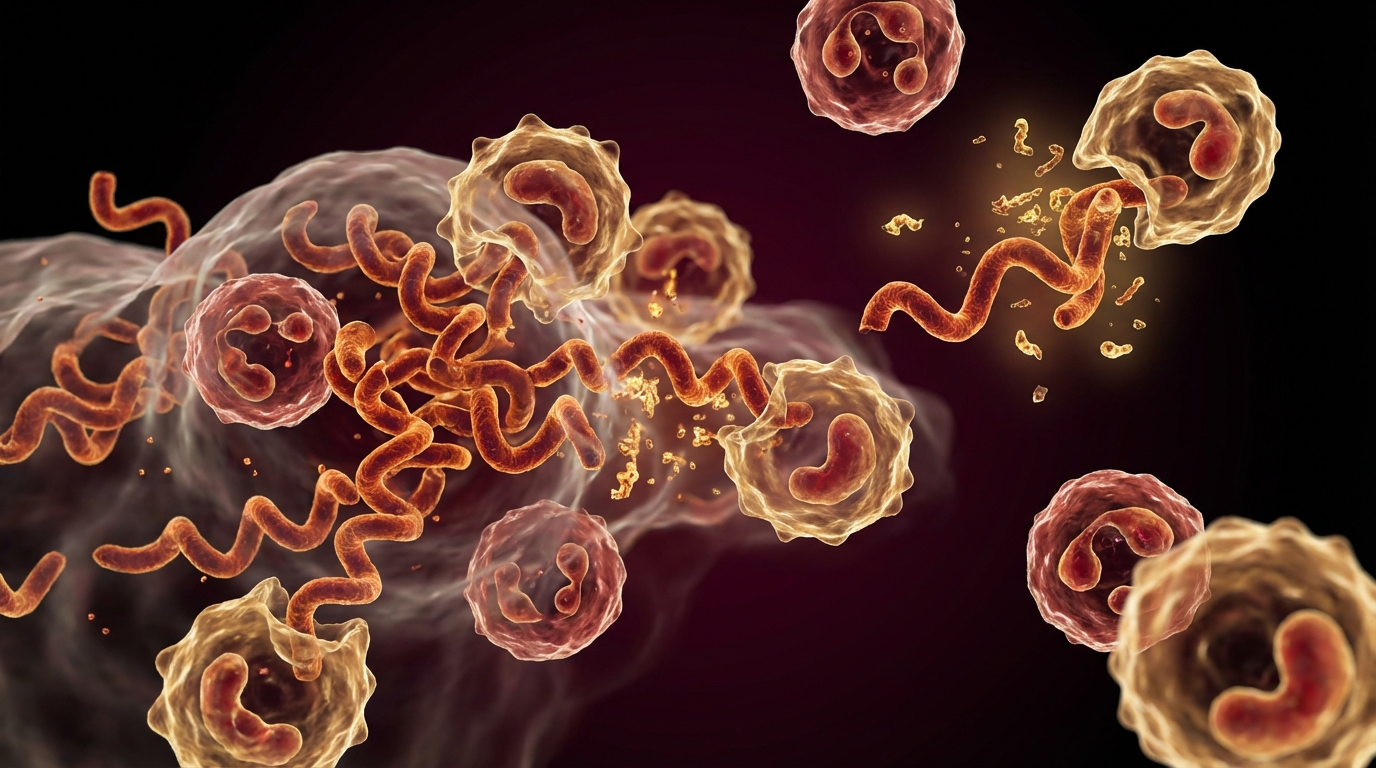
In Borrelia burgdorferi biofilms specifically, the matrix contains alginate, calcium, and extracellular DNA in addition to protein components — creating a multilayered barrier that no single disruption strategy can fully address.
2. Metabolic Dormancy — Antibiotics Need Active Targets
Most antibiotics work by disrupting essential metabolic processes in dividing bacteria:
- Beta-lactams (penicillin, ceftriaxone) inhibit cell wall synthesis — useless if the cell is not building new wall
- Fluoroquinolones inhibit DNA replication — irrelevant in non-dividing cells
- Aminoglycosides disrupt protein synthesis — reduced uptake in dormant cells
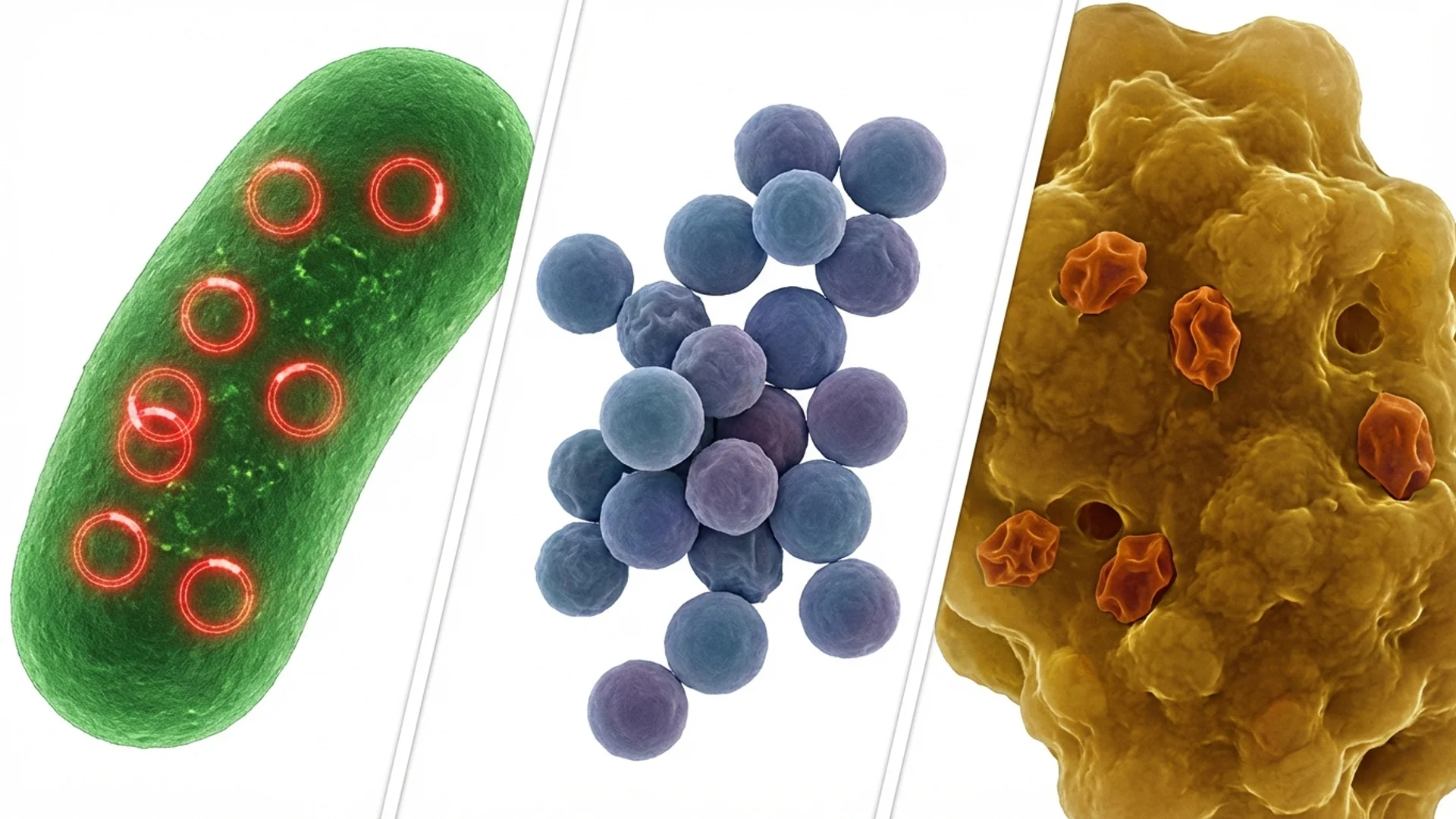
Within a biofilm, organisms near the center exist in a metabolically quiescent state. They are not dead — they are dormant. They consume minimal resources, divide rarely or not at all, and maintain just enough metabolic activity to survive. These are called persister cells, and they are the primary reason chronic infections relapse after antibiotic discontinuation [3].
What I tell my patients: imagine antibiotics as bullets designed to hit moving targets. Persister cells are not moving. They are sitting still, and the bullets fly right past them.
3. Efflux Pump Upregulation
Bacteria within biofilms upregulate efflux pumps — molecular machines that actively pump antibiotics out of the bacterial cell. Studies show that efflux pump expression is significantly higher in biofilm-associated organisms compared to their planktonic counterparts [2].
This is not genetic resistance (mutation-based). It is phenotypic tolerance — the organism’s gene expression changes in response to the biofilm environment. The same organism, grown planktonically, would be fully susceptible to the antibiotic.
4. Horizontal Gene Transfer
Biofilms create the ideal environment for horizontal gene transfer — the sharing of genetic material between bacteria, including resistance genes. The close proximity of organisms within the biofilm, the presence of extracellular DNA, and the protected environment all facilitate this transfer.
This means that even if only a few organisms within a biofilm carry a resistance gene, that gene can spread rapidly throughout the community. The biofilm is essentially an incubator for resistance evolution.
5. Quorum Sensing — Coordinated Defense
Bacteria within biofilms communicate through quorum sensing — chemical signaling molecules that coordinate group behavior. When antibiotic exposure is detected, quorum sensing triggers community-wide defensive responses:
- Matrix production increases (thickening the barrier)
- Efflux pump expression increases
- Metabolic activity decreases (reducing antibiotic targets)
- Stress response proteins are activated
This is a coordinated defense, not an individual survival strategy. The biofilm behaves as a multicellular organism defending itself against a threat.

The Evidence
What We Know (Human Data)
The biofilm-antibiotic failure phenomenon is extensively documented outside of tick-borne disease:
Cystic fibrosis: Pseudomonas aeruginosa biofilms in CF airways are the paradigmatic example. Despite decades of aggressive antibiotic therapy, complete eradication is rarely achieved — biofilm-associated organisms show 100-1,000x reduced susceptibility to antibiotics compared to planktonic forms [1].
Device-related infections: Prosthetic joint infections, catheter infections, and implant infections typically require device removal because antibiotics alone cannot clear biofilm-associated organisms. This is standard medical practice — not controversial.
Chronic wound infections: Biofilm-associated wound infections often fail to heal despite topical and systemic antibiotics. Mechanical debridement (physical biofilm removal) plus antibiotics is significantly more effective than antibiotics alone.
For Lyme disease specifically, the evidence includes:
- Sapi et al. demonstrated that Borrelia biofilms showed significantly reduced susceptibility to doxycycline, amoxicillin, and ceftriaxone compared to planktonic forms [4]
- Feng et al. at Johns Hopkins showed that drug combinations targeting multiple morphological forms (including persister-active agents) were required to eradicate Borrelia in vitro [3]
- Standard antibiotic regimens (21 days of doxycycline) were designed based on planktonic susceptibility data — not biofilm penetration data
What I See in Practice
In our clinical experience treating over 12,000 patients with tick-borne diseases, the pattern is consistent: patients who receive standard-duration antibiotic courses (2-4 weeks) frequently relapse. Those who receive extended courses with biofilm disruption have better sustained outcomes.
What I observe in practice is that the clinical timeline tells the story. Patients on antibiotics alone often improve during the first 4-6 weeks (planktonic organisms are being killed), then plateau or partially regress (biofilm-protected organisms persist). Adding biofilm disruption strategies often breaks through that plateau.
I also observe that the severity of Herxheimer reactions during biofilm disruption suggests that a significant pathogen burden was indeed being protected from prior antibiotic exposure. The die-off intensity is itself a form of clinical evidence.
Practical Application: What To Do About It
Understanding why antibiotics fail against biofilms leads directly to the strategies designed to overcome this limitation:
1. Biofilm Disruption Before Antimicrobials
Enzyme-based disruption with nattokinase, serrapeptase, and NAC degrades the protective matrix, improving antibiotic penetration. Timing matters: disruption agents taken 30-60 minutes before antimicrobials.
2. Combination Antimicrobial Therapy
Targeting multiple metabolic states simultaneously:
- Active dividers: doxycycline, ceftriaxone
- Intracellular organisms: azithromycin
- Persister/cyst forms: tinidazole, dapsone
- Biofilm-associated forms: antimicrobials combined with matrix-disrupting agents
3. Extended Treatment Duration
Standard 2-4 week courses assume planktonic infection kinetics. Biofilm-associated infections may require months of treatment. This is not controversial in orthopedics (prosthetic joint infections are treated for 6-12 weeks minimum) — but it remains controversial in tick-borne disease, where treatment guidelines were written based on acute infection models.
4. Pulse Dosing / Cycling
Some clinicians use pulsed antibiotic protocols: treatment for 4 weeks, break for 2 weeks, repeat. The rationale is that persister cells that survived the treatment period will begin to revert to metabolically active forms during the drug-free interval, becoming susceptible targets during the next treatment pulse.
5. Immune System Optimization
Ultimately, the immune system must clear residual organisms after antimicrobials have reduced the pathogen burden. Immune testing can identify specific deficits (NK cell dysfunction, T-cell depletion) that can be addressed to support clearance.

Safety and Considerations
- Extended antibiotic therapy carries risks including GI disruption, C. difficile colitis, hepatotoxicity, and drug-resistant organism selection. Close monitoring is essential.
- Biofilm disruption can release significant toxin burden. Herxheimer management protocols should be in place before initiating disruption.
- Not all treatment failure is biofilm-related. Drug intolerance, inadequate dosing, incorrect diagnosis, and co-infections must be considered.
- The controversy around chronic Lyme disease treatment is ongoing. The data presented here is from published research, but the clinical application to chronic Lyme extends beyond current IDSA guidelines. Patients should understand the evidence landscape and make informed decisions with their treating physicians.
The Bottom Line
Antibiotics were designed to kill free-floating bacteria in acute infections. Biofilm-associated chronic infections are a fundamentally different problem — one that requires fundamentally different strategies. The nuance matters: this is not about antibiotics being bad medicine. It is about antibiotics being incomplete medicine for a specific type of infection. Understanding the five mechanisms of biofilm-mediated antibiotic failure — physical barrier, metabolic dormancy, efflux pumps, gene transfer, and quorum sensing — leads directly to the multi-modal strategies required to overcome them.
References
- Costerton JW, Stewart PS, Greenberg EP. Bacterial biofilms: a common cause of persistent infections. Science. 1999;284(5418):1318-1322. PMID: 10334980
- Hall CW, Mah TF. Molecular mechanisms of biofilm-based antibiotic resistance and tolerance in pathogenic bacteria. FEMS Microbiol Rev. 2017;41(3):276-301. PMID: 28369412
- Feng J, Auwaerter PG, Zhang Y. Drug combinations against Borrelia burgdorferi persisters in vitro: eradication achieved by using daptomycin, cefoperazone and doxycycline. PLoS One. 2015;10(3):e0117207. PMID: 25806811
- Sapi E, Kaber RS, Engelman KM, et al. Evaluation of in-vitro antibiotic susceptibility of different morphological forms of Borrelia burgdorferi. Infect Drug Resist. 2011;4:97-113. PMID: 21753890